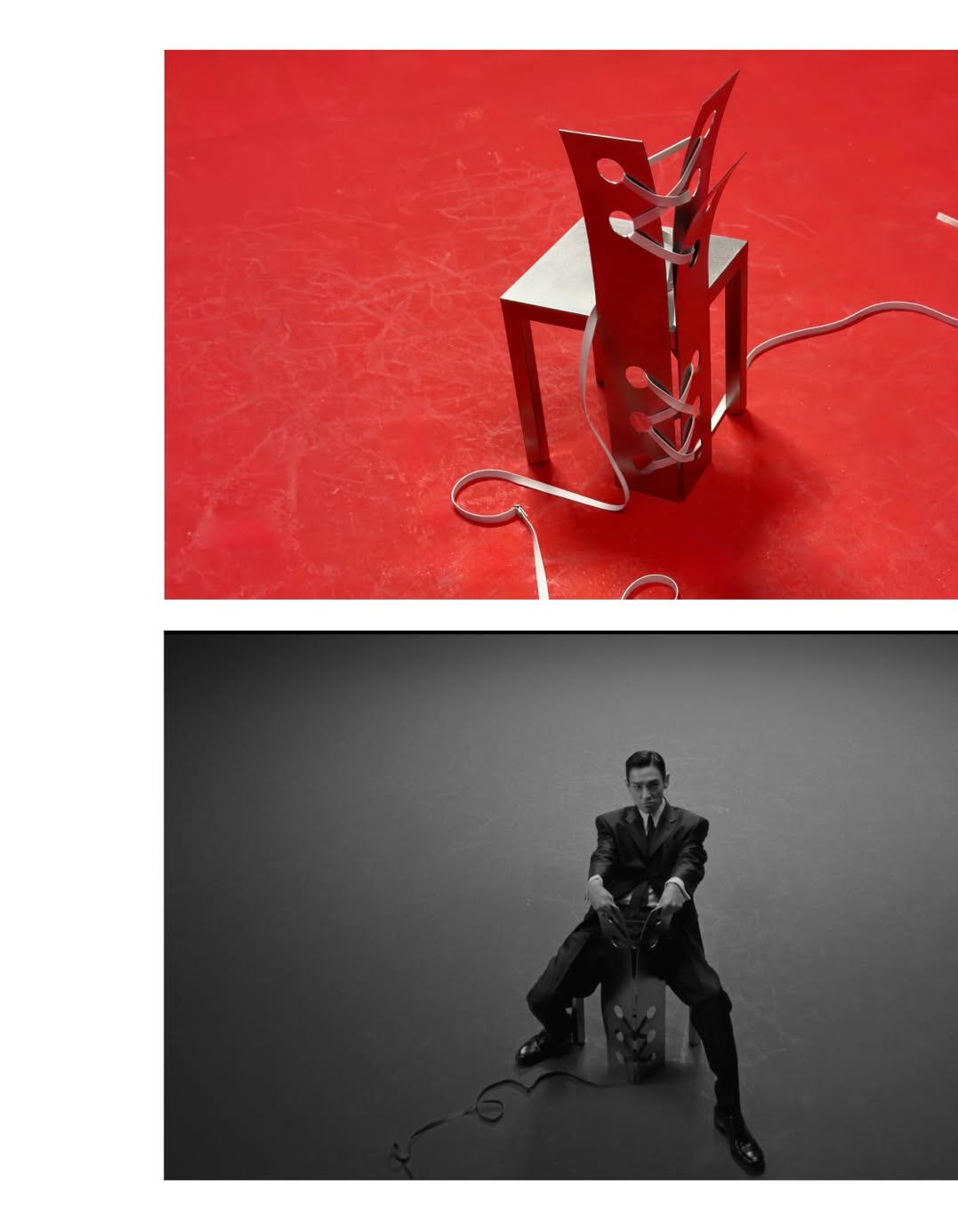

Welcome to TTTOPSUPPORT — an International Fanbase dedicated to supporting T.O.P, an artist whose talent, creativity, depth, and individuality continue to inspire fans around the world.
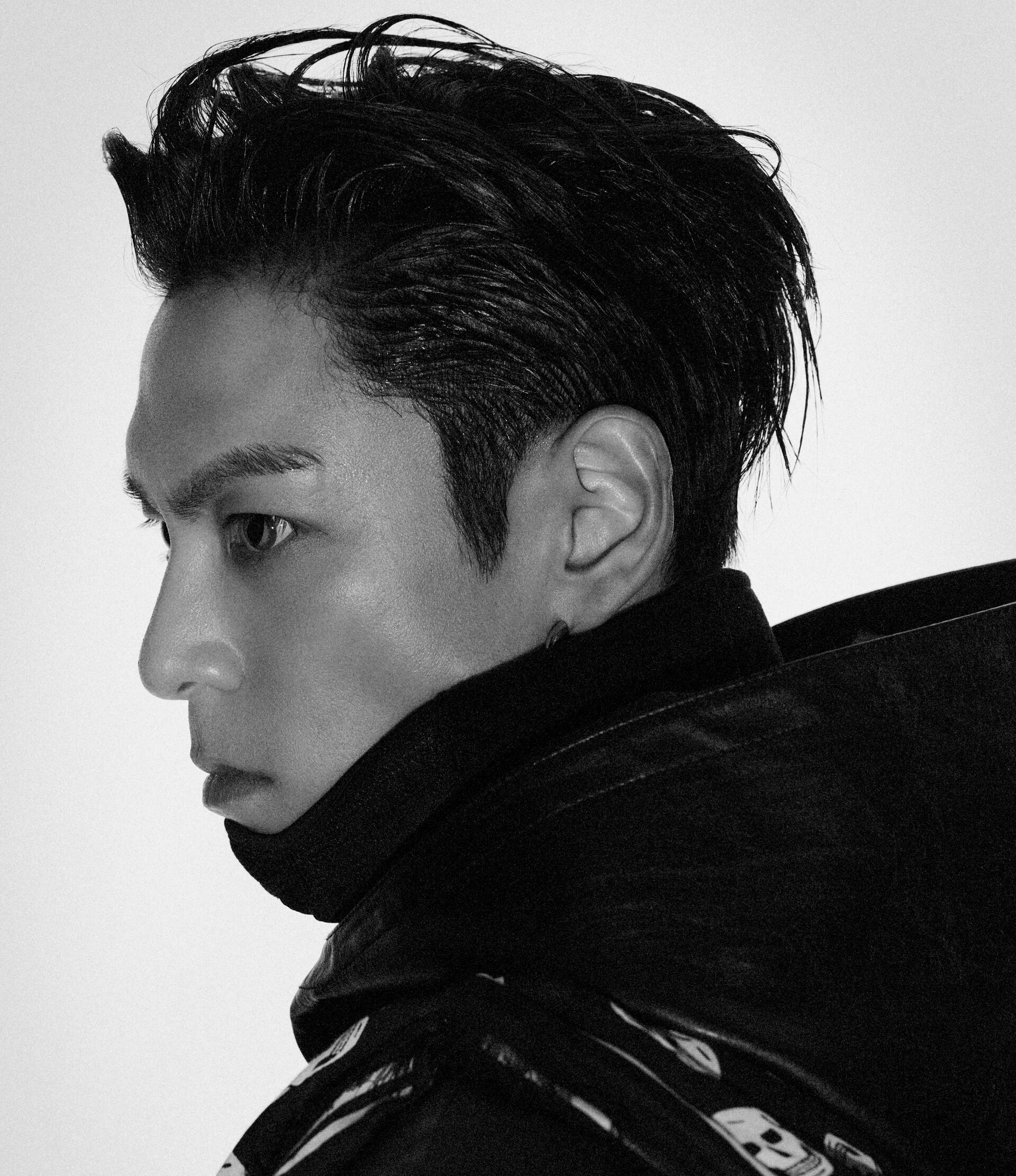
T.O.P
Everything you need to know about T.O.P. Discover T.O.P's profile, discography, filmography, projects, official social media channels, streaming platforms, the official TOPSX fan community, and other verified resources—all in one place.
STREAM & PURCHASE
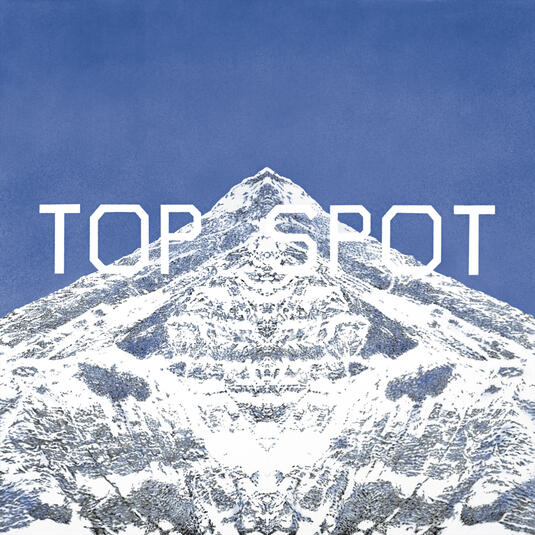
ANOTHER DIMENSION
Find all official streaming, download, and purchase links for Another Dimension in one place.✨
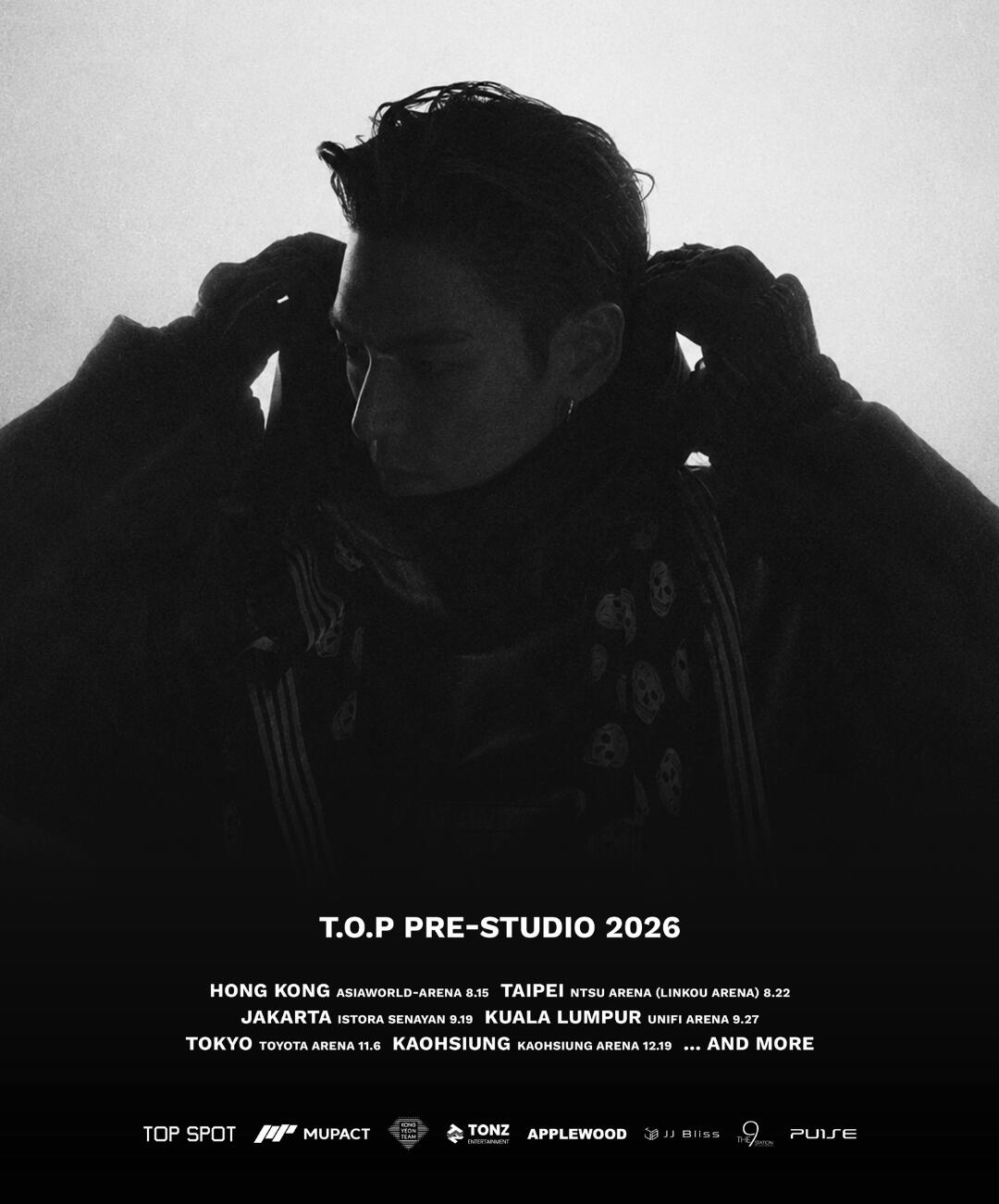
T.O.P PRE-STUDIO 2026 TOUR
Find tour schedules, venue information, ticketing updates, event guides, merchandise details, fan projects, and the latest news—all in one place to help you prepare for every stop of T.O.P's new journey. ✨
CALENDAR
Stay connected with T.O.P's journey through our regularly updated event calendar. Find upcoming schedules, concerts, official appearances, broadcasts, fan events, and important dates at a glance ✨
RE:UNION (再会)
T.O.P JAPAN FANMEETING 2026
Find all event-related information, announcements, schedules, ticket details, merchandise, and FAQs here—translated by TTTOPSUPPORT. ✨
TOPSX STORE
Learn how to get the most out of the TOPSX Store with step-by-step guides, feature walkthroughs, FAQs, and helpful tips—translated by TTTOPSUPPORT. ✨

Guides
Helpful guides made for fans — from streaming tutorials to voting tips and support projects ✨
translations & Other Content
Bringing fans closer through translations, news, content updates, interviews, and shared moments ♡
projects
Explore projects created with love by fans — donation drives, support ads, anniversary events, and more ✨
Welcome to our growing collection of projects dedicated to T.O.P!
Since 2023, TTTOPSUPPORT has united fans around the world through meaningful initiatives celebrating T.O.P's artistry, talent, achievements, and every milestone along his journey.
Each project represents more than an event—it reflects the creativity, kindness, and unwavering support of a global community united by one shared passion. Whether big or small, every initiative has been created with gratitude and the hope of showing our appreciation for T.O.P.
This collection will continue to grow as we create new memories and celebrate many more chapters together.
2026
2025
BIRTHDAY PROJECTS
2024
BIRTHDAY PROJECTS

BIRTHDAY GIFT PART 1

BIRTHDAY GIFT PART 2
2023
BIRTHDAY PROJECTS

BIRTHDAY FANBOOK

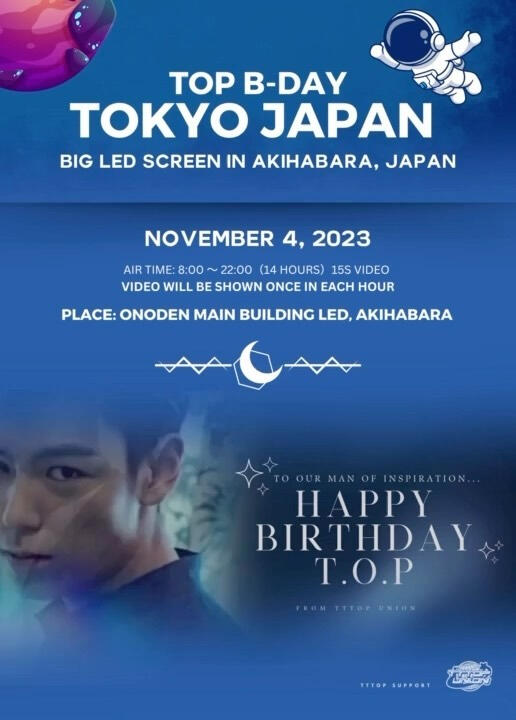
BIRTHDAY AD IN JAPAN - TTTOP FAN UNION

TTTOPDAY IN LOS ANGELES WITH @bigbang_discord
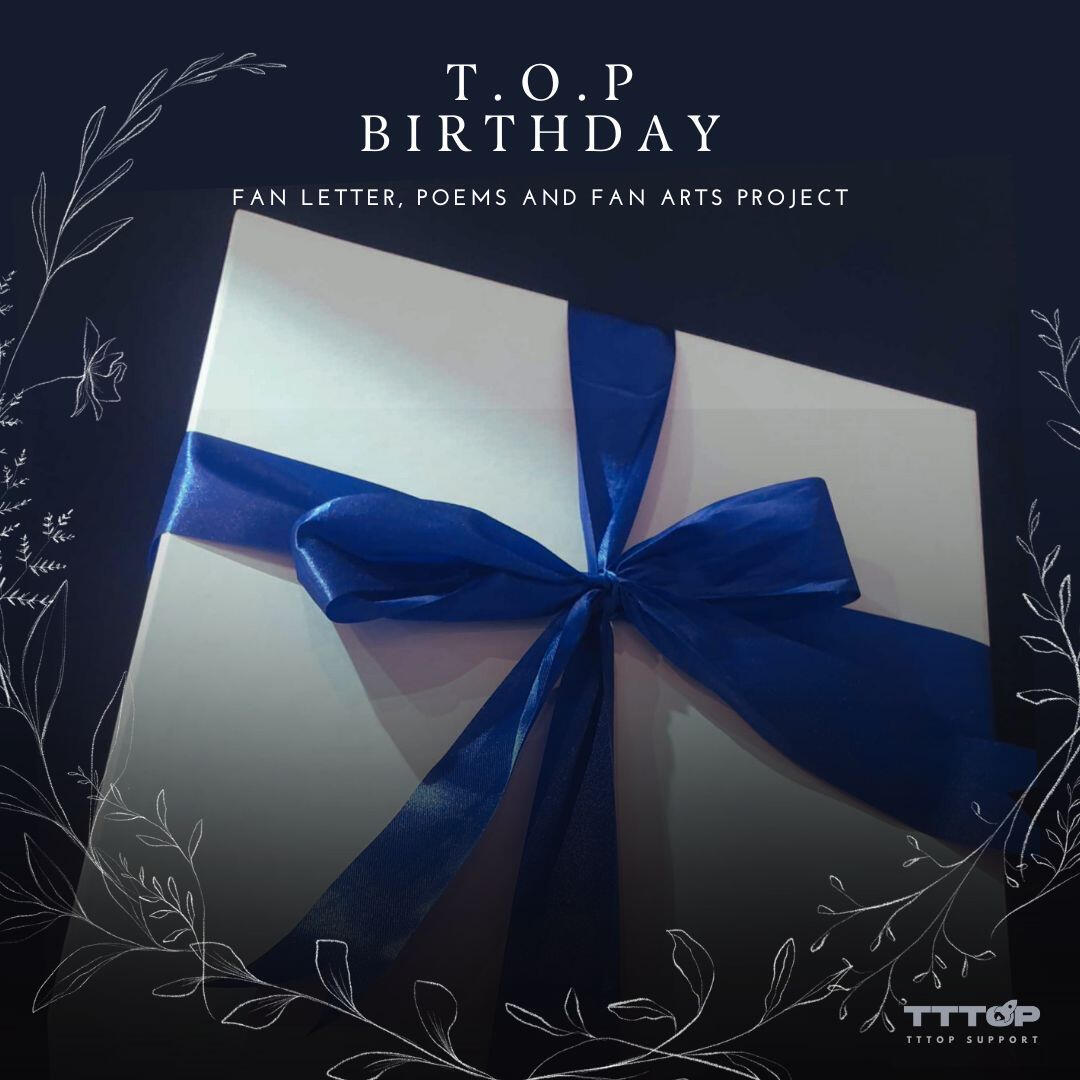


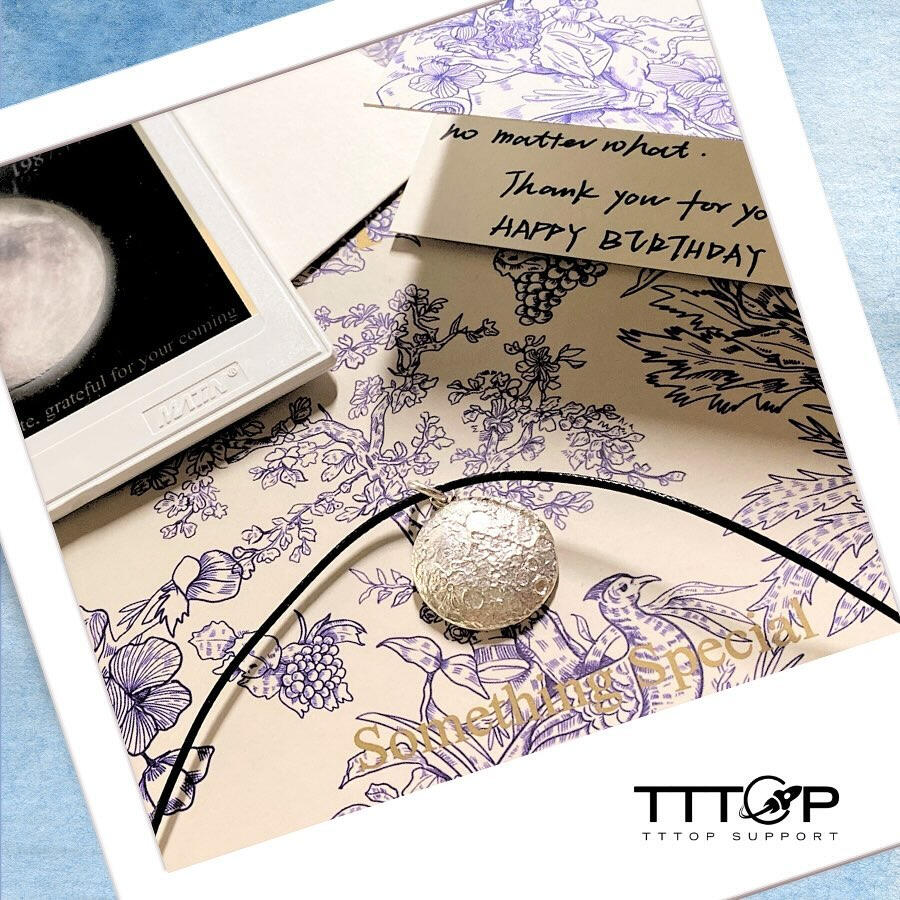
BIRTHDAY GIFT TO T.O.P
2024.11.04
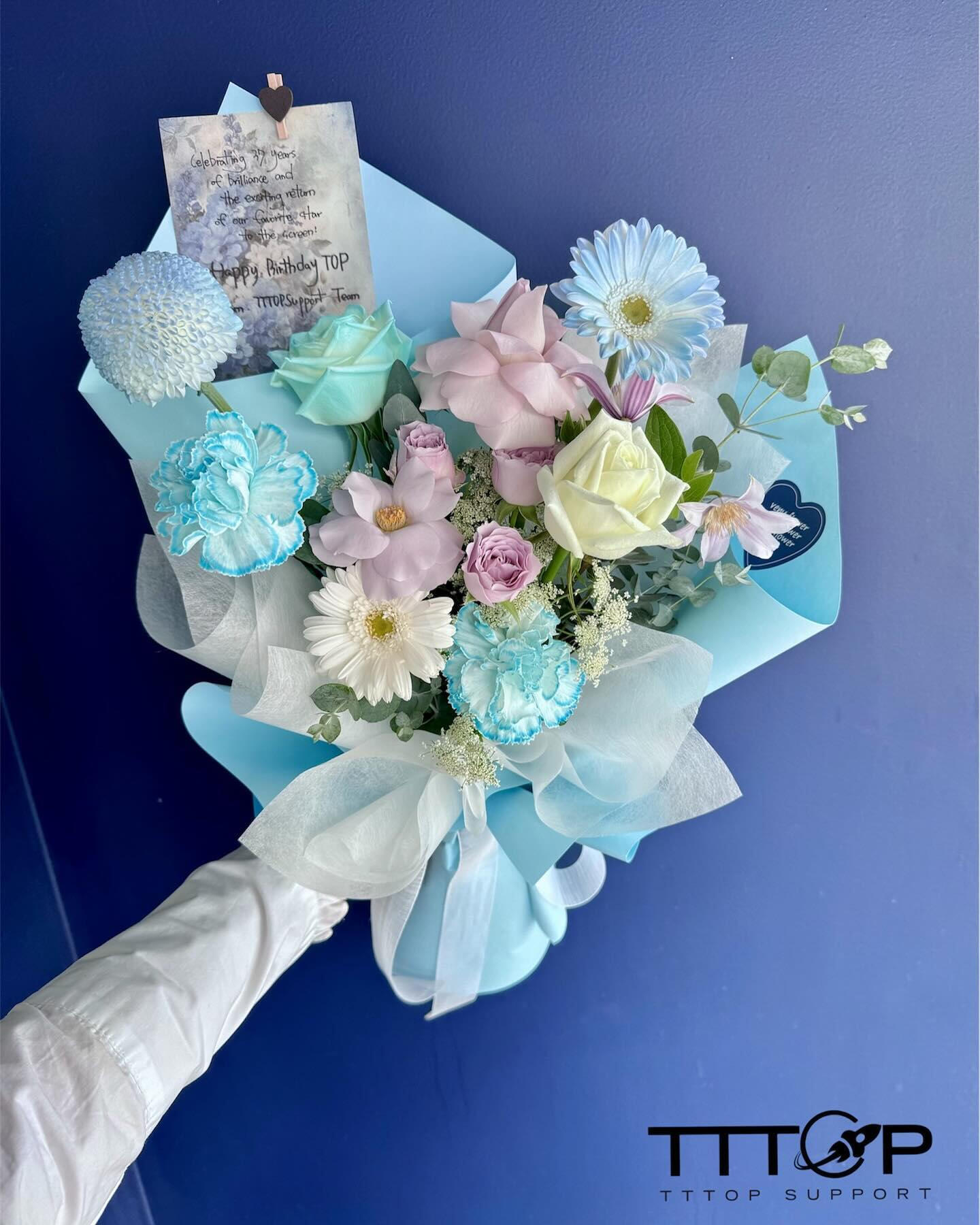
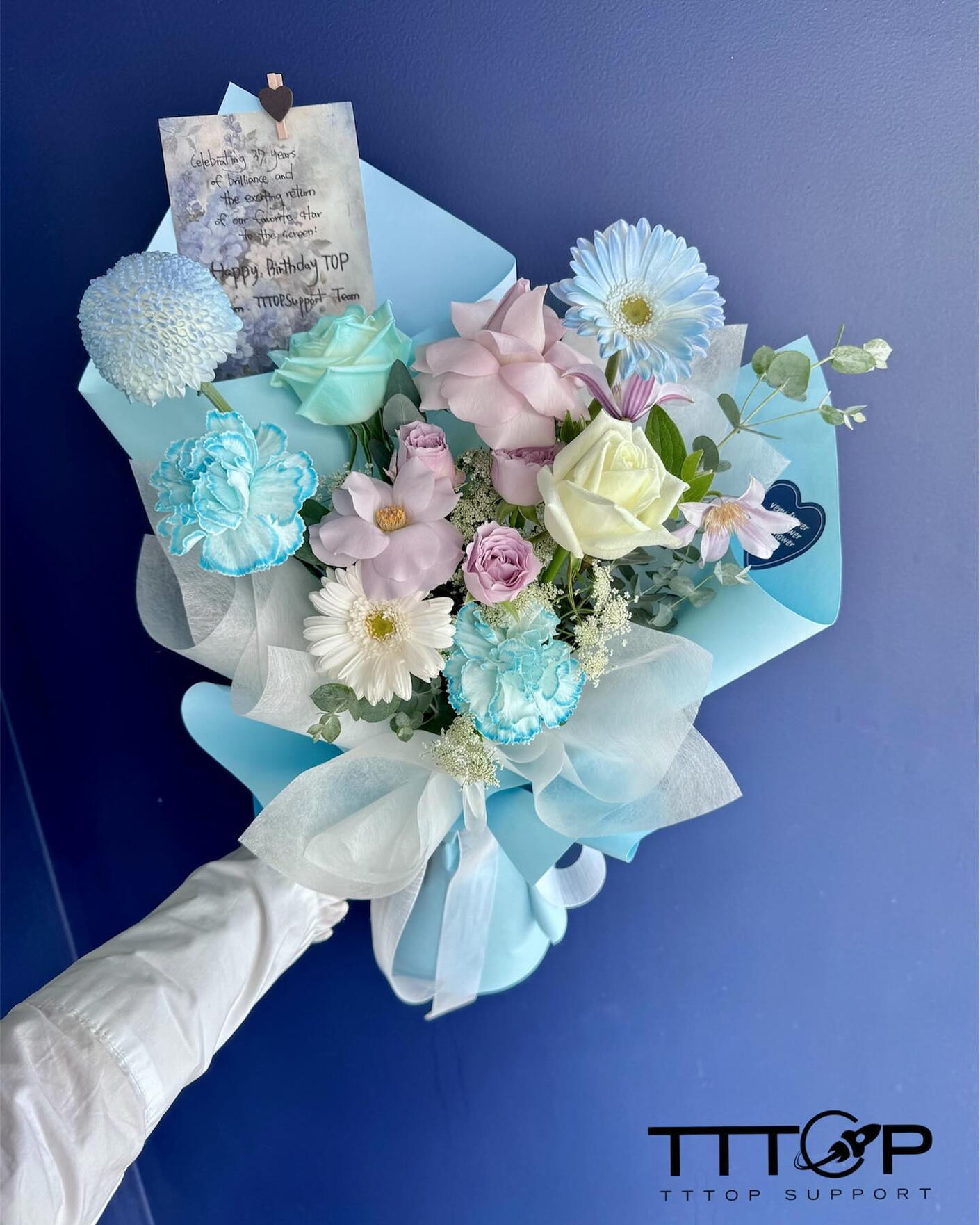
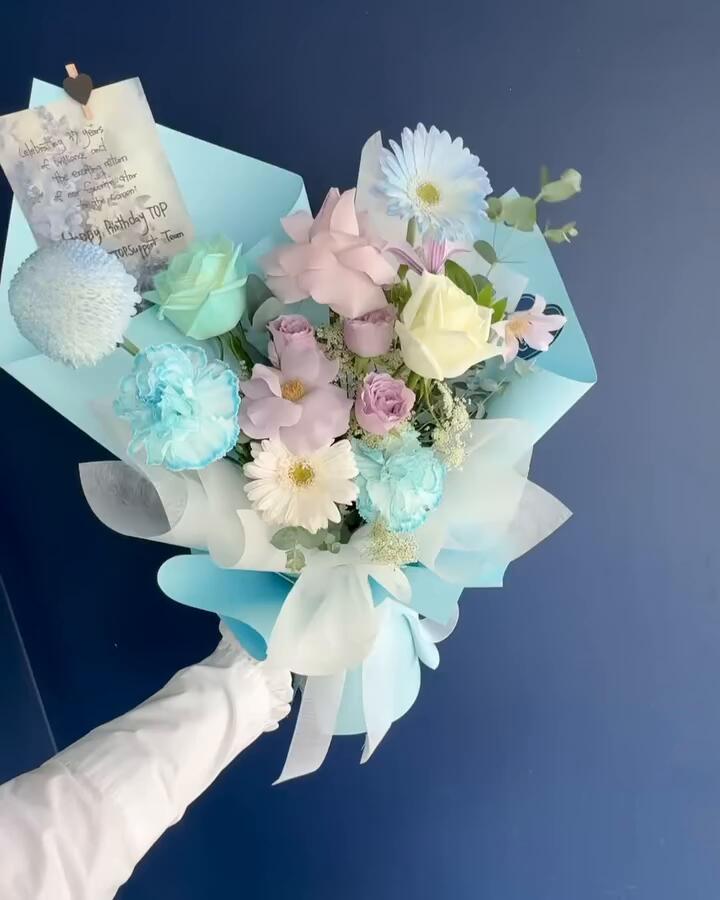
Just as a flower blooms with grace and beauty, your talent lights up every role you take on.Happy birthday to our favorite artist, T.O.P ❤️HAPPY CHOI SEUNGHYUN DAY
#CHEERSTOTTTOP
#CHOISEUNGHYUN #최승현

BIRTHDAY GIFT TO T.O.P
2024.11.04
We are pleased to announce the successful delivery of our gifts to T.O.P ❤️We thank everyone who joined us in honoring this special occasion. Our team is committed to supporting him in all his future endeavors.HAPPY CHOI SEUNGHYUN DAY
#CHEERSTOTTTOP
#CHOISEUNGHYUN #최승현
HAPPY BIRTHDAY OUR DEAREST T.O.P ❤
TTTOPDAY IN LOS ANGELES, USA
with @bigbang_discord
We are sincerely grateful for being the support team for #TTTOPDAY_LA @tttopday_day ❣We congratulate the @bigbang_discord for the successful Wine Showcase Event for T.O.P in LA 🍷Thank you for your unwavering support 🙌🏻

Gallery


2023 BIRTHDAY AD IN TOKYO, JAPAN
[TTTOP GLOBAL FAN UNION]
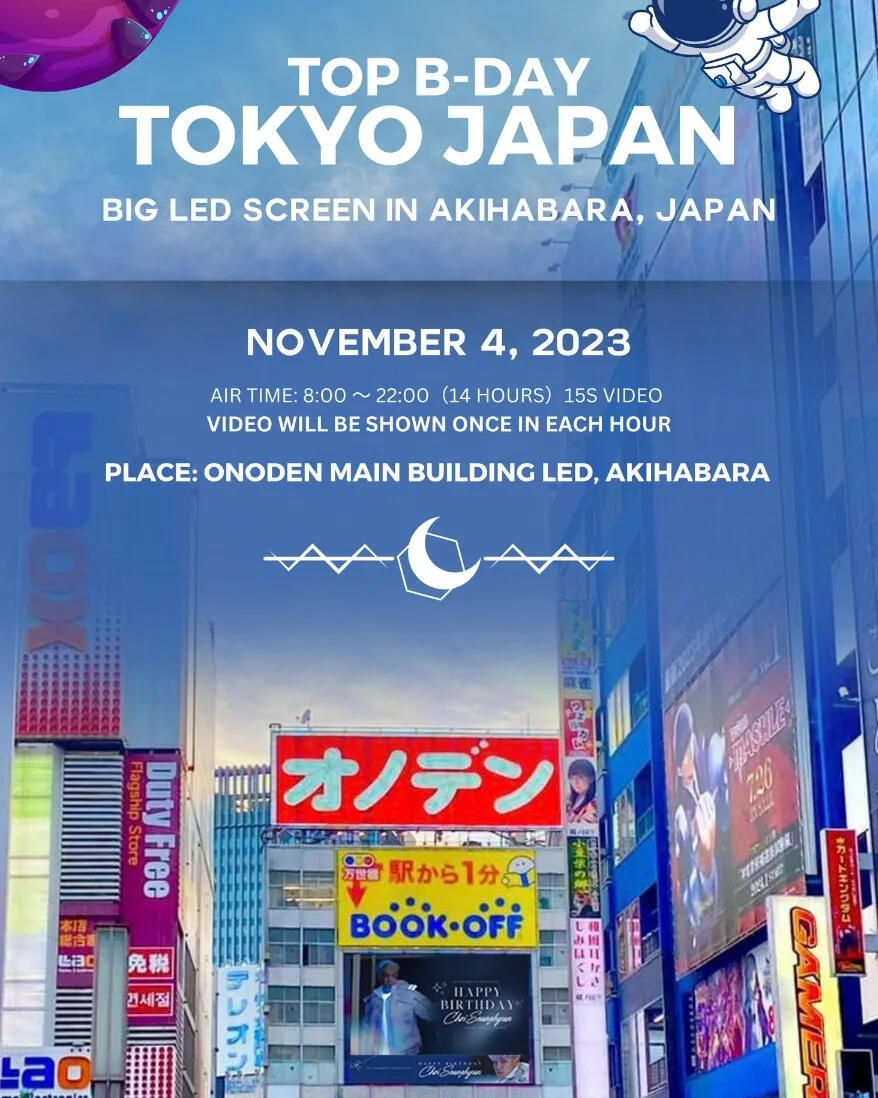
Location: 1-2-7 Sotokanda, Chiyoda-ku; Japan Shinjuku Akihabara Onoden Main Building LED
Date: November 4, 2023
Screen Operating Hours: 9:00 AM - 12:00 AM
Frequency: 15 seconds with 14 times/day
via @hyunp_phyun on X
via @gdisprince on X
HAPPY BIRTHDAY OUR DEAREST T.O.P ❤
We love you, from TTTOPSUPPORT Team#HAPPYTTTOPDAY #TTTOPDAY #TTTOP_UNION #TTTOP
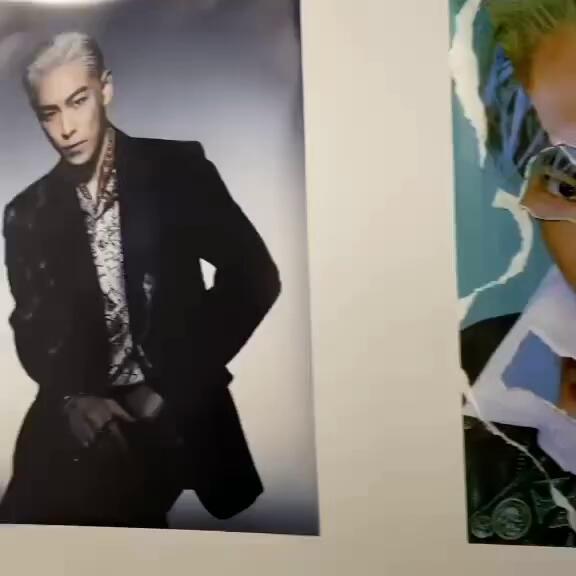
2023 BIRTHDAY FANBOOK
Finally, the diligent efforts of the past few months have come to fruition.A heartfelt thank you to everyone who contributed to our T.O.P Birthday Book Project. Your beautiful letters, poems, fan arts, and words of encouragement have been faithfully captured and are now on the way to Korea.We hope that T.O.P will feel all of your incredible love and support that we felt while preparing this book.CN经过精心准备,我们为胜铉的生日应援特别礼物已经印刷完成,现在已经启程在送往韩国的路上。 非常感谢大家对本次应援书的支持和积极参与。在收集和整理大家的来信与创作时,我们看到了许多真挚的话语,感受到了大家的热情与支持。我们坚信,这种超越国籍、语言和时空的爱,一定会通过这本书成功传递给胜铉。JPついに、過去数ヶ月間の努力が実を結びました。皆さまからいただいた心を込めた手紙、詩、ファンアート、そして励ましの言葉は全て大切に収められ、特別なプレゼントとして印刷が完了し、現在韓国へと向けて送られています。私たちは、たぷ様が皆さまからの国籍や言語、時空を超えた愛とサポートを感じていただけることを心より願っています。
最後に、このブックプロジェクトに貢献してくださった皆さまには、心から感謝申し上げます。


T.O.P
Profile
• Name: T.O.P (탑)
• Birth Name: Choi Seung-Hyun (최승현)
• Birth Date: Nov. 4, 1987
• Agency: TOPSPOT PICTURES Co., Ltd.
Discography
Studio albums
• TOP SPOT - 다중관점 [ANOTHER DIMENSION] (2026)Single albums
• DOOM DADA (2013)Digital singles
• TURN IT UP (2010)
Movies
• Tazza: The Hidden Card (2014) - Ham Dae-Gil
• Commitment (2013) - Lee Myung-Hoon
• 71: Into the Fire (2010) - Oh Jung-Bum
• Iris: The Movie (2010) - Vick
• 19-Nineteen (2009) - Seo Jeong-Hun
Drama Series
• Squid Game 3 (2025) - Thanos (230)
• Squid Game 2 (2024) - Thanos (230)
• The Secret Message (2015) - Woo-Hyun
• IRIS (2009) - Vick
• I am Sam (2007) - Chae Moo-Shin
Awards
2025
• 22nd Gold Derby TV Awards – Best Supporting Actor - Squid Game 22013
• 18th Busan International Film Festival – Asia Star Award (Rookie Award) - Commitment2011
• 47th Baeksang Arts Awards – Film Division, Most Popular Male Actor - 71:Into the Fire
• 47th Baeksang Arts Awards – Film Division, Best New Actor - 71:Into the Fire
• Max Movie Awards – Best New Actor -71:Into the Fire2010
• 31st Blue Dragon Film Awards – Best New Actor - 71:Into the Fire
• 31st Blue Dragon Film Awards – Popular Star Award - 71:Into the Fire
• 3rd Style Icon Awards – New Style Icon, Film Actor - 71:Into the Fire
• 47th Grand Bell Awards – Hallyu Popularity Award - 71:Into the Fire
OFFICIAL ACCOUNTS
@ttt
@topspot_pictures
YouTube
@topspot_pictures
X (Formerly Twitter)
@topspot_pic
@topsx_jp_ofc
OFFICIAL FAN COMMUNITY
TOPSX - T.O.P GLOBAL FAN COMMUNITY
TOPSX - T.O.P JAPAN FAN COMMUNITY
ACTIVITIES AND EVENTS
Note: This detailed calendar shows up to 10 upcoming events at a time. Please check back regularly for newly added dates.
MONTHLY CALENDAR ⭐
View T.O.P's upcoming activities, events, releases, and appearances at a glance.
Tap any event in red for more details, and use the arrows to browse past and upcoming events.
T.O.P PRE-STUDIO 2026 TOUR
AUGUST
08.15 HONGKONG
ASIAWORLD-ARENA
Lantau Island, Hong Kong
08.22 TAIPEI
NTSU ARENA (LINKOU ARENA)
Guishan District, Taoyuan City, Taiwan
08.23 TAIPEI
NTSU ARENA (LINKOU ARENA)
Guishan District, Taoyuan City, Taiwan
SEPTEMBER
CANCELLED
09.19 JAKARTA
ISTORA SENAYAN
Senayan, Central Jakarta, Indonesia
POSTPONED
09.27 KUALA LUMPUR
UNIFI ARENA
Bukit Jalil, Kuala Lumpur, Malaysia
OCTOBER
TICKETS STILL AVAILABLE!
10.24 BANGKOK
IMPACT EXHIBITION HALL 5-6
Amphoe Pak Kret, Nonthaburi, Thailand
NOVEMBER
11.06 TOKYO
TOYOTA ARENA
Koto City, Tokyo, Japan
DECEMBER
12.19 KAOHSIUNG
KAOHSIUNG ARENA
Zuoying District, Kaohsiung, Taiwan
AND MORE...

NEWS
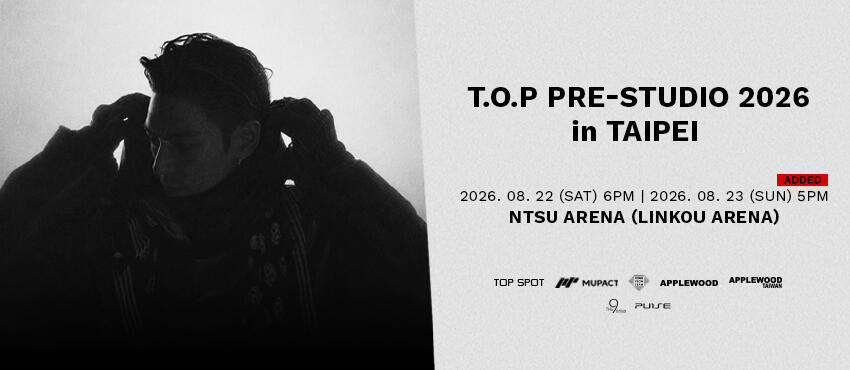
T.O.P PRE-STUDIO 2026 in TAIPEI
2026.08.23 (SUN) 5PM
NEW SHOW ADDED
Thank you to all TOPSX for your incredible support! 🖤
Thanks to your overwhelming enthusiasm, an additional Taipei show has been confirmed!
Event Information
Show Date: Saturday, 23 August 2026
Show Time: 5:00PM
Venue: National Taiwan Sport University Arena (Linkou Arena)
Address: Guishan District, Taoyuan City, Taiwan
Ticketing Site
Purchase Tickets via tixcraft.com
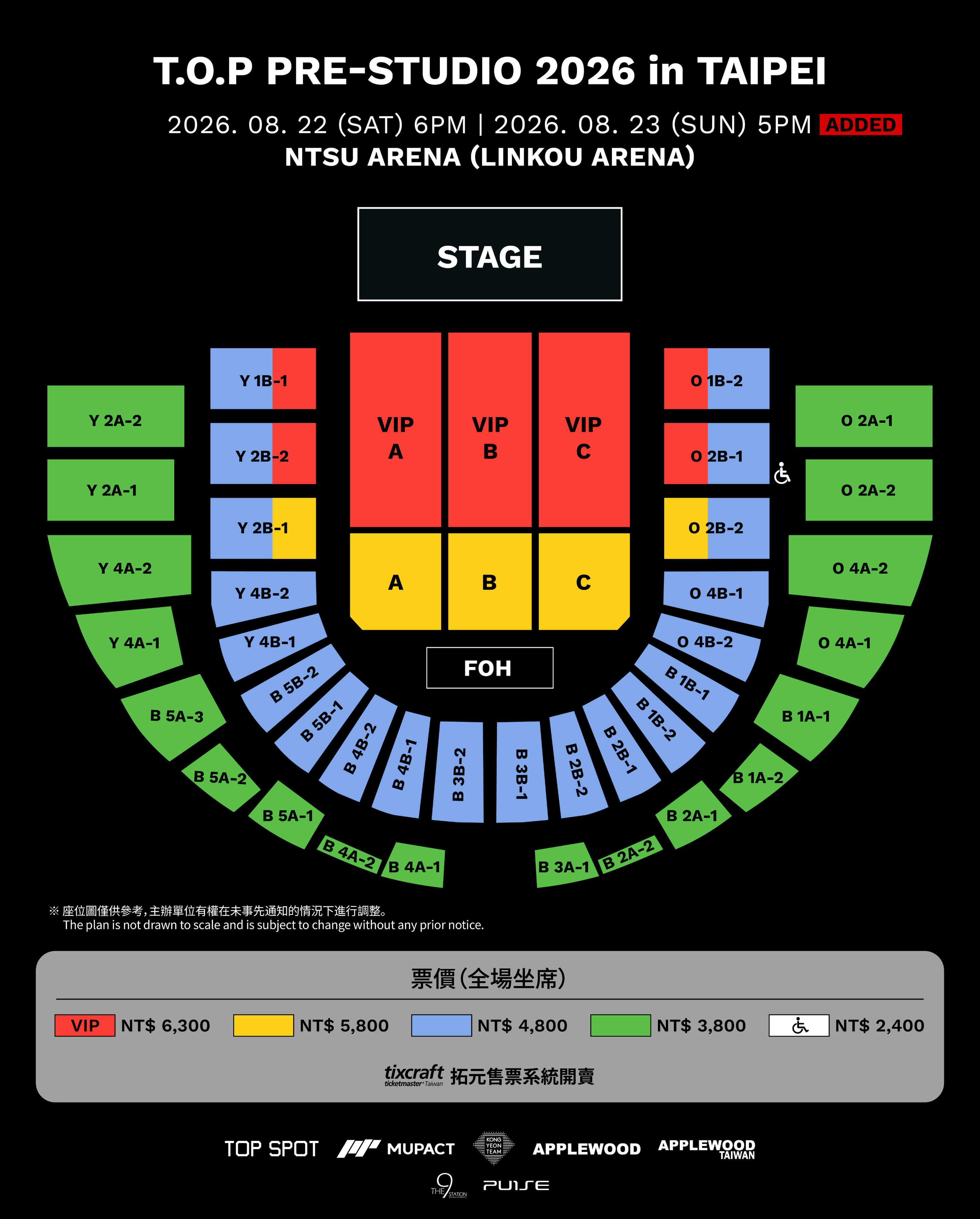
Ticket Prices and Seat Map
• 1F VIP Sections A/B/C & 2F Section — NT$6,300
• 1F Sections A/B/C & 2F Section — NT$5,800
• 2F Section — NT$4,800
• 3F Section — NT$3,800
• 2F Accessible Seating — NT$2,400 (Staff will assist guests to their seats.)
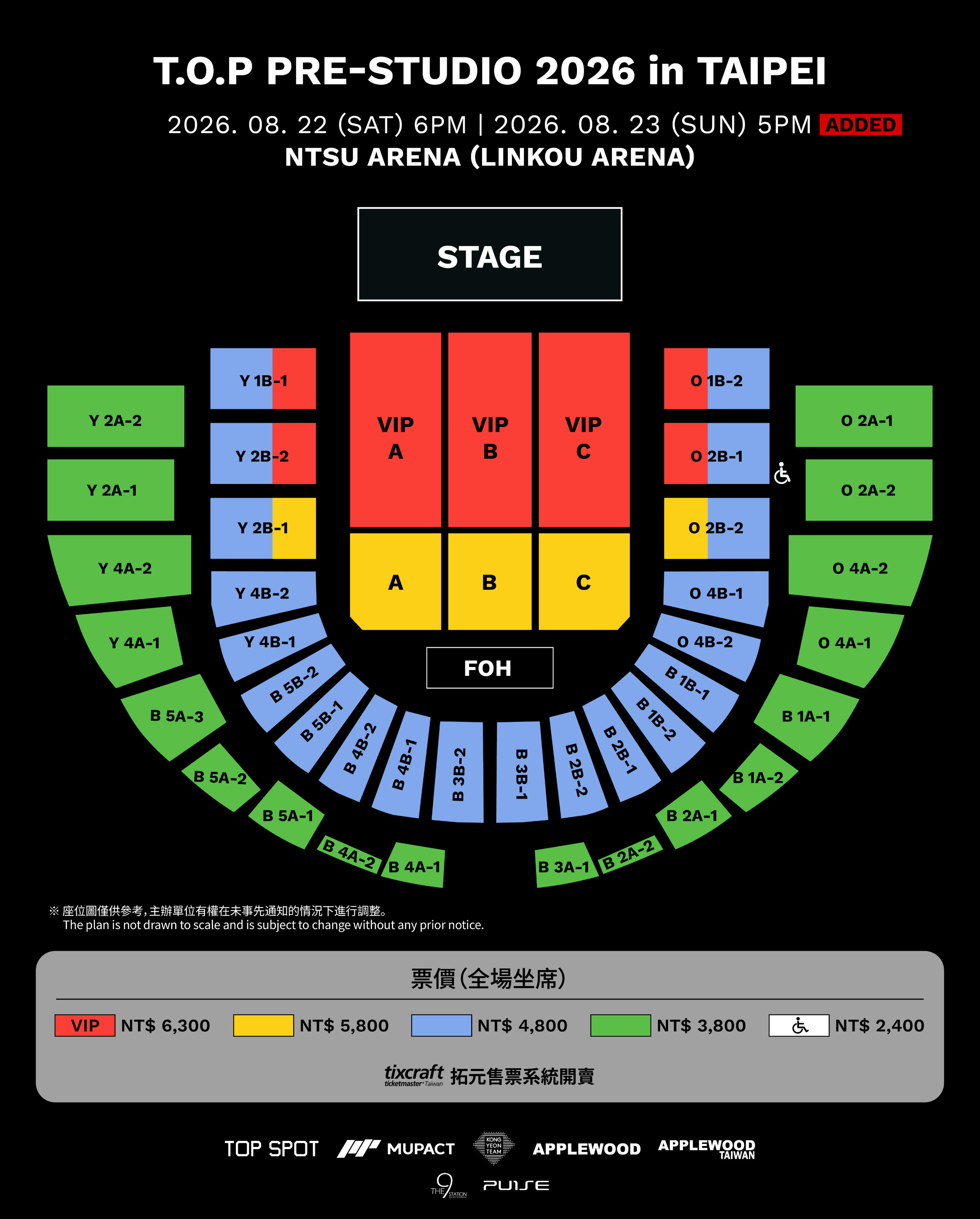
Notes:• All seating is reserved. Please sit in the seat indicated on your ticket.
• Accessible seats will also be available during the TOPSX Official Membership Presale. They are only available to eligible purchasers who have completed both:
1. The disability verification process through the Tixcraft ticketing system, and
2. TOPSX Official Membership presale registration.
• Only those who have completed both requirements before the presale period may purchase accessible seating.
Fan Benefits
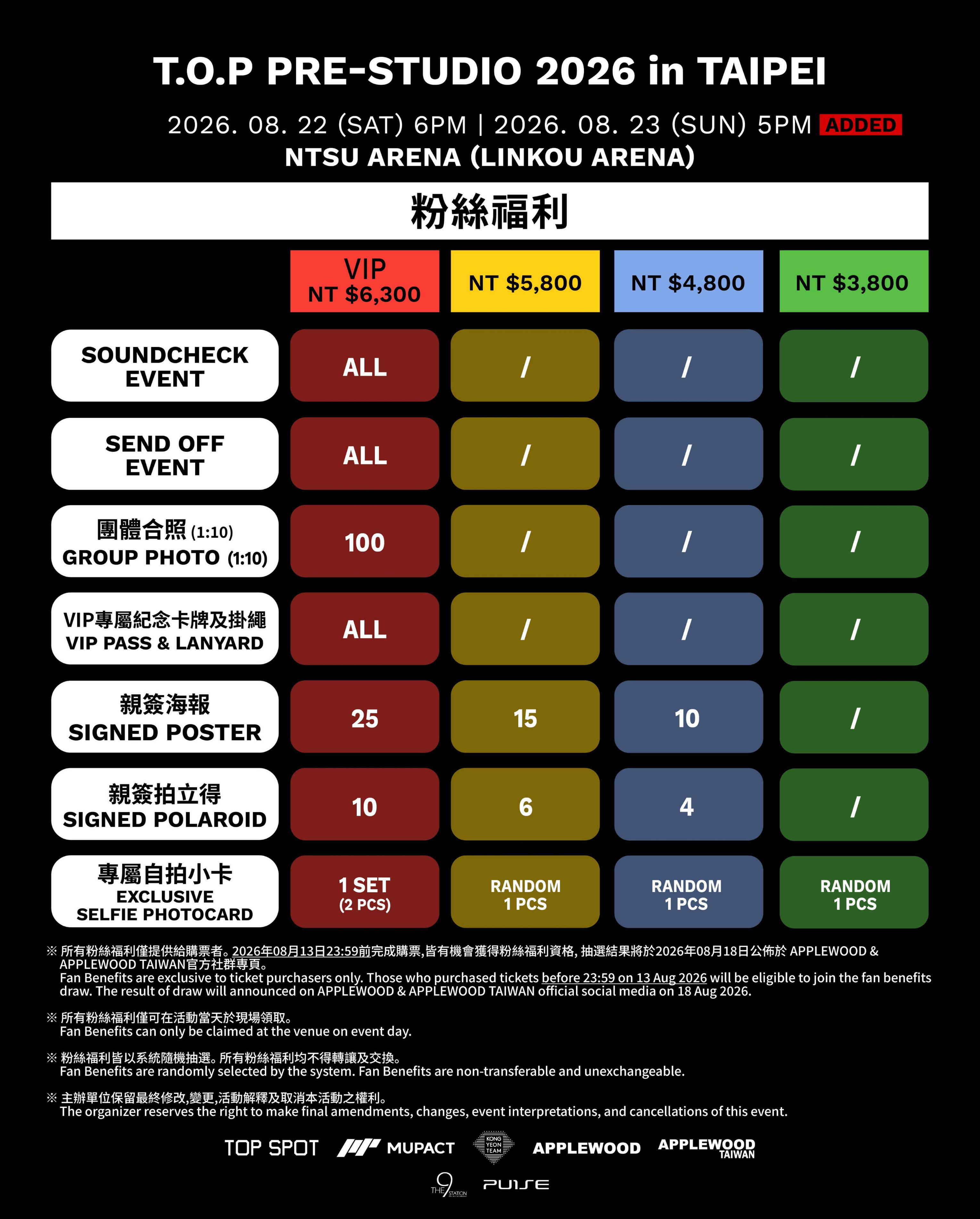
GENERAL ON-SALE
General Sale Begins:
August 8, 2026 (Saturday), 12:00 PM (Local Time)Online Ticketing:
Tixcraft Ticketing System
MORE INFO
Please stay tuned to Applewood Official's social media channels for further announcements.
T.O.P PRE-STUDIO 2026 in TAIPEI
2026.08.22 (SAT) 6PM
SOLD OUT!
Thank you TOPSX~ All tickets for this performance have been sold out!
Check out Day 2!
Event Information
Show Date: Saturday, 22 August 2026
Show Time: 6:00PM
Venue: National Taiwan Sport University Arena (Linkou Arena)
Address: Guishan District, Taoyuan City, Taiwan
Ticketing Site
Purchase Tickets via tixcraft.com
Ticket Prices and Seat Map
• 1F VIP Sections A/B/C & 2F Section — NT$6,300
• 1F Sections A/B/C & 2F Section — NT$5,800
• 2F Section — NT$4,800
• 3F Section — NT$3,800
• 2F Accessible Seating — NT$2,400 (Staff will assist guests to their seats.)
Notes:• All seating is reserved. Please sit in the seat indicated on your ticket.
• Accessible seats will also be available during the TOPSX Official Membership Presale. They are only available to eligible purchasers who have completed both:
1. The disability verification process through the Tixcraft ticketing system, and
2. TOPSX Official Membership presale registration.
• Only those who have completed both requirements before the presale period may purchase accessible seating.
Fan Benefits
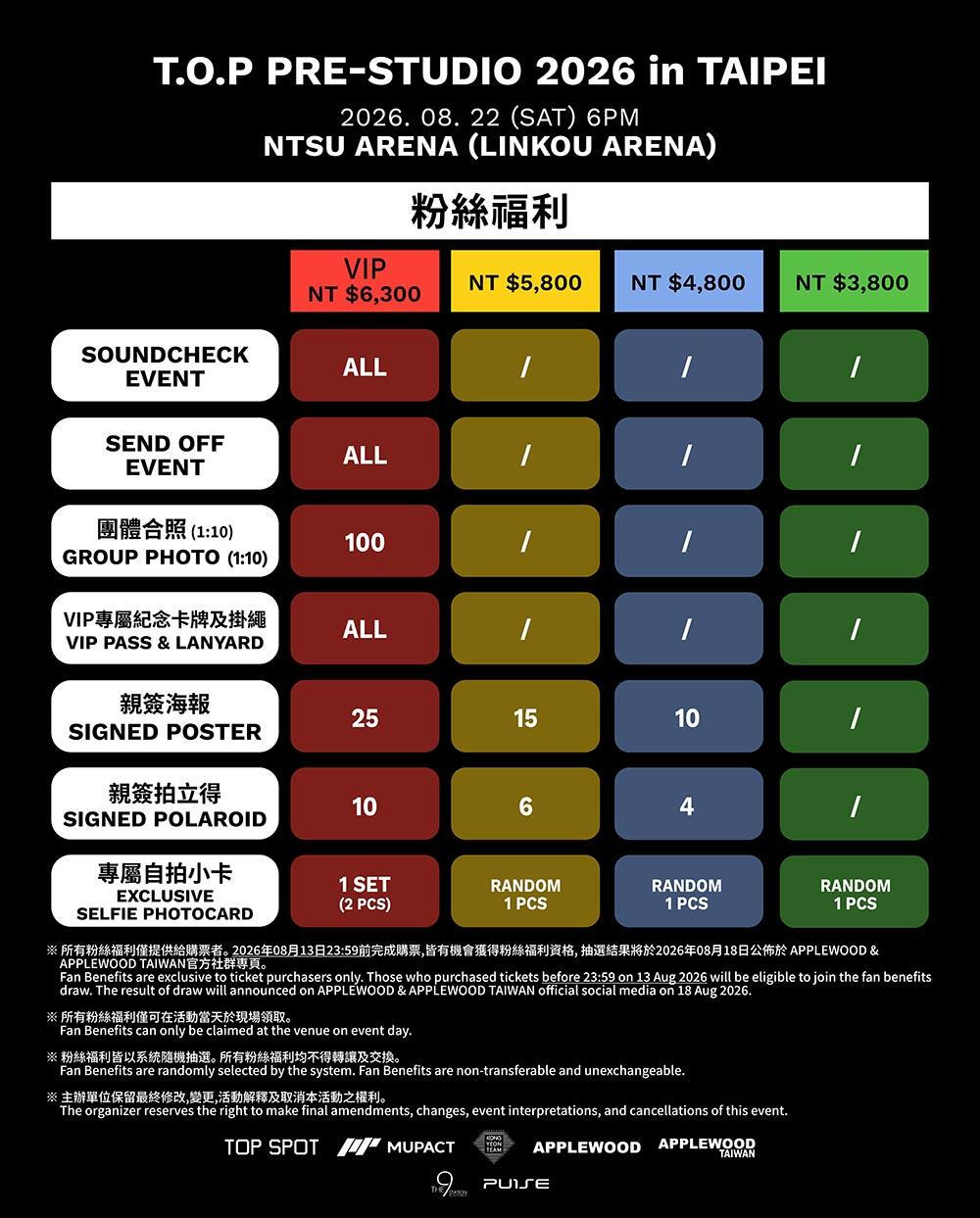
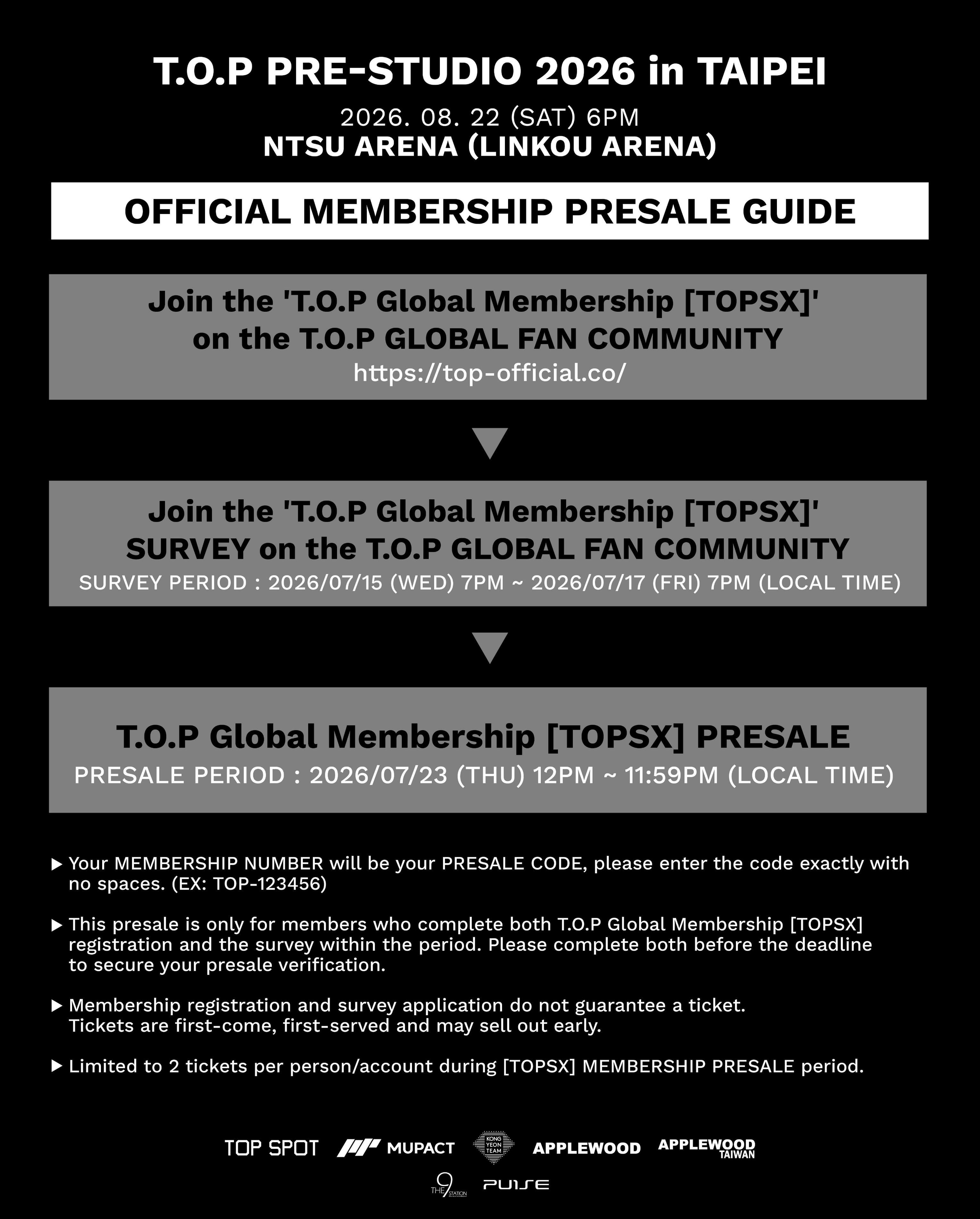
TOPSX OFFICIAL MEMBERSHIP PRE-SALE
Join T.O.P Global Membership [TOPSX]:
https://top-official.co/Official Membership Presale Registration:
July 15, 2026 (Wed) 7:00 PM – July 17, 2026 (Fri) 7:00 PM (Local Time)Official Membership Presale:
July 23, 2026 (Thu) 12:00 PM – 11:59 PM (Local Time)
GENERAL ON-SALE
General Sale Begins:
July 24, 2026 (Fri) 7:00 PM (Local Time)Online Ticketing:
Tixcraft Ticketing System
MORE INFO
Please stay tuned to Applewood Official's social media channels for further announcements.
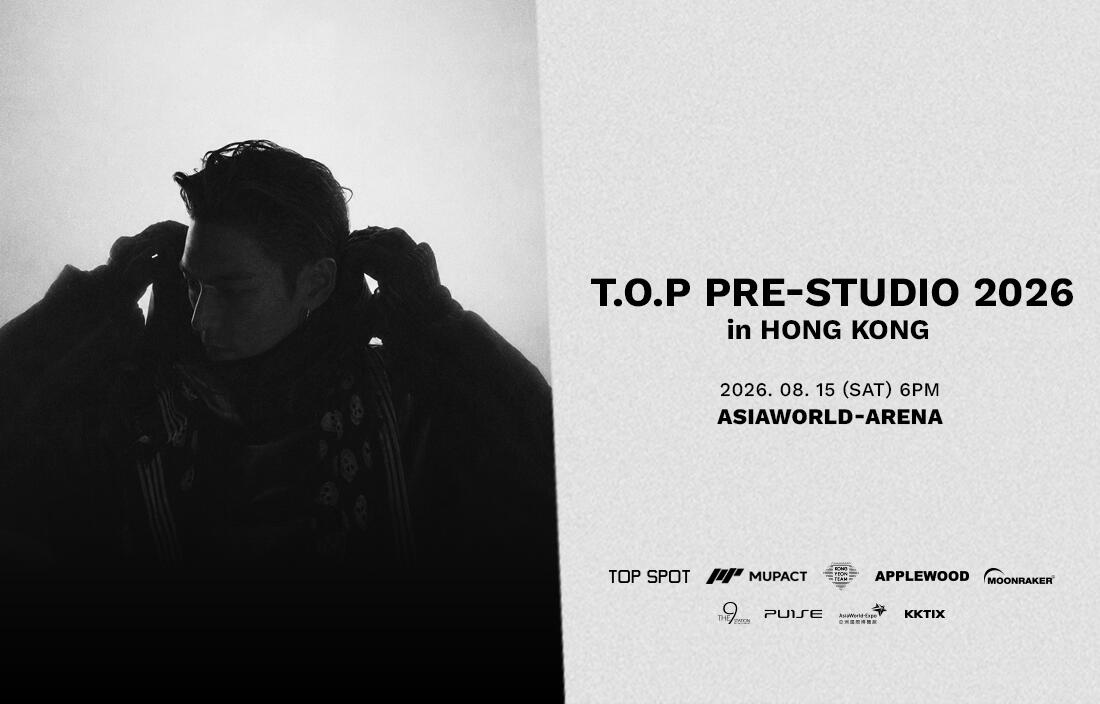
T.O.P PRE-STUDIO 2026 in HONG KONG
2026.08.15 (SAT) 6PM
Event Information
Show Date: Saturday, 15 August 2026
Show Time: 6:00PM
Venue: AsiaWorld-Arena (Hall 1)
Address: AsiaWorld-Expo, Hong Kong International Airport, Lantau Island, Hong Kong
Ticketing Site
Purchase Tickets via KKTIX.com
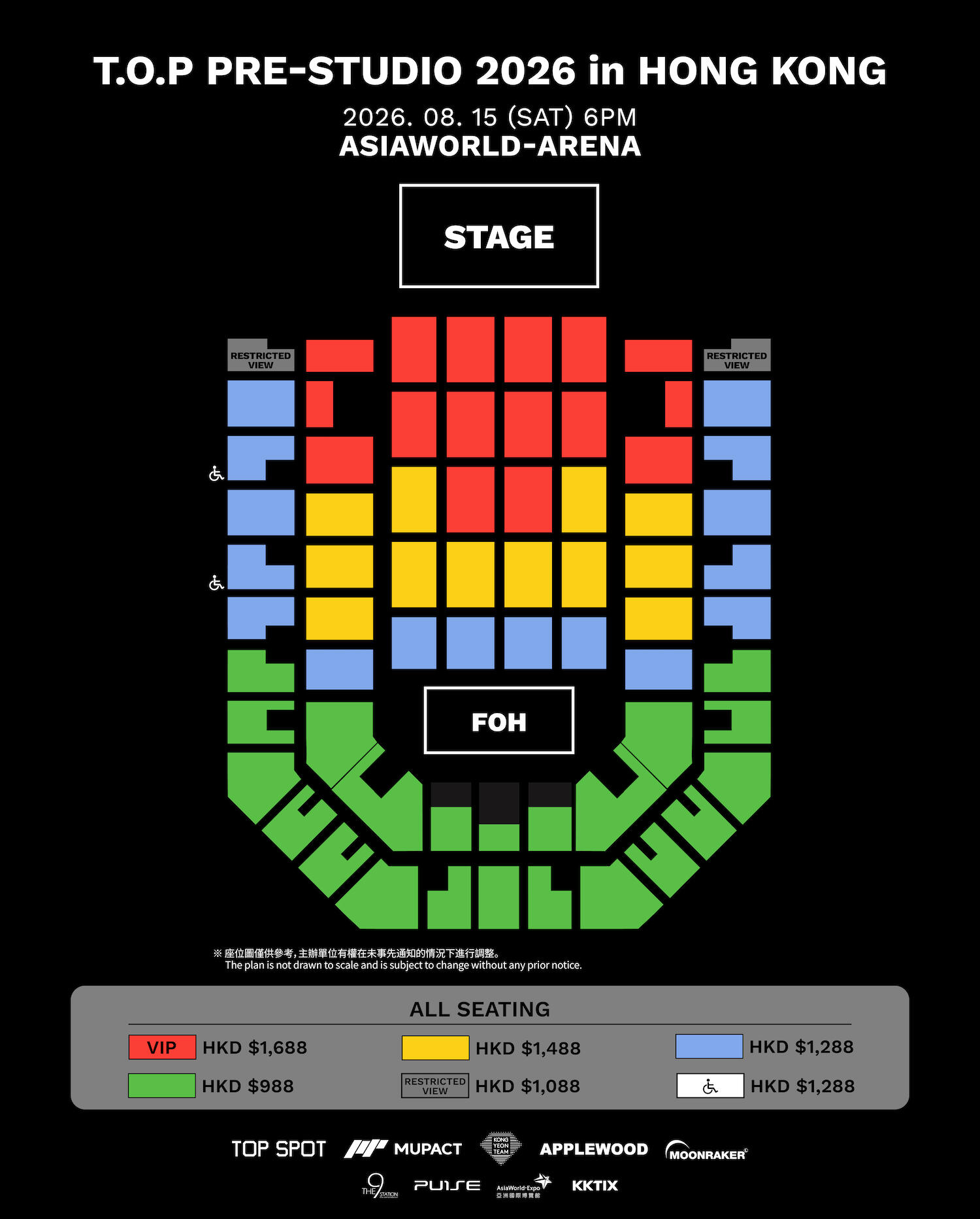
Ticket Prices and Seat Map
Ticket Price
• VIP- HK$1,688
• CAT A - HK$1,488
• CAT B - HK$1,288
• CAT C - HK$988
• Restricted View - HK$1,088
(全場坐位 All Seated)
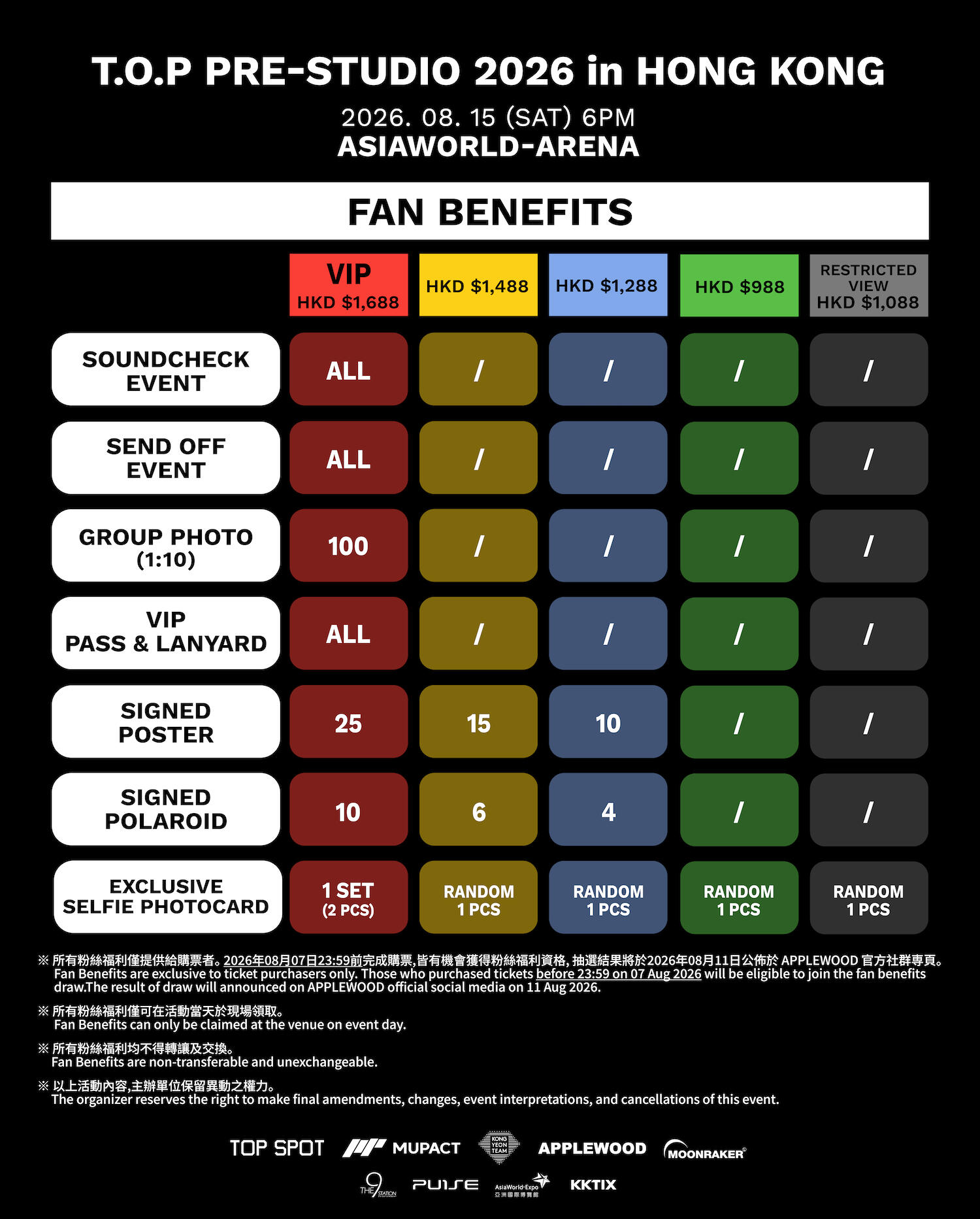
Fan Benefits
Fan benefit activities will be held before or after the show. Ticket holders are advised to pay attention to the announcements by the organizer on social media.
TOPSX OFFICIAL MEMBERSHIP PRE-SALE
T.O.P Official Membership [TOPSX] Presale will be available on KKTIX from: Thursday, July 16, 2026 2:00PM – 11:59PMOnly available for official members who have successfully registered for this presale. Membership number is required for purchasing ticket.
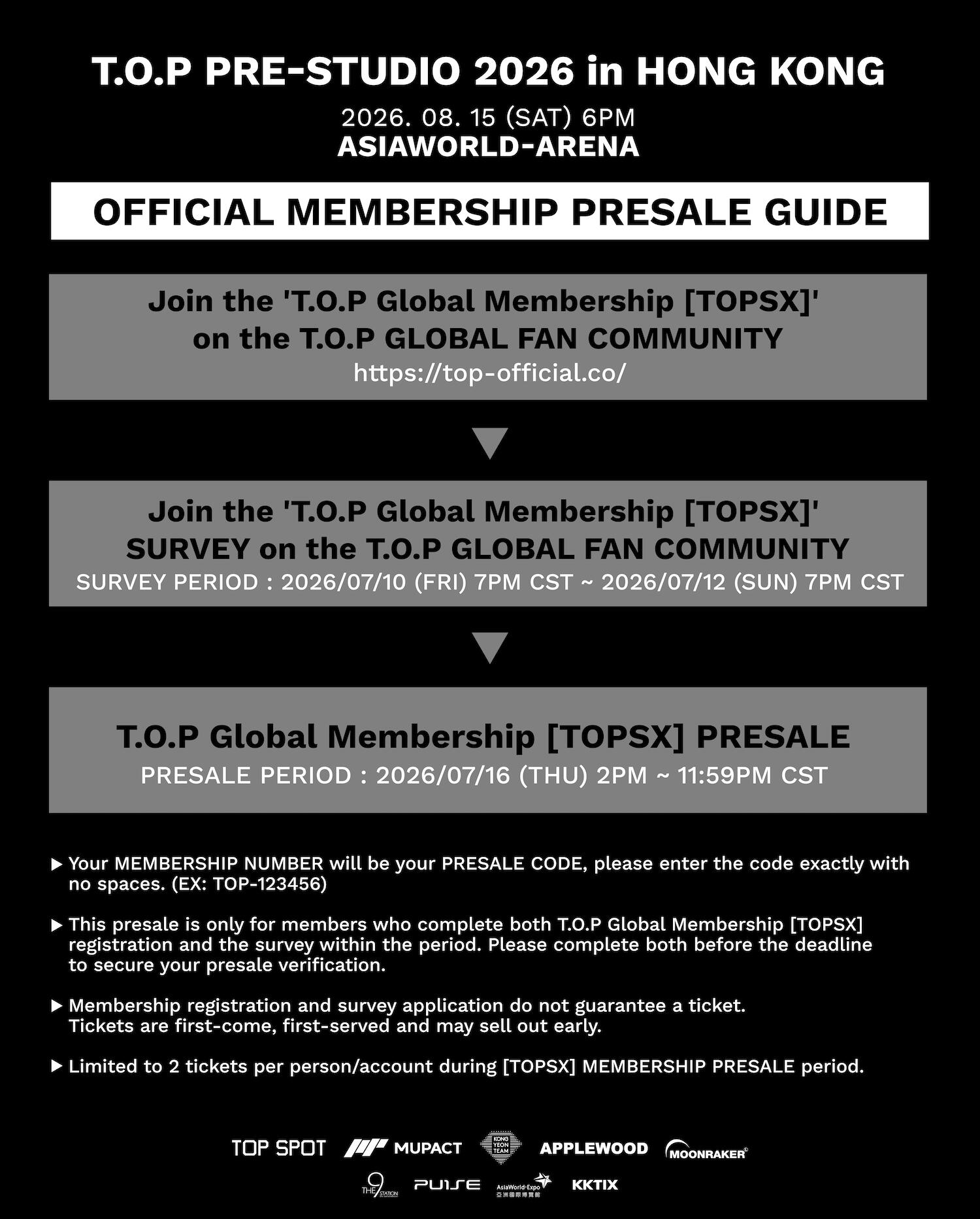
GENERAL SALE
General on-sale will be available on KKTIX from: Friday, 17 July 2026 1:00PM onwards
Dynamic QR Code Notice
1. Ticket holders are required to download the KKTIX App on the App Store/Google Play and present the dynamic QR code in the app for entry.2. Do not take a screenshot of the QR code on the e-ticket. The dynamic QR code will be updating regularly, and any screenshot or printout of the QR code will not be valid for entry.3. The e-ticket transfer function for this event will be available from 10:00AM on 15 August 2026. For transferring tickets to friends or family members, please complete transferring the ticket within the KKTIX App in advance to avoid possible network congestion at the show. If attending together with the ticket holder, you can use the same device to present multiple tickets for entry.
MORE INFO
Please stay tuned to Applewood Official's social media channels for further announcements.
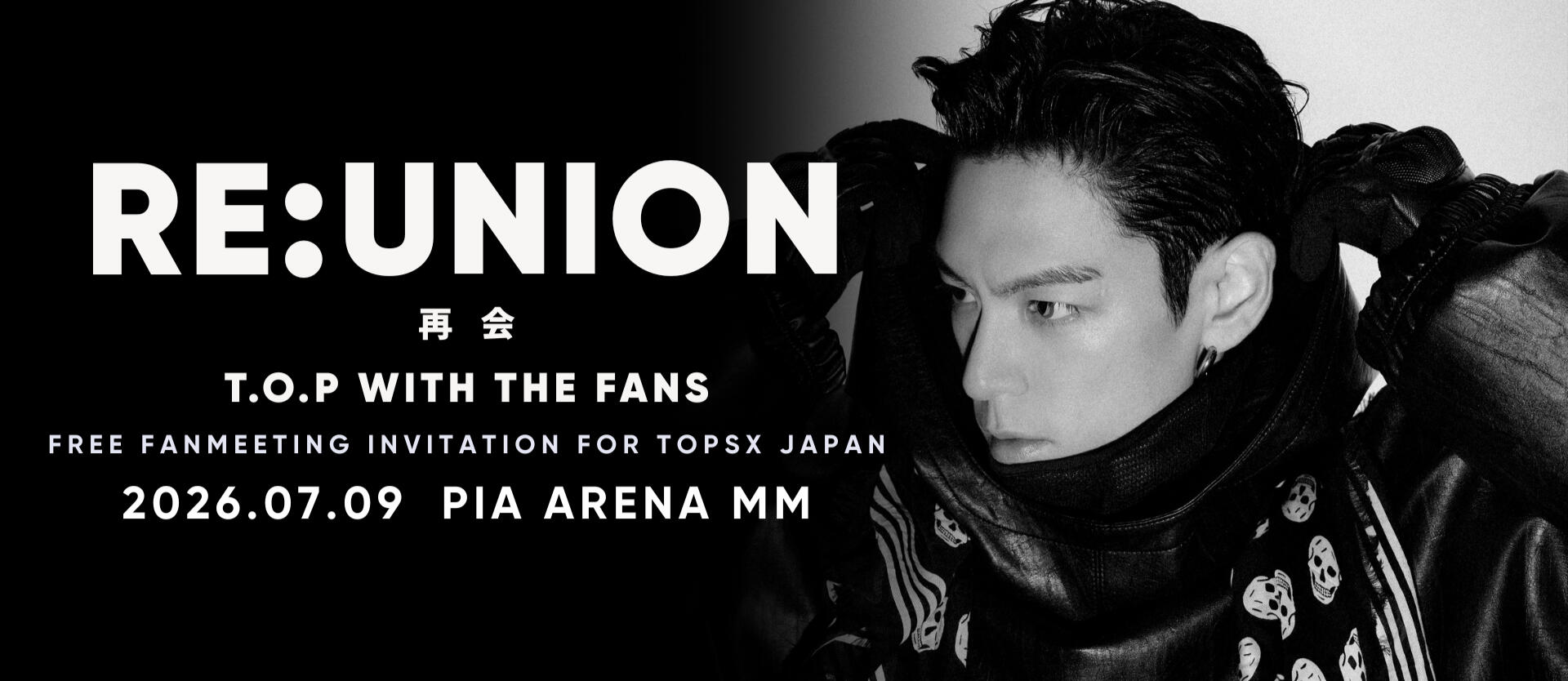
RE:UNION (再会)
T.O.P WITH THE FANS JAPAN FANMEETING 2026

T.O.P: "RE:UNION TOPSX JAPAN +❤️"
via ttt on Instagram [Original Post]
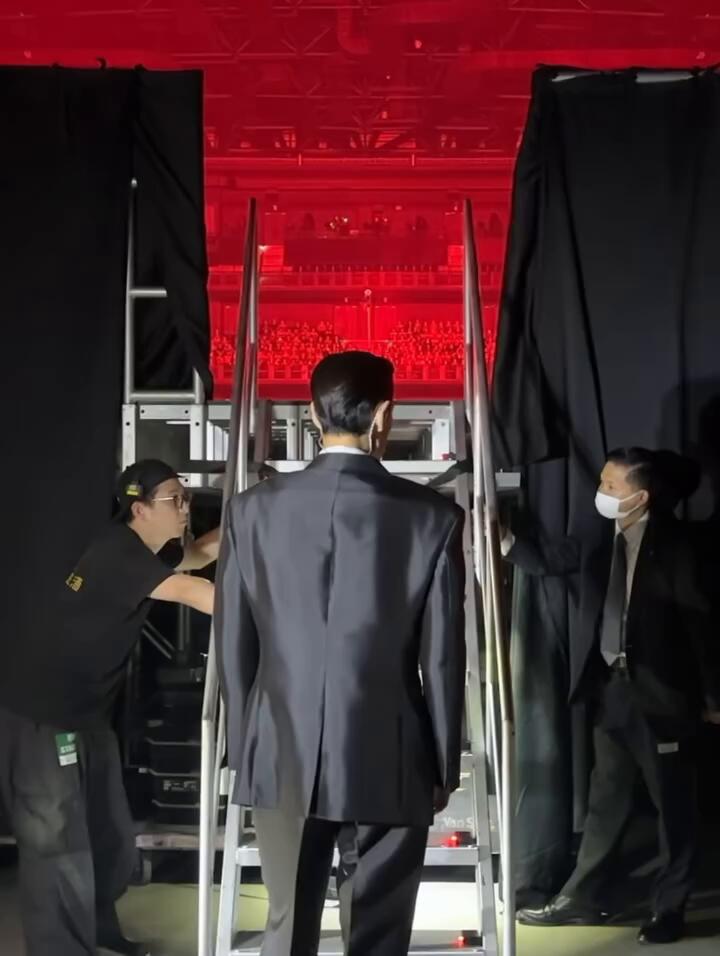
T.O.P: "Thank you for all your love and support, TOPSX JAPAN! ✍🏻"
via ttt on Instagram [Original Post]
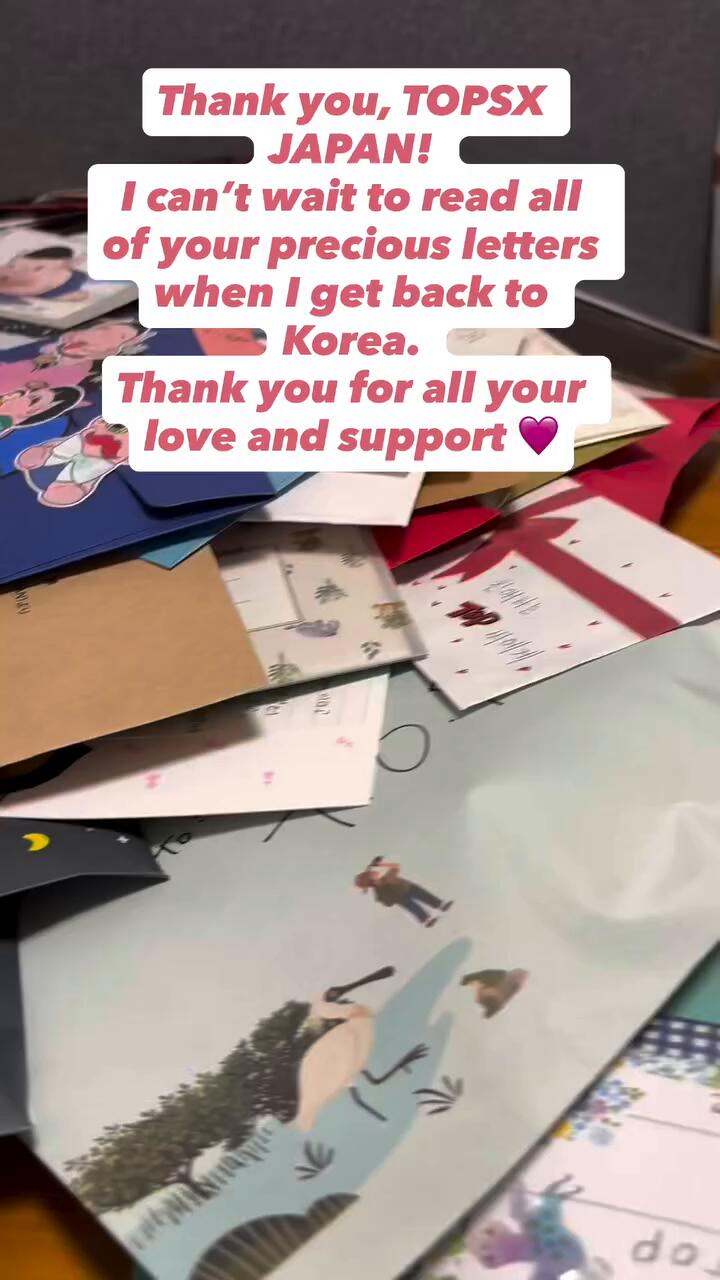
T.O.P: "Thank you, TOPSX JAPAN! I can't wait to read all of your precious letters when I get back to Korea. Thank you for all your love and support 🩷"
via ttt on Instagram Story
Images Courtesy of TOPSX JAPAN, JJ BLISS Entertainment (@jjbliss_official Instagram)


VENUE:
PIA ARENA MM
3-2-2 Minatomirai, Nishi-ku, Yokohama, Kanagawa 220-0012, Japan
FANMEETING RECAP
Article by Ai Tsubota of Elle Japan
JAPAN TRIP MEMORIES
via @ttt Instagram

T.O.P at RE:UNION Rehearsals

T.O.P at RE:UNION Rehearsals

T.O.P at Maezawa-san's Residence in Japan

T.O.P at "Picasso, through the Eyes of Paul Smith" Exhibit presented exclusively in Japan at National Art Center, Tokyo

T.O.P at Maezawa-san's Residence in Japan

T.O.P with his friend, Yusaku Maezawa watching Studio54 + ADHD MV at Maezawa-san's Residence

Stendhal Syndrome MV Preview

T.O.P in Japan

T.O.P with his friend, Yusaku Maezawa

Welcome Home Party for T.O.P, hosted by Yuzaku Maezawa

Welcome Home Party for T.O.P, hosted by Yuzaku Maezawa

T.O.P with his friend Yuzaku Maezawa and his dog Rikyu.

T.O.P with his friend Yuzaku Maezawa

T.O.P with Rikyu.

T.O.P with Rikyu.


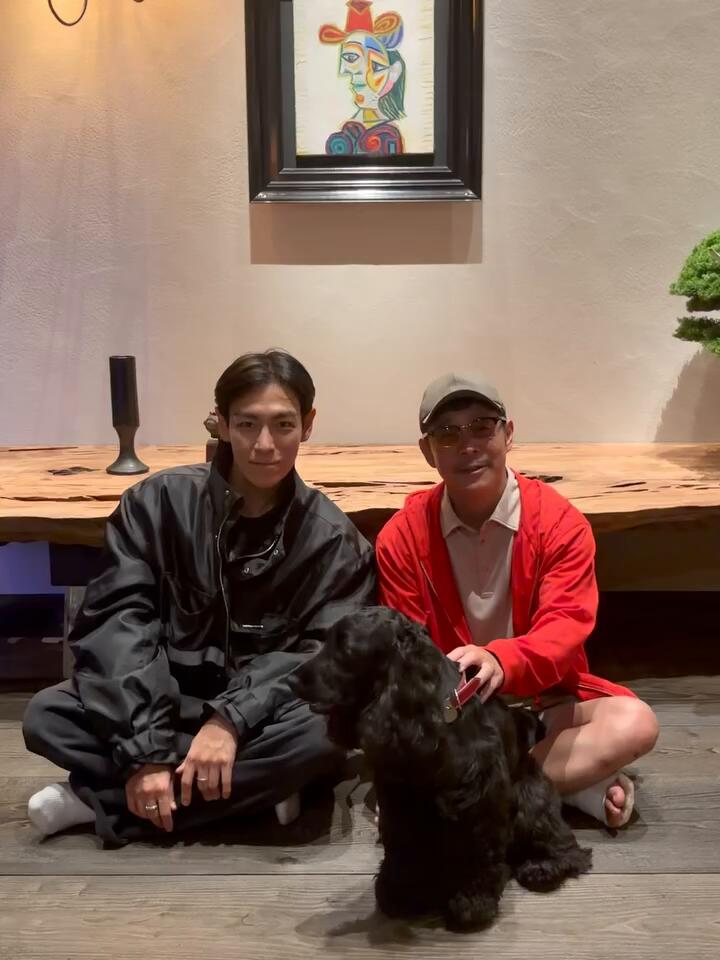
T.O.P and his friend Yuzaku Maezawa with his dog Rikyu.T.O.P came to visit me!!! ✨
It was my first time meeting him, and I was so surprised because… isn't he way too handsome!? 🥹✨On top of that, he was incredibly kind, and I instantly became a big fan of him. ☺️🤍Before I knew it, I was staying by his side the whole time, asking, "Please pet me~ 🥺" and being all cuddly...
He spent so much time playing and bonding with me. 🐶💕T.O.P had his first performance in Japan in about 10 years, and Yusaku was also able to reunite with him after such a long time. He looked so happy!T.O.P, welcome back to Japan after so long!! 🇯🇵✨
Please come visit us again very soon. 🥰🐾
#RikyuT.O.P님, 만나서 정말 반가웠어요! 🤍
It was such a pleasure meeting you, T.O.P! 🤍
또 놀러 와 주세요! 🐶✨
Please come visit us again! 🐶✨via rikyu_the_cocker Instagram
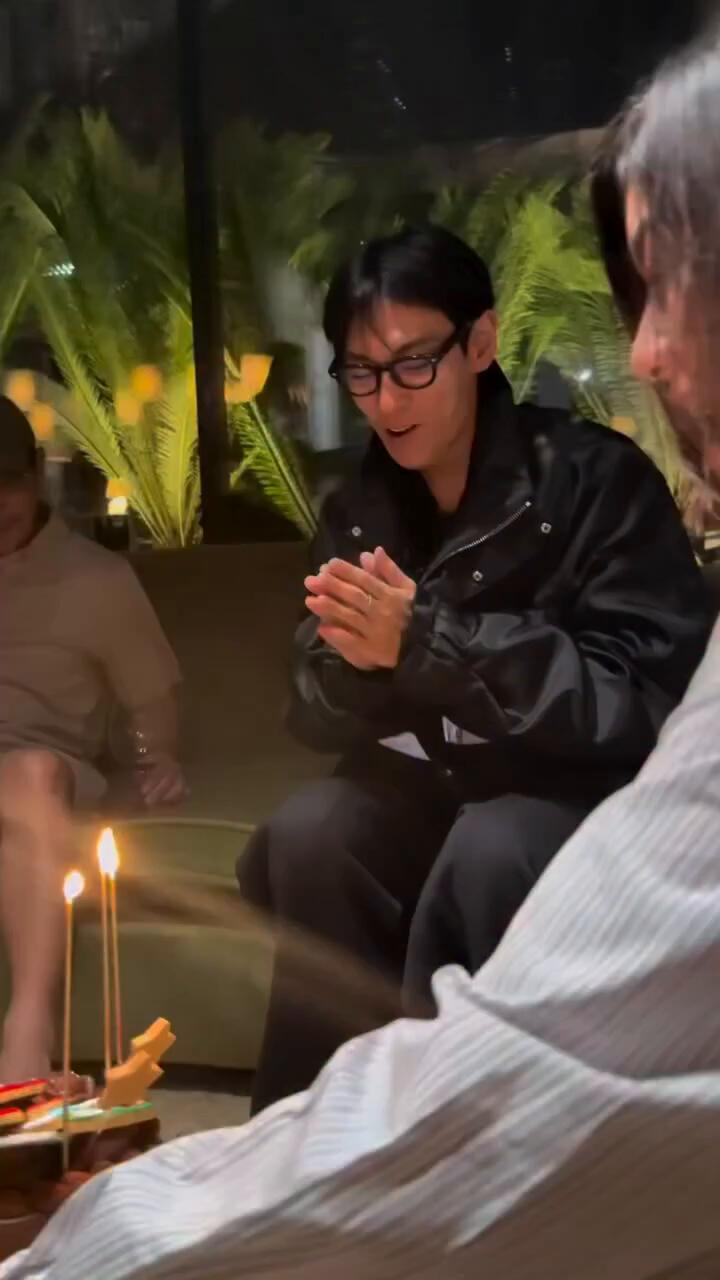
2026.07.12 T.O.P's IG Story 🔝: “ただいま” “ただいま” (I’m home! I’m home!)T.O.P with Yusaku Maezawa and Yuki Terase ☺️
via JJBliss CEO (@_sanha.official_)T.O.P FANMEETING 2026 – RE:UNION –For this special reunion with the fans after 10 years, we spent so much time thinking, planning, and preparing.I can only express my deepest gratitude to everyone who was there with us.Watching him hold back his emotions on stage...
Knowing exactly how he felt, there were so many moments when my heart was overwhelmed with emotion.To my artist, Seunghyun,
who approached everything with such sincerity, dedication, and joy—
thank you so much.Looking at all of you in TOPSX,
I was reminded once again that an artist truly lives because of the love of their fans.Thank you all so very much.
via MC Masayuki Furuya (@furuya_masayuki)At long last, the day finally arrived. 🥹A reunion after 10 years!I had the honor of serving as the MC for "T.O.P JAPAN FANMEETING 2026 – RE:UNION –". 🎤It's impossible to put into words what it felt like to reunite after a decade...The moment I saw him during rehearsal, the excitement and emotion I felt were indescribable.It was enough to make me forget just how long those 10 years had been. 😊The fan meeting went well beyond the scheduled time 😅 and ended up lasting about three hours.As a place for everyone to reunite, I think it couldn't have been a better time. 👍I wonder what kind of stage he'll prepare for his return to Japan this November...I wonder if he got to eat Mouko Tanmen!? ⁉️
Guides and frequently asked questions

RE:UNION T.O.P WITH THE FANS BEST DRESSED AWARD EVENT

RE:UNION T.O.P WITH THE FANS EVENT REGISTRATION GUIDE

RE:UNION T.O.P WITH THE FANS FC SECOND ROUND REGISTRATION

RE:UNION T.O.P WITH THE FANS FREQUENTLY ASKED QUESTIONS

RE:UNION T.O.P WITH THE FANS UPDATED FAQ
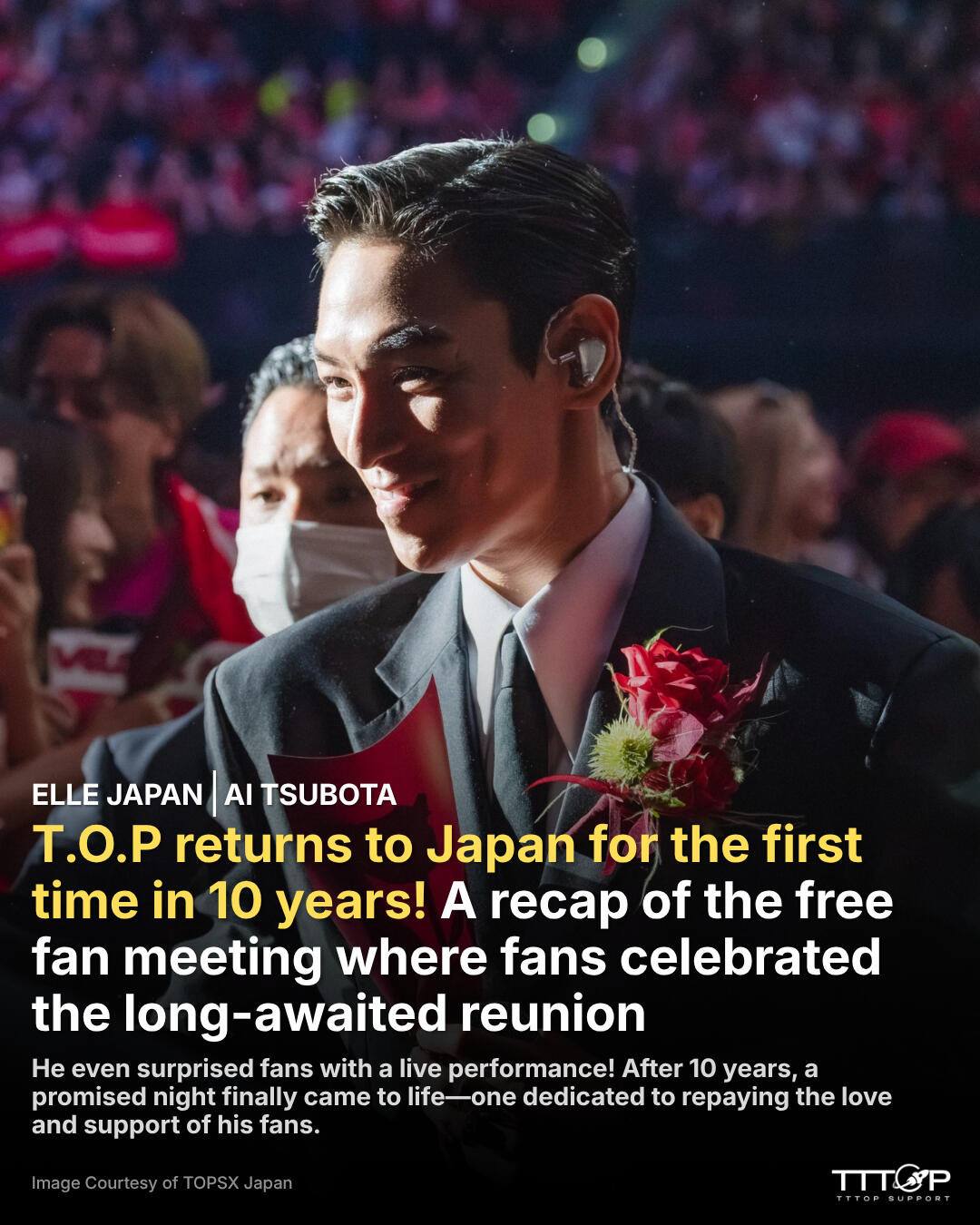
T.O.P returns to Japan for the first time in 10 years!
A recap of the free fan meeting where fans celebrated the long-awaited reunion
By Ai Tsubota | Elle Japan
Translated to English by TTTOPSUPPORT
Original Article: ELLE JAPAN
Release date: July 16, 2026

Former BIGBANG member T.O.P returns to Japan after 10 years! A recap of the free fan meeting where fans celebrated the long-awaited reunion
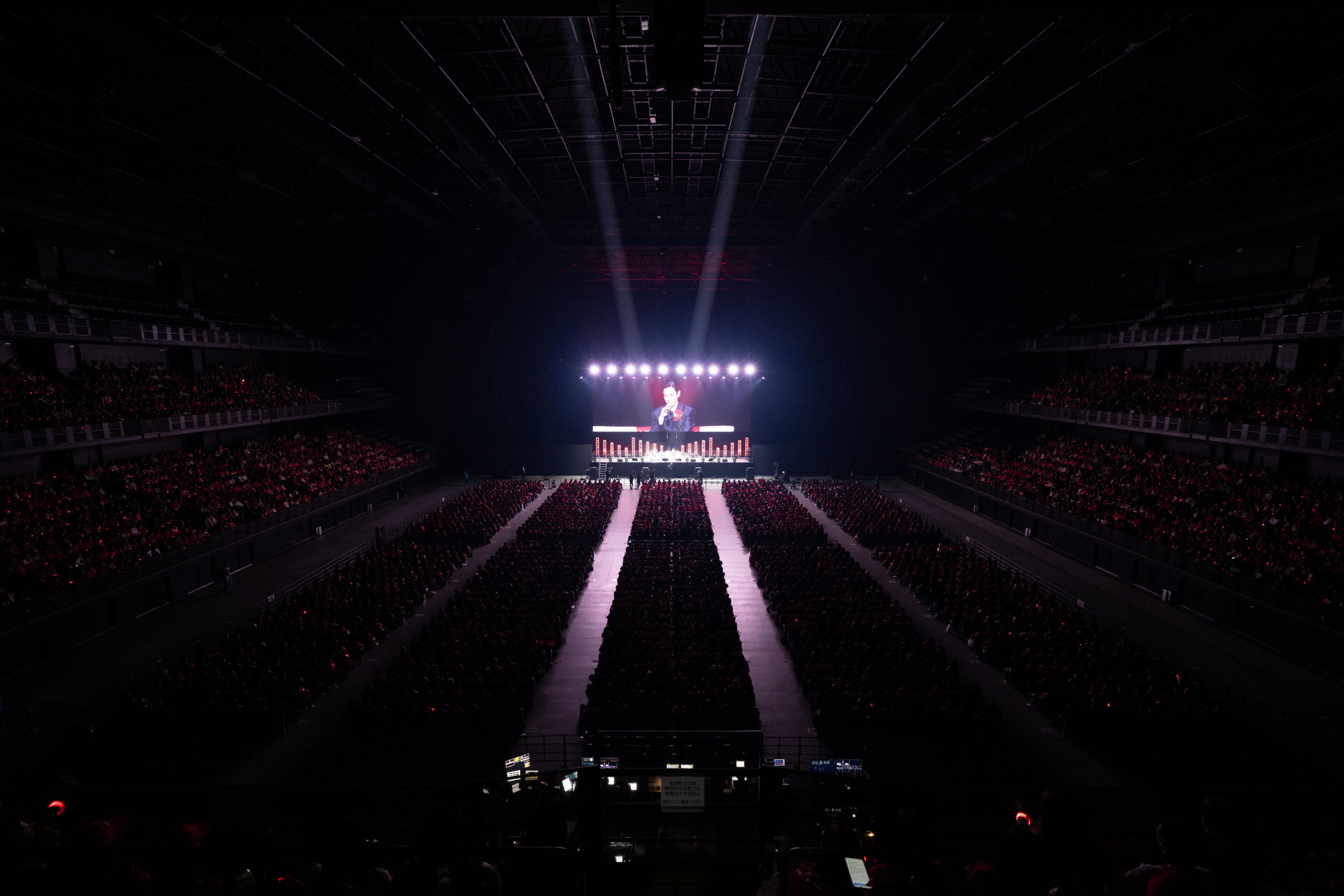
T.O.P, who debuted as a member of BIGBANG in 2006, helped lead the global rise of the K-pop wave with his striking visuals and powerful, distinctive rap style. In recent years, he attracted widespread attention for his role in Netflix's Squid Game Season 2, and in April this year, he released his first solo album in approximately 13 years, TOP SPOT – Multiple Perspectives (ANOTHER DIMENSION).The album's double title track "Studio54," featuring singer and actress Nana in the music video, as well as his YouTube content, have generated significant buzz, further cementing his reputation as a one-of-a-kind artist with a unique creative presence.With the desire to "give tangible thanks for the years of support," T.O.P personally conceived and planned "RE:UNION," a fan meeting held on July 9 at Pia Arena MM in Yokohama. The event was completely free for members of his official Japanese paid fan membership, with every seat offered at no cost.From an engaging talk session and opportunities to interact with fans to a surprise live performance, the event marked T.O.P's first reunion with his Japanese fans in a decade. Here's a look back at the unforgettable fan meeting that celebrated their long-awaited reunion.
A Reunion After 10 Years: Thunderous Cries of "Welcome Back" as T.O.P Reads a Letter to His Fans
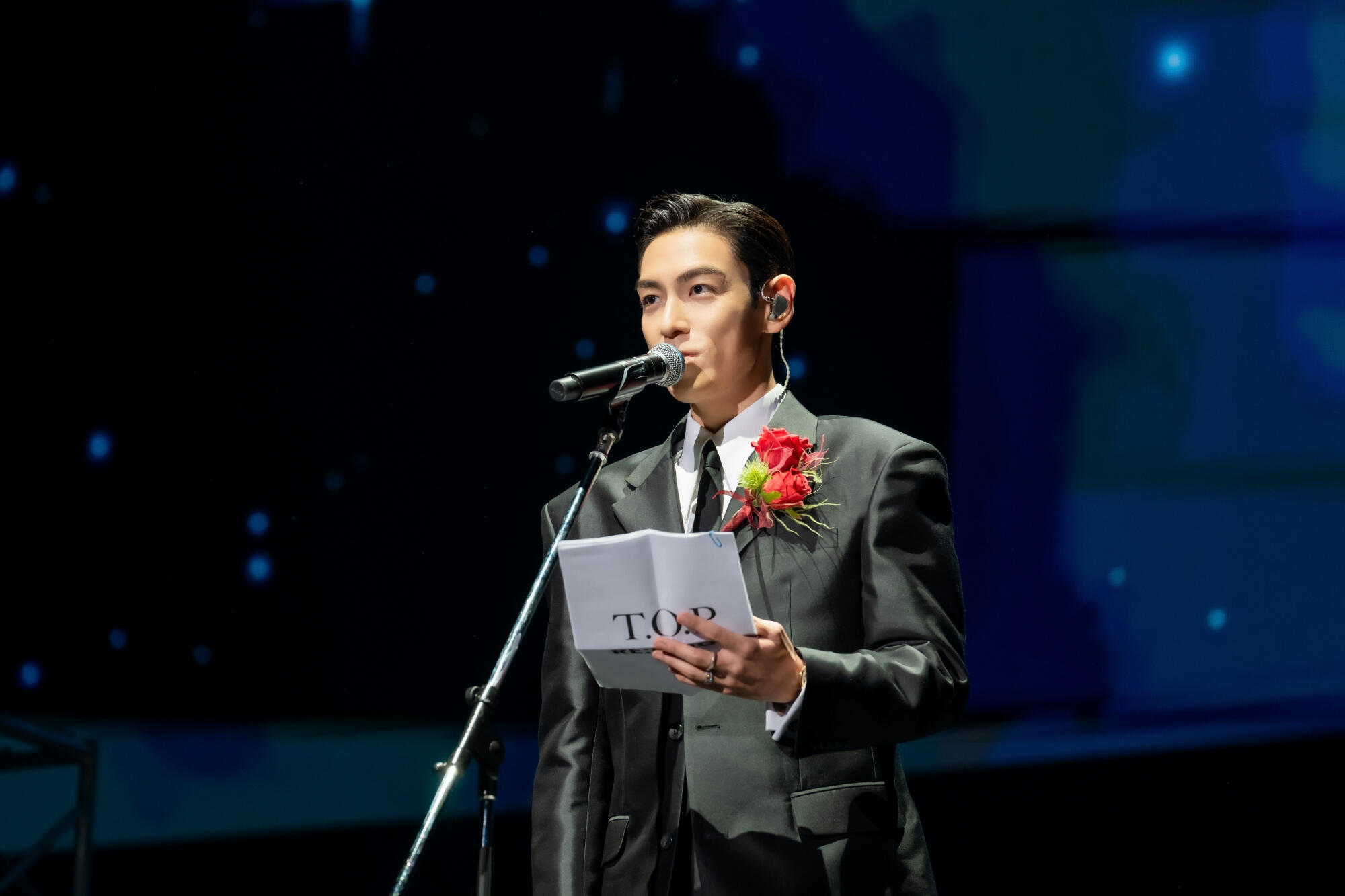
As soon as T.O.P appeared on stage, he was greeted by deafening cheers that seemed to shake the venue. Standing before the microphone, he began reading a letter to his fans in Japanese.
"If there is parting, then there will surely be a reunion. And I will definitely come back. It took me 10 long years to fulfill that promise."
The moment he finished those words, the arena erupted with enthusiastic shouts of "Welcome back!" (おかえりー!)In his letter, he spoke candidly about the past decade and his feelings toward his fans.
"I've spent the last 10 years living simply as one person. At times, I felt free and at ease. But at the same time, they were also years filled with loneliness and solitude. Even so, I wanted to keep the promise I made to all of you. With that one thought in mind, I never stopped making music."
T.O.P continued:
"During the time I spent away from the stage, I came to truly understand, from the bottom of my heart, just how immense and precious the love you all gave me has been."
Then he added:
"The only reason I was able to find the courage to come back once again is because of your unwavering love and support."
Those words were met with warm applause throughout the arena. He continued:
"From now on, I want to repay all of you through my music."
"I don't want to use the word 'reunion' anymore. Because from now on, we'll always be together."
The heartfelt statement drew another wave of cheers from the audience. He then looked directly at his fans and said:
"There is one thing I absolutely wanted to tell you while looking into your eyes. I truly missed you all. And everyone... I'm home."
As he waved to the crowd, the arena echoed with calls of "Welcome home!" and "Welcome back!", creating an emotional close to the moment.After finishing the letter, T.O.P introduced the event’s host, Masayuki Furuya, saying: "My reliable partner, I truly missed you!" Furuya then came on stage, and the two shared a warm embrace. Furuya jokingly exclaimed: "This is T.O.P’s scent!"
A Talk Show Where T.O.P Openly Discussed His Journey So Far and His Latest Album
Next came the talk show, where T.O.P reflected on his 10-year journey and future plans, discussing topics including his long-awaited return to Japan, his latest album TOP SPOT – Multiple Perspectives (ANOTHER DIMENSION), and his appearance in Netflix’s Squid Game.T.O.P revealed that he had spent a great deal of time thinking about what form this long-awaited reunion after 10 years should take. When asked why he was so determined to make the event free, he explained:
"I have many fans around the world, but I especially felt that my Japanese fans quietly continued to believe in me and waited patiently without saying anything. I wanted to give back to them with a sincere heart."
He also shared that he once again felt Japan’s unique atmosphere when arriving at the airport. When asked what Japanese food he had missed, he immediately answered:
"Mōko Tanmen!" (蒙古タンメン!)
He added that because he had been refraining from his favorite wine and alcoholic drinks in preparation for the event, he wanted to enjoy a draft beer together with Mōko Tanmen after the performance was over.Looking back on the past decade, T.O.P said:
"It was a time when I returned to myself, focused on exercising, going back and forth between my home and studio, and concentrating on creating music. It was a period where I pushed myself forward."
He reflected with a smile:
"During that time, I’ve completely become an older man myself."
He then joked with host Masayuki Furuya, saying:
"I want to become a cool ahjussi (older man) like you, Furuya ahjussi!"
Their playful exchange offered a glimpse into their long-standing friendship.T.O.P also shared that, somewhat unexpectedly, his appearance in Netflix's Squid Game had earned him a new generation of fans, many of them elementary school children.When asked why he decided to take on the role, he explained:
"Of course, the script was wonderful, but more than anything, when I looked at the character, I felt that there was a strong connection with the title and concept of the album I had been creating. I decided to take the role because it represented realizing my past mistakes, moving forward, and washing away all of my past trauma."
During the talk session, a surprise interview video recorded on the final day of filming the drama in December 2023 was shown. In the footage, T.O.P said:
"I've been dreaming of this day for two years."
After the video ended, he recreated the rap performed by the character Thanos, whom he portrayed, and struck a finger-heart pose while saying:
"TOPSX JAPAN (the fan name), I like you."
He also revealed that he has been collecting photos of his music-making process and personal life in preparation for his upcoming Asia tour, T.O.P PRE-STUDIO 2026.The conversation then turned to his latest album. Speaking about the mukbang video he filmed with Nana, T.O.P explained that he took on the challenge because he wanted to show a more natural, unfiltered side of himself.
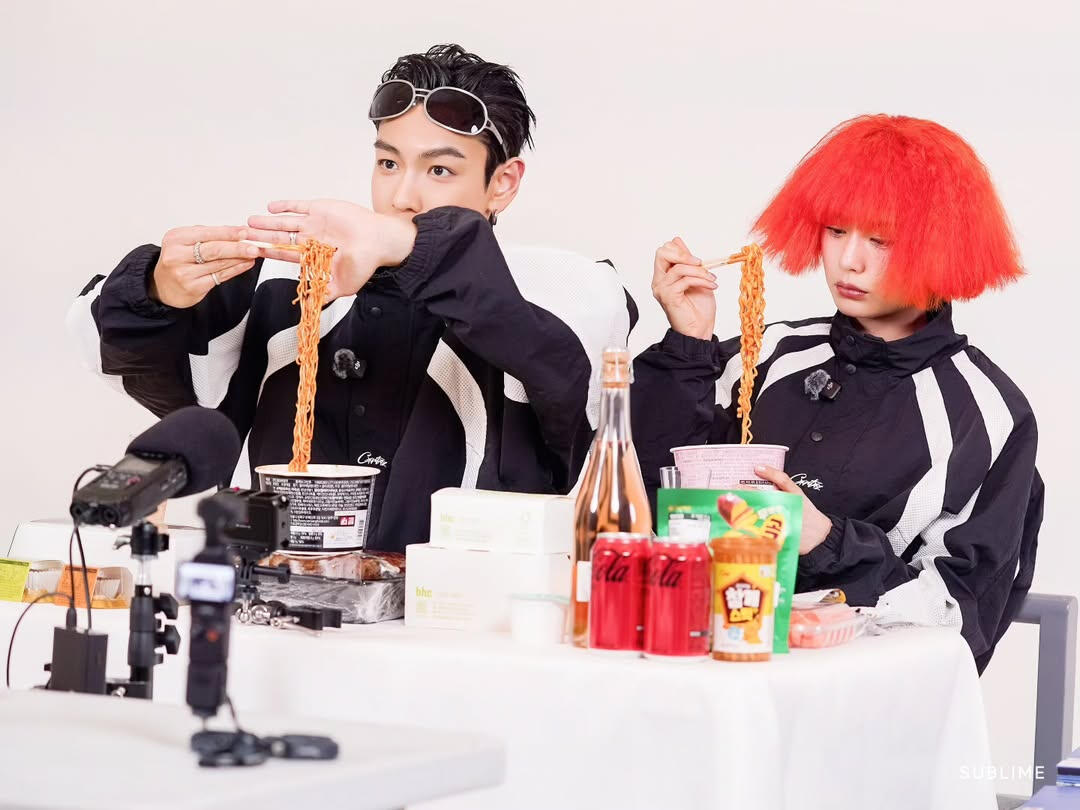
Looking back on the experience, he said:
"Being a YouTuber is really difficult."
When asked whether he would continue making YouTube content in the future, he amused the audience by recreating the classic YouTube catchphrase:
"Please subscribe to the channel, hit like, and turn on notifications."
The crowd erupted in laughter and cheers.T.O.P then jokingly added:
"If everyone enjoys it, should we aim for the Silver Play Button?” (The commemorative award given when a channel surpasses 100,000 subscribers.)
He continued:
"And then I’ll do a mukbang with Furuya-san!"
His spontaneous declaration turned into an unexpected promise (or perhaps a playful challenge!?) that delighted the audience.The latest album features artwork by American contemporary artist Ed Ruscha, with the art direction handled by Chae Kyung-sun, the art director of Squid Game. The project is a work that encapsulates T.O.P’s past 20 years, and he shared his thoughts:
"I created it with sincerity and care, almost like a work of art. I would be happy if fans could see it as a new gift from me to them."
He also revealed that the album itself had actually been completed before he joined Squid Game, and described his encounter with the character Thanos, whom he portrayed, as "fate."Reflecting on having the Squid Game production team involved in the album’s visuals, music videos, and music production, he said:
"I was able to work with true masters who understood my personal vision and the world I wanted to create. I learned so much from the experience."
The lyrics, which at times reveal his emotions through intense and powerful expressions, carry a determination to never return to the person he was in the past.
"I created this album with a new resolve—to expose my shame, face it, and overcome it.”
He continued:
"If you listen to the tracks from 1 through 11 in order, I think you’ll be able to understand the process of how I organized my identity."
At this point, behind-the-scenes footage from the music videos for "DESPERADO" and "Studio54", which had never been publicly shown before, was revealed for the first time. After the footage ended, T.O.P simply remarked: "Professional, right?"Since the album’s release, he had not conducted media promotions or live performances, explaining that this was because:
"First of all, I wanted to show it directly to my fans."
Despite that, he said he was surprised that the songs became global hits.
"This is the power of music."
He added:
"I wanted to step away from the existing promotional system and be judged solely by the power of music. Everything I wanted to say is already contained in the music, so I didn’t feel the need to explain it through interviews or provide additional explanations. I simply wanted people to listen to the music itself."
Regarding his plans for future live performances, T.O.P revealed:
"I felt that after releasing my album, I needed time to fully digest and process it."
He continued:
"When I release my second album, I would like everyone to enjoy it together with my stage performances."
At this point, the animated music video for "STENDHAL SYNDROME" was unveiled for the first time worldwide. The video features Mojiri, a character inspired by T.O.P’s image of himself as a child.When host Furuya pressed him about his future release plans, T.O.P surprised the audience by answering:
"My next album and even my third album are already finished."
The venue erupted in amazement. He then explained the direction of his upcoming work:
"My first album is like a memoir that looks back on my own past, but my second album will be a work created from the perspective of observing the world and the darker aspects of society. It won’t be about my own story, but rather an album that I hope everyone can relate to and understand."
He also teased that the album would be a more "wild and crazy" project with a stronger emphasis on hip-hop elements.
A Surprise Performance at the End! An Outpouring of Fan Service and an Emotional Finale
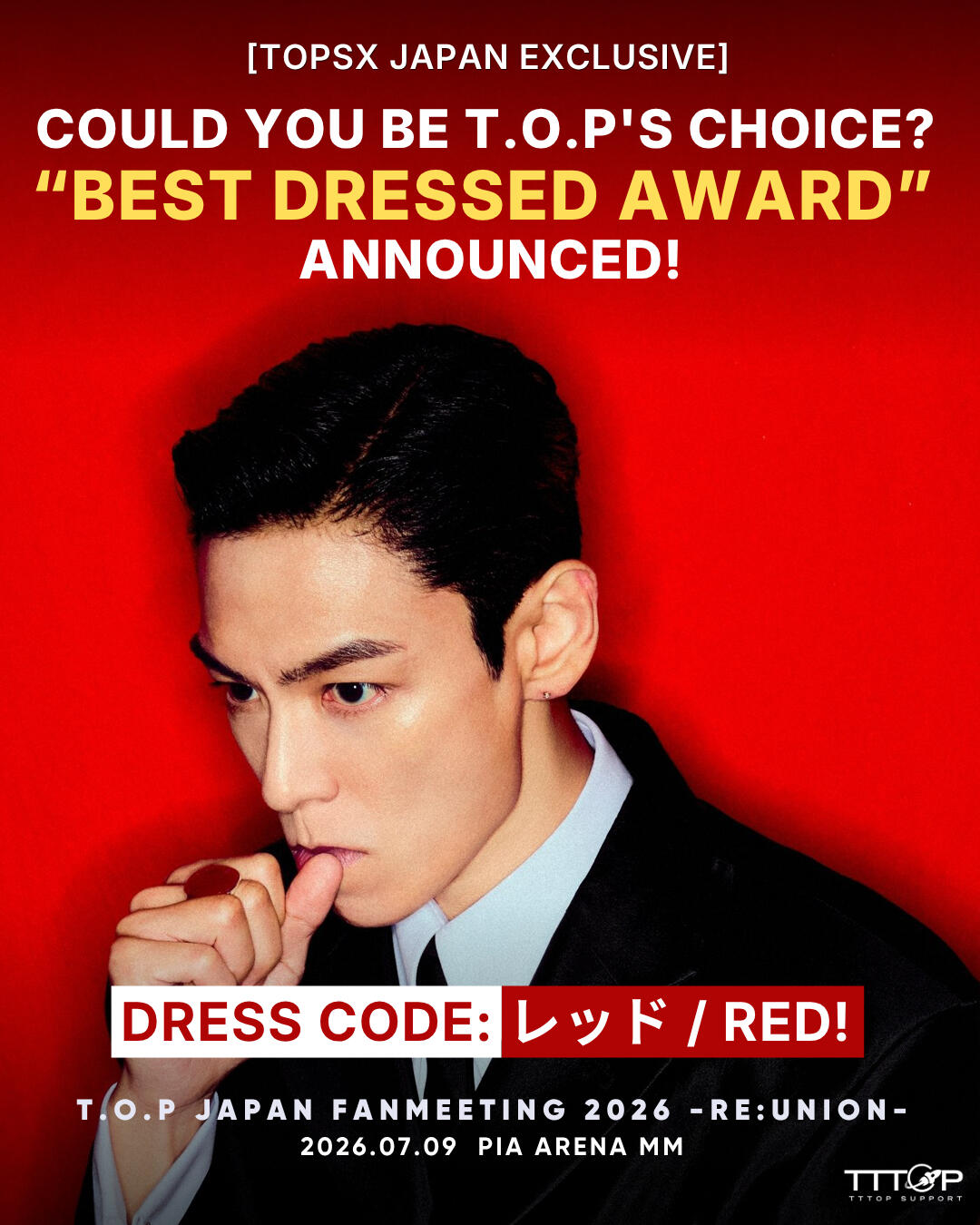
The dress code for the event was "red," inspired by the logo of the fan club TOPSX JAPAN. Seeing fans who had gathered wearing red items, T.O.P said:
"You all look truly beautiful!"
He also shared his hopes for TOPSX JAPAN, saying that he wanted it to become a warm community where fans and the artist could influence one another and create works of art together.T.O.P also mentioned the upcoming domestic release of his own wine brand, "T'SPOT." He shared the exciting news:
"We are working with a Japanese team so that we can offer it to TOPSX JAPAN at an affordable price. We are also preparing a special package, so I hope everyone will look forward to it."
As a surprise for T.O.P, a video message from fans was played. He brought laughter to the venue with his playful response:
"Actually, I had a feeling something like this might happen."
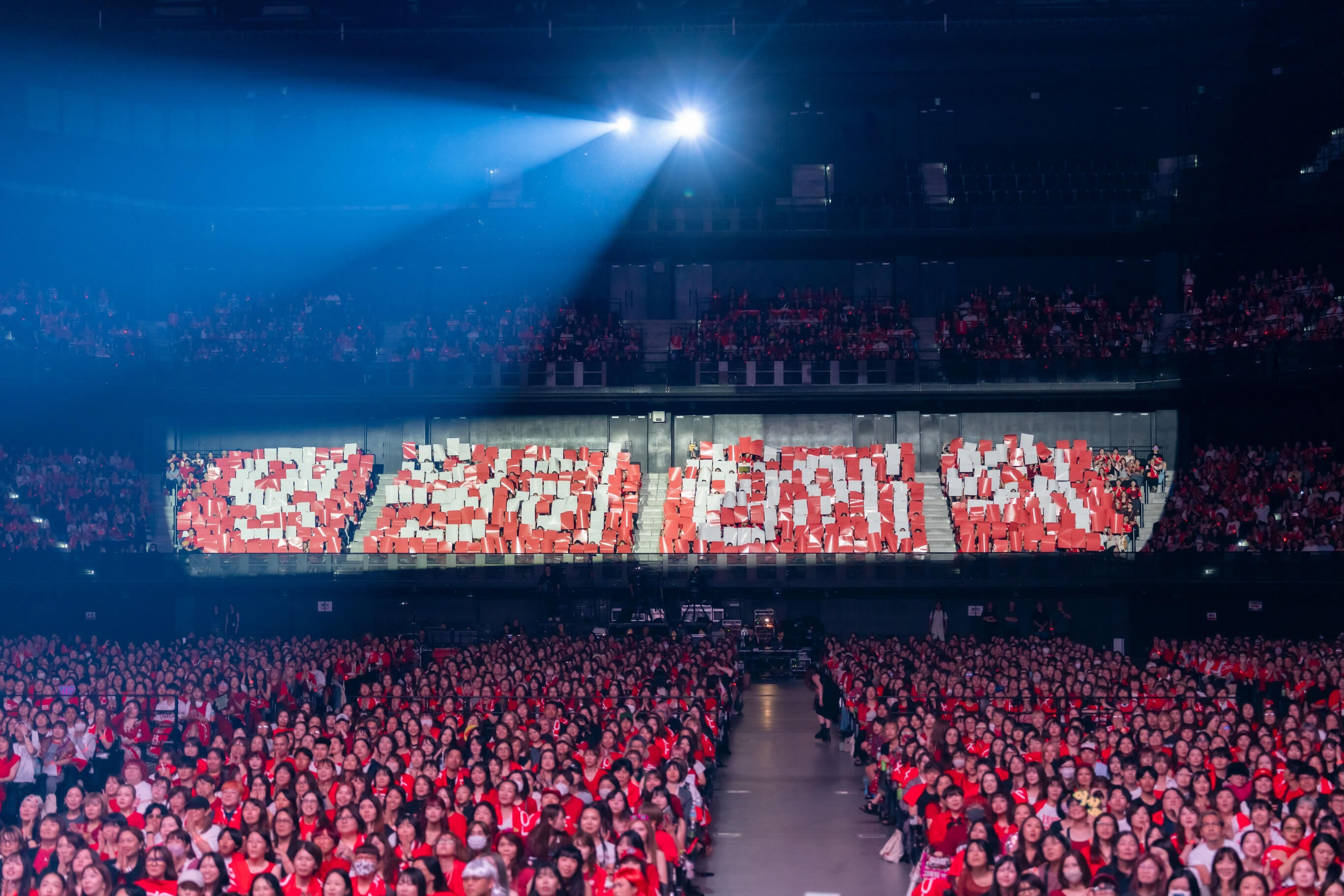
Then, when fans held up a slogan that meant "Together forever", T.O.P was visibly moved and said:
"I never could have imagined this. I’m truly touched. I promise you!"
The fans’ surprise was a huge success, creating an emotional and unforgettable moment to close the event.
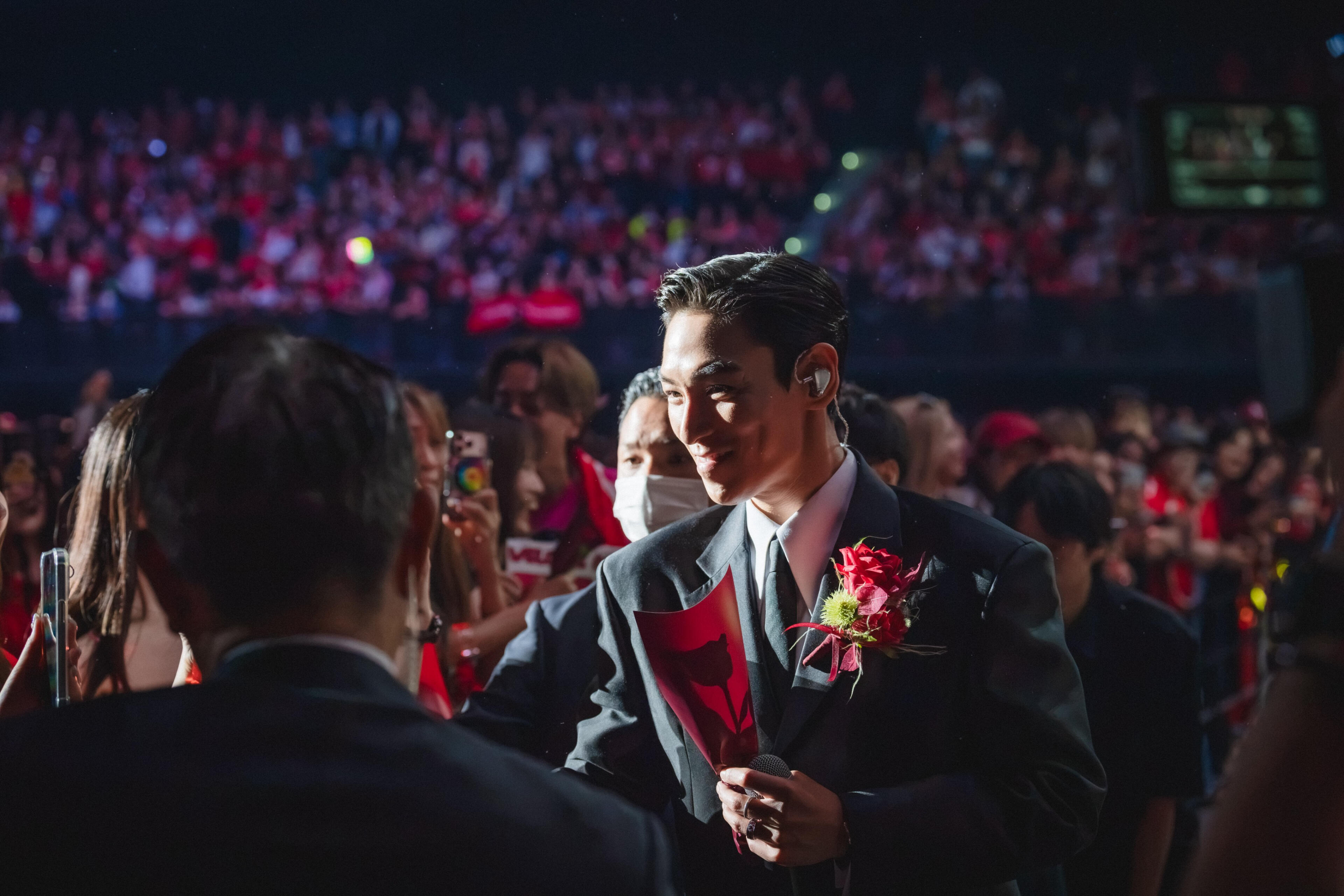
At the end of the fan meeting, T.O.P surprised everyone by walking down into the audience. He enjoyed interacting with fans at an incredibly close distance, including handing out roses. After making his way around the venue and returning to the stage, he delivered a rap performance set to a special mashup of "Studio54" and "Another Dimension Holy Dude !!!!!!!!" (ADHD).The biggest surprise of the day sent the atmosphere in the venue to its peak, with the excitement reaching a fever pitch.After finishing the performance, T.O.P once again went into the audience to greet fans and show his appreciation. He shared:
"I’ve found the courage to keep moving forward again."
Looking ahead to the Japan stop of his Asia tour, scheduled for November 6, his birthday month, he sent fans a heartfelt message:
"Let’s definitely meet again in November."
"TOPSX JAPAN, I love you!"
With those powerful words, he brought an emotional close to the best reunion with his fans in 10 years.
READ THE FULL ARTICLE ON ELLE.COM/JP

T.O.P JAPAN FANMEETING 2026
-RE:UNION-
OFFICIAL MERCHANDISE APP
For TOPSX Japan:


Recommended Operating Environment:
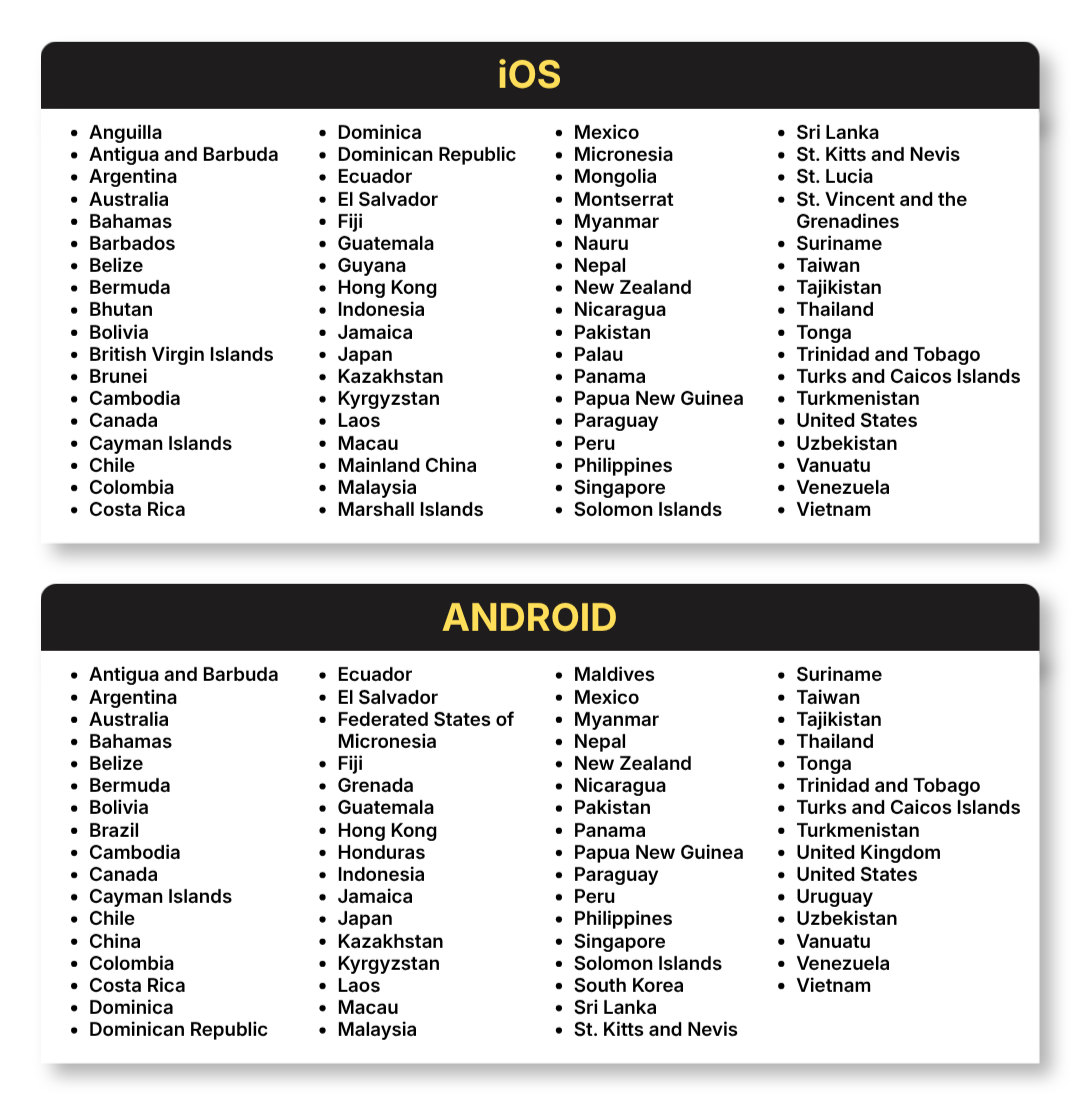
Devices running iOS 15.5 or later and Devices running Android 7.0 or later.
E-Commerce Site For International Fans:
TOPSX STORE - APP VERSION
Detailed List of Supported Countries and Regions
T.O.P JAPAN FANMEETING 2026 -RE:UNION-
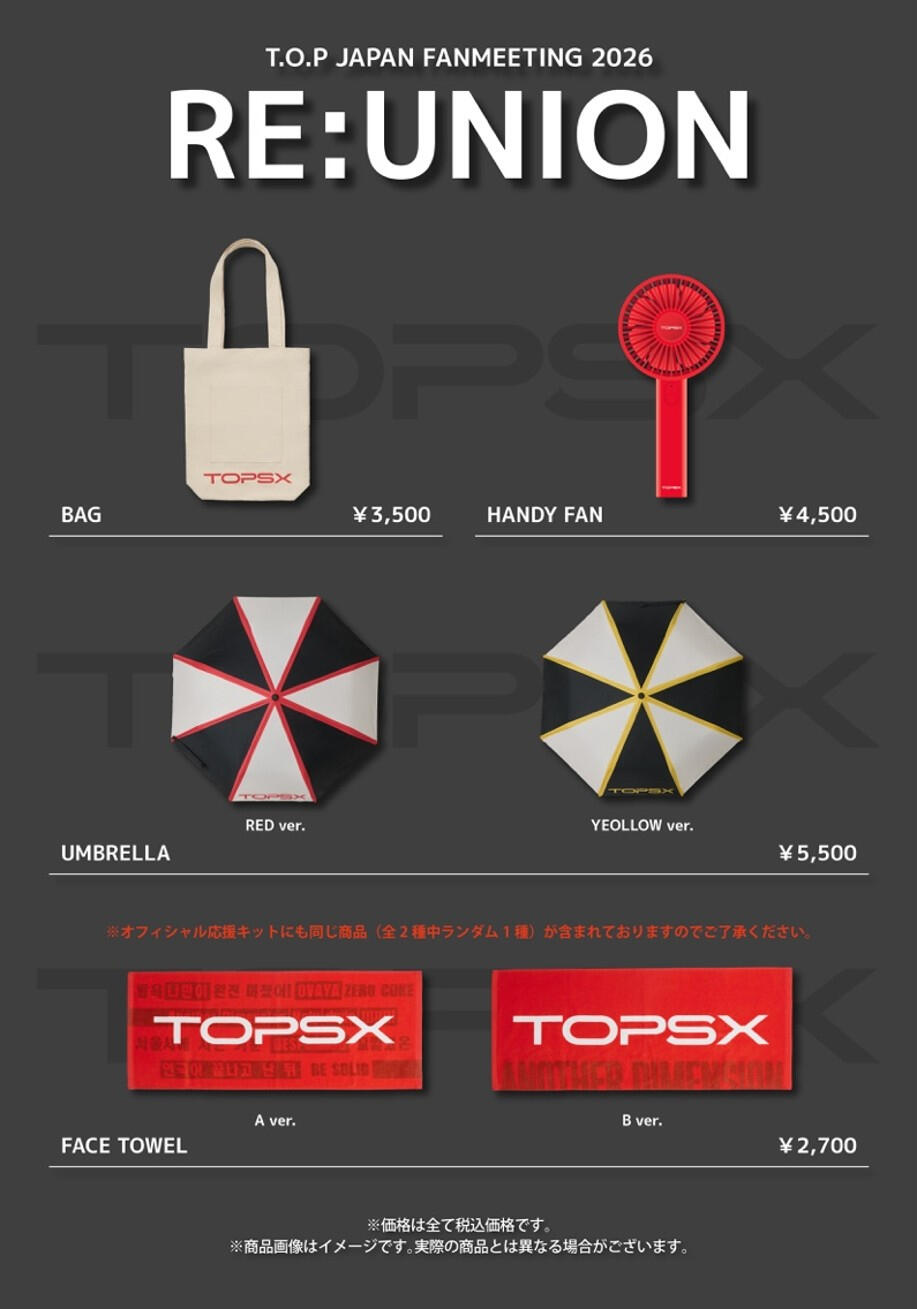
OFFICIAL GOODS
Bag - ¥3,500
Handy Fan - ¥4,500
Umbrella YELLOW Ver. - ¥5,500
Umbrella RED Ver. - ¥5,500
FACE TOWEL_A ver. - ¥2,700
FACE TOWEL_B ver. - ¥2,700
T.O.P JAPAN FANMEETING 2026
-RE:UNION-
OFFICIAL MERCHANDISE APP


GUIDES

TOPSX STORE REGISTRATION GUIDE

HOW TO USE - TOPSX STORE OFFICIAL MERCHANDISE APP


GUIDES

Stationhead Mobile Streaming Guide

Stationhead Web Streaming Guide

Shazam Streaming Guide

TRANSLATIONS AND OTHER CONTENT
NEWS
INTERVIEWS

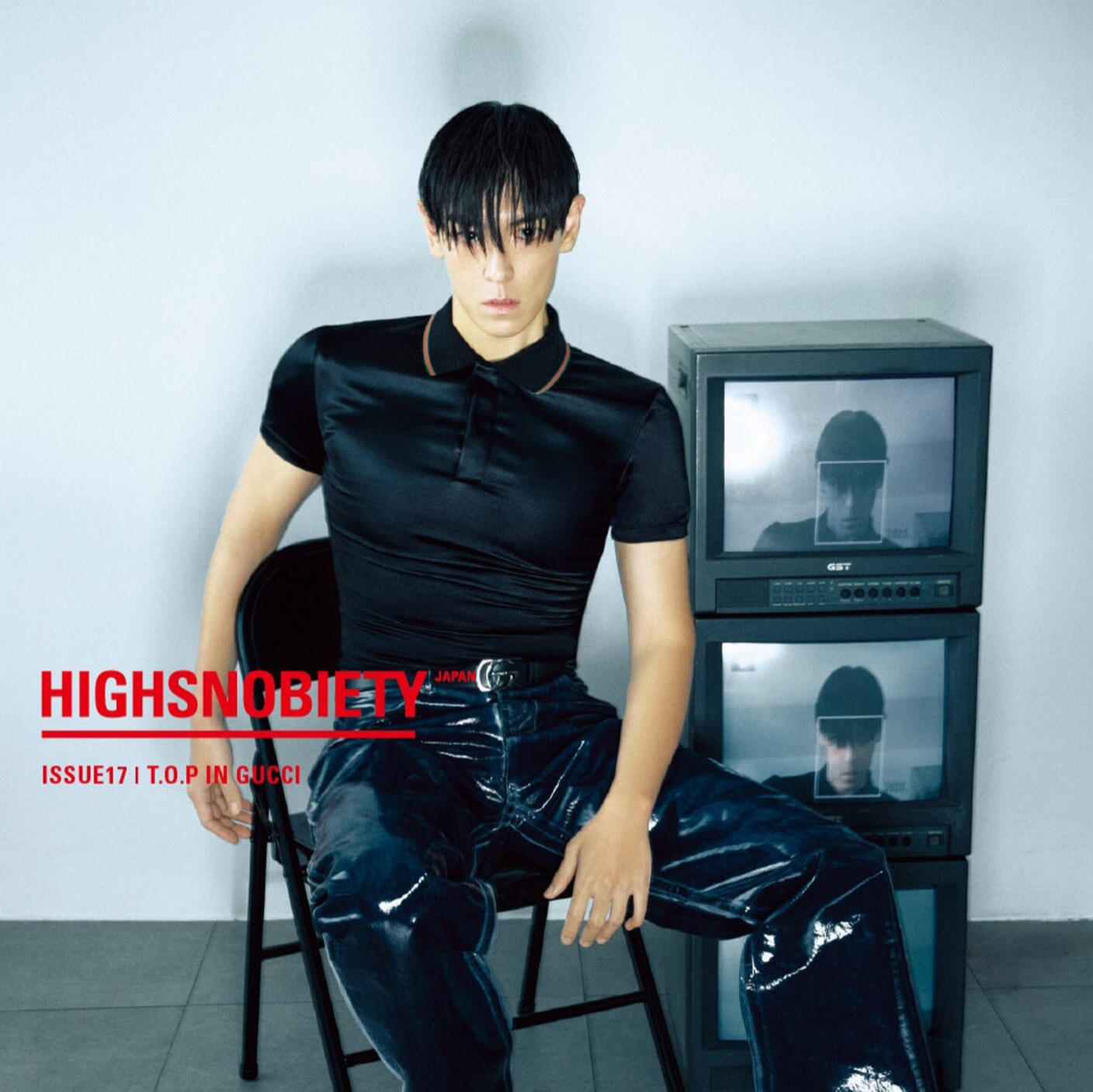
HIGHSNOBIETY JAPAN ISSUE17 SEPTEMBER 2026

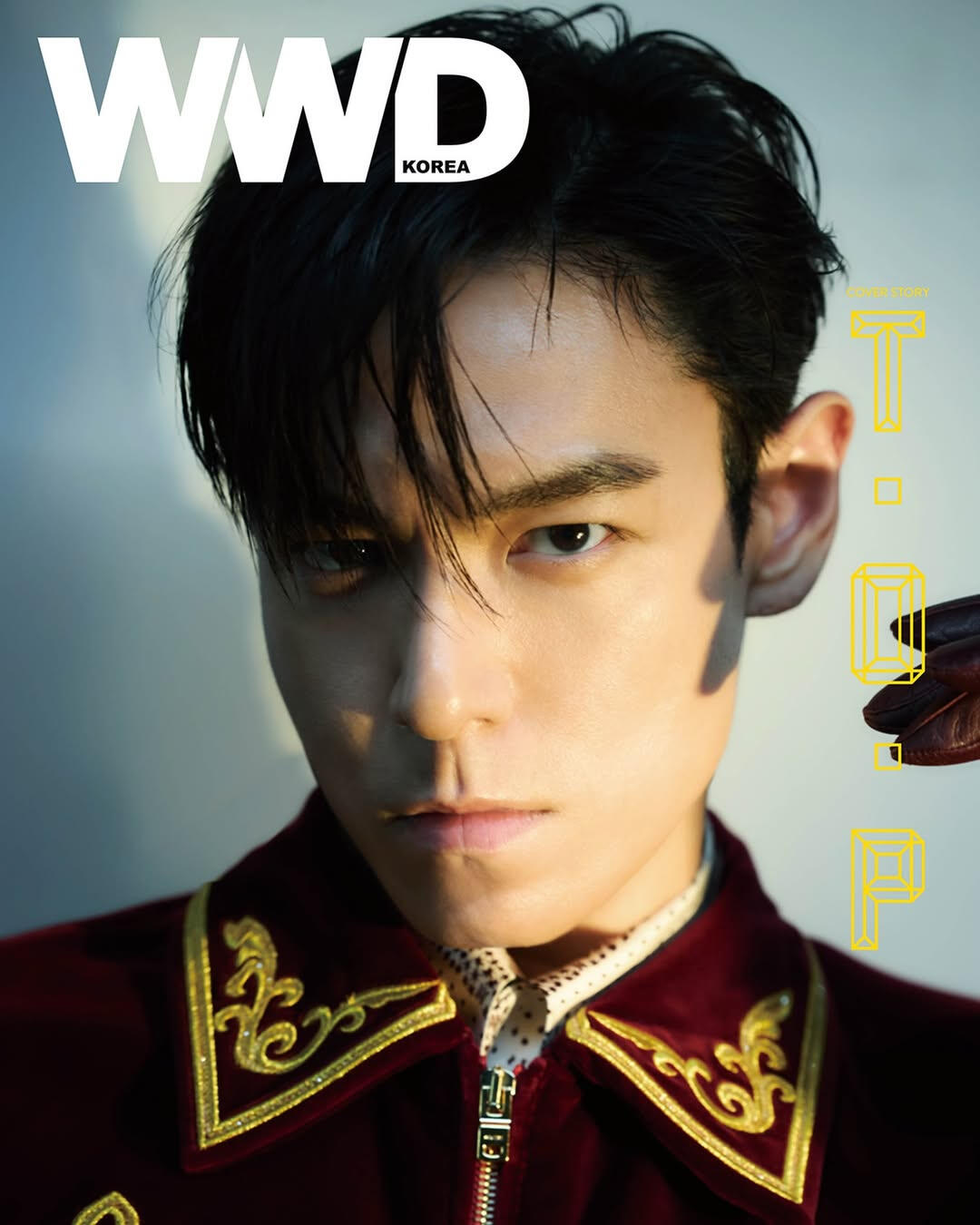
WWD KOREA
MAY 2026 ISSUE![JULY 2026 [Magazine Interviews] GUCCI High Jewelry and High Watchmaking Event in Japan](data:image/svg+xml;base64,PHN2ZyB4bWxucz0iaHR0cDovL3d3dy53My5vcmcvMjAwMC9zdmciIHg9IjAiIHk9IjAiIHZpZXdCb3g9IjAgMCAxMDgwIDEzNTAiIHdpZHRoPSIxMDgwIiBoZWlnaHQ9IjEzNTAiIHByZXNlcnZlQXNwZWN0UmF0aW89Im5vbmUiPjxyZWN0IGZpbGw9IiMxYzE0MTAiIHdpZHRoPSIxMDAlIiBoZWlnaHQ9IjEwMCUiLz48L3N2Zz4%3D)
JULY 2026
[Magazine Interviews]
GUCCI High Jewelry and High Watchmaking Event in Japan
BlueCabinet Magazine’s Interview with Lee Nara
![JULY 2026 [Magazine Interviews] GUCCI High Jewelry and High Watchmaking Event in Japan](assets/images/gallery20/8e69148f.jpg?v=5f2a1415)
OTHER

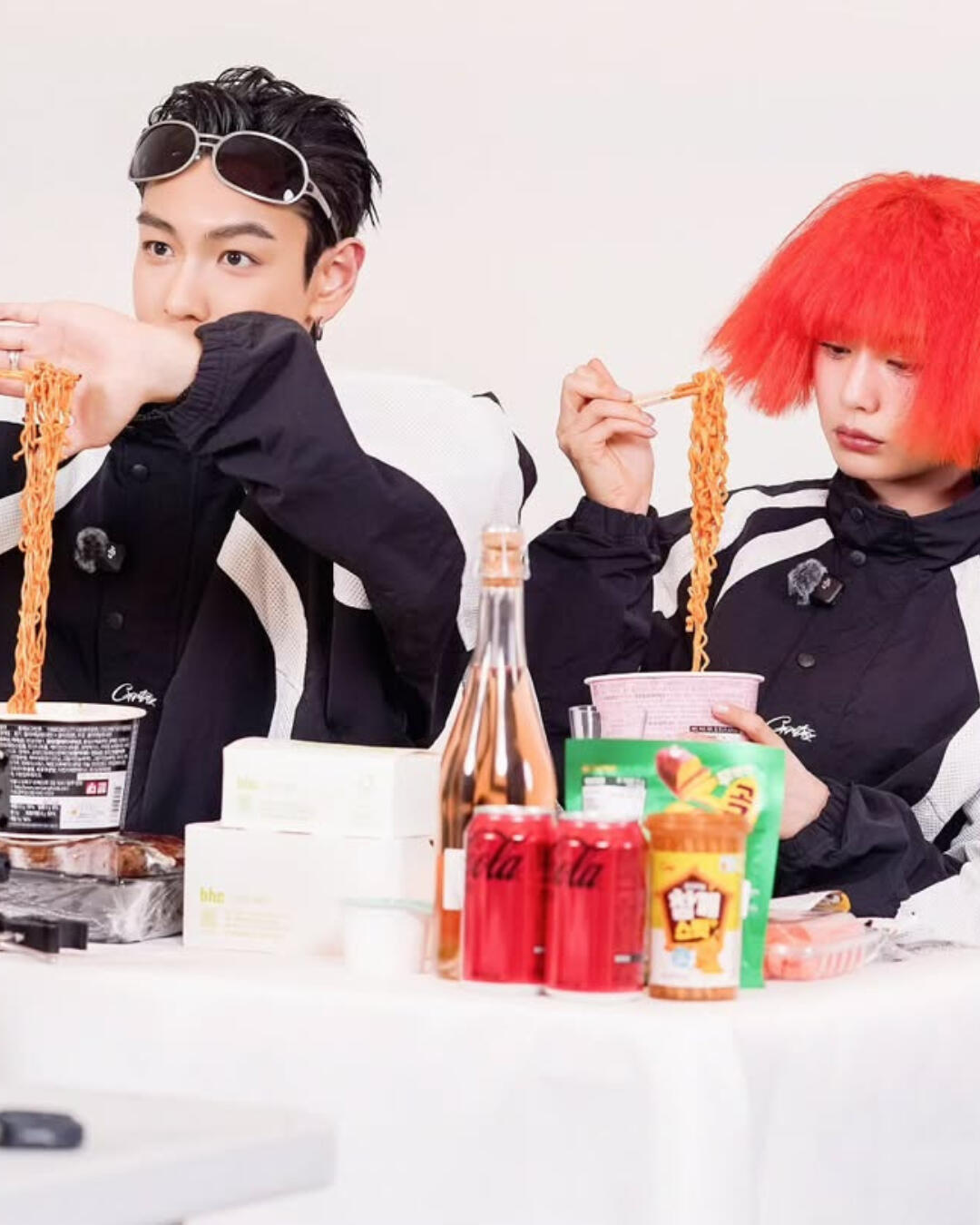
T.O.P, a One-Off YouTuber Ft. NANA
GUIDES
Shazam Streaming Guide


GUIDES
HOW TO USE TOPSX STORE
T.O.P JAPAN FANMEETING 2026 -RE:UNION-
OFFICIAL MERCHANDISE APP

![Venue Pickup [Pay in Advance via the App] Step-by-Step Guide](assets/images/gallery10/b73c80d8_original.jpg?v=5f2a1415 "Venue Pickup [Pay in Advance via the App] Step-by-Step Guide")
![Part 1 Venue Pickup [Pay in Advance via the App] Step-by-Step Guide](assets/images/gallery10/12af7c9a_original.jpg?v=5f2a1415 "Part 1 Venue Pickup [Pay in Advance via the App] Step-by-Step Guide")
![Part 2 Venue Pickup [Pay in Advance via the App] Step-by-Step Guide](assets/images/gallery10/5c250e1e_original.jpg?v=5f2a1415 "Part 2 Venue Pickup [Pay in Advance via the App] Step-by-Step Guide")
![Part 3 Venue Pickup [Pay in Advance via the App] Step-by-Step Guide](assets/images/gallery10/c155d17c_original.jpg?v=5f2a1415 "Part 3 Venue Pickup [Pay in Advance via the App] Step-by-Step Guide")
![Part 4 Venue Pickup [Pay in Advance via the App] Step-by-Step Guide](assets/images/gallery10/56df6fc2_original.jpg?v=5f2a1415 "Part 4 Venue Pickup [Pay in Advance via the App] Step-by-Step Guide")


![Purchasing Random Toys [Venue Pickup] and [Ship Later] Step-by-Step Guide](assets/images/gallery10/b1c75b9d_original.jpg?v=5f2a1415 "Purchasing Random Toys [Venue Pickup] and [Ship Later] Step-by-Step Guide")
![Part 1 Purchasing Random Toys [Venue Pickup] and [Ship Later] Step-by-Step Guide](assets/images/gallery10/883f2b43_original.jpg?v=5f2a1415 "Part 1 Purchasing Random Toys [Venue Pickup] and [Ship Later] Step-by-Step Guide")
![Part 2 Purchasing Random Toys [Venue Pickup] and [Ship Later] Step-by-Step Guide](assets/images/gallery10/c826dcae_original.jpg?v=5f2a1415 "Part 2 Purchasing Random Toys [Venue Pickup] and [Ship Later] Step-by-Step Guide")
![Collecting Your Random Toys [Venue Pickup]](assets/images/gallery10/6b10aa0e_original.jpg?v=5f2a1415 "Collecting Your Random Toys [Venue Pickup]")
![Part 1 Purchasing Random Toys [Ship Later]](assets/images/gallery10/df3f2bf8_original.jpg?v=5f2a1415 "Part 1 Purchasing Random Toys [Ship Later]")
![Part 2 Purchasing Random Toys [Ship Later]](assets/images/gallery10/6cf2adbd_original.jpg?v=5f2a1415 "Part 2 Purchasing Random Toys [Ship Later]")
![Part 3 Purchasing Random Toys [Ship Later]](assets/images/gallery10/465231f7_original.jpg?v=5f2a1415 "Part 3 Purchasing Random Toys [Ship Later]")


GUIDES
TOPSX STORE
T.O.P JAPAN FANMEETING 2026 -RE:UNION-
OFFICIAL MERCHANDISE APP
STEP-BY-STEP REGISTRATION GUIDE


RE:UNION - TOP WITH THE FANS JAPAN FANMEETING 2026
UPDATED F.A.Q GUIDE


RE:UNION - TOP WITH THE FANS JAPAN FANMEETING 2026
"BEST DRESSED AWARD" EVENT


RE:UNION - TOP WITH THE FANS JAPAN FANMEETING 2026
FREQUENTLY ASKED QUESTIONS


RE:UNION - TOP WITH THE FANS JAPAN FANMEETING 2026
EVENT REGISTRATION GUIDE


RE:UNION - TOP WITH THE FANS JAPAN FANMEETING 2026
EVENT REGISTRATION GUIDE


GUIDES
Stationhead Mobile Streaming Guide


GUIDES
Stationhead Web Player Streaming Guide


GUCCI
HIGH JEWELRY AND HIGH WATCHMAKING
EVENT IN JAPAN
2026.07.08
Translated to English by TTTOPSUPPORT
T.O.P has returned to Japan for the first time in nearly a decade.Gucci held its High Jewelry & High Watchmaking event, welcoming T.O.P from South Korea as a special guest. They spoke with him about his favorite design details and what he hopes to do during his stay in Japan.
Vogue Japan
Original Post
Subbed by TTTOPSUPPORT
T.O.P: Hello Vogue Japan! I’m TOP!Q: What’s the secret to wearing jewelry confidently while keeping a cool look?T.O.P: I think it really depends on the type of jewelry, though. I think it’s all about balance. Like the jewelry I’m wearing today. If you’re wearing bold, glamorous jewelry like this, it’s best to keep your outfit a little more understated. I think balance is the most important thing in everything.Q: Is there a piece of jewelry that holds a special memory for you?T.O.P: I would say the jewelry I’m wearing today, of course. I think it’s probably the one that has left the deepest impression on me.Q: What would you like to eat while you’re visiting Japan?T.O.P: It depends on the time and the occasion, but today I feel like eating soba.
FASHIONSNAP
Original Post
Subbed by TTTOPSUPPORT
T.O.P: Hello, I’m T.O.P!Q: What detail of today’s look do you especially like?T.O.P: The leather jacket I’m wearing today and I really love the contrast between Gucci’s ‘Labirinti’ piece and the ring.Q: Is there anything you’d like to do while you’re in Japan?T.O.P: It’s been about 10 years since I last visited Japan. Tomorrow, I finally have my fan meeting. When I think about being able to meet my fans soon, I feel very excited. I can’t wait to see everyone. Thank you!
WWD Japan
Original Post
Subbed by TTTOPSUPPORT
T.O.P: Hello WWD!, I’m T.O.P!Q: What are your favorite pieces from Gucci’s high jewelry and high watch collections?T.O.P: It’s this watch I’m wearing today. The design of the dial is really cool. I find myself looking at it over and over again.Q: What do you value most when choosing jewelry and watches?T.O.P: Jewelry and watches that are appropriate for the occasion. It’s about wearing pieces that are right for the occasion. And also choosing accessories that suit me. I think that’s an important point.
Harper's Bazaar Japan
Original Post
Subbed by TTTOPSUPPORT
T.O.P: Hello Harper’s Bazaar Japan! I’m T.O.P!Q: Please share a message for Bazaar readers who want to shine in their own unique way.T.O.P: For everyone who wants to shine in their own way, I hope you’ll listen to my album ANOTHER DIMENSION. I believe it will help you shine brightly.Q: Other than reuniting with your Japanese fans, what is on your bucket list that you would like to accomplish during this visit?T.O.P: The first item on my bucket list is to meet my fans in person. The second item on my bucket list is to meet up with my artist friends whom I haven’t had the chance to see in Japan before. Although my stay this time isn’t very long, I hope I can see them, even if it’s only for a little while. I want to spend time with my friends.
Esquire Japan
Original Post
Subbed by TTTOPSUPPORT
T.O.P: Hello Esquire Japan! I’m T.O.P!Q: If you had to describe Gucci’s High Jewelry & Watch Collection in one word today, what would it be?T.O.P: Seeing the high jewelry in person, you realize it’s more than just jewelry—you witness extraordinary craftsmanship and astonishing attention to detail. I was deeply inspired.Q: When you visit Japan, are there any aspects of its art or design that particularly inspire or influence you?T.O.P: Every time I come to Japan, I find myself looking at all the buildings and architecture. I feel that I’m influenced by it in countless ways. I also visit galleries and museums in Japan, where I discover a wide variety of artworks and gain a great deal of inspiration from them.Q: Are there any artworks that have particularly impressed you recently, or any Japanese artists you’ve been interested in?T.O.P: Of course, there is Professor Kohei Nawa, with whom I have had a close relationship for many years. As I experience his recent performances and sculptural works, I have tremendous respect for the way he continues to create one extraordinary work after another.Q: Finally, could you share a few words with your fansT.O.P: To all my fans, I’m back in Japan for the first time in 10 years. Tomorrow, I’ll be holding a fan meeting, and I hope to spend a wonderful time together with all of you, meeting you face-to-face. I would be happy if we could spend this precious time together.T.O.P: I hope you’ll look forward to it. Thank you.
TOP SPOT - [ANOTHER DIMENSION]
OFFICIAL LINKS
Support T.O.P by streaming his first studio album, purchasing physical copies, and sharing his music with others worldwide 🩵
Watch on YouTube
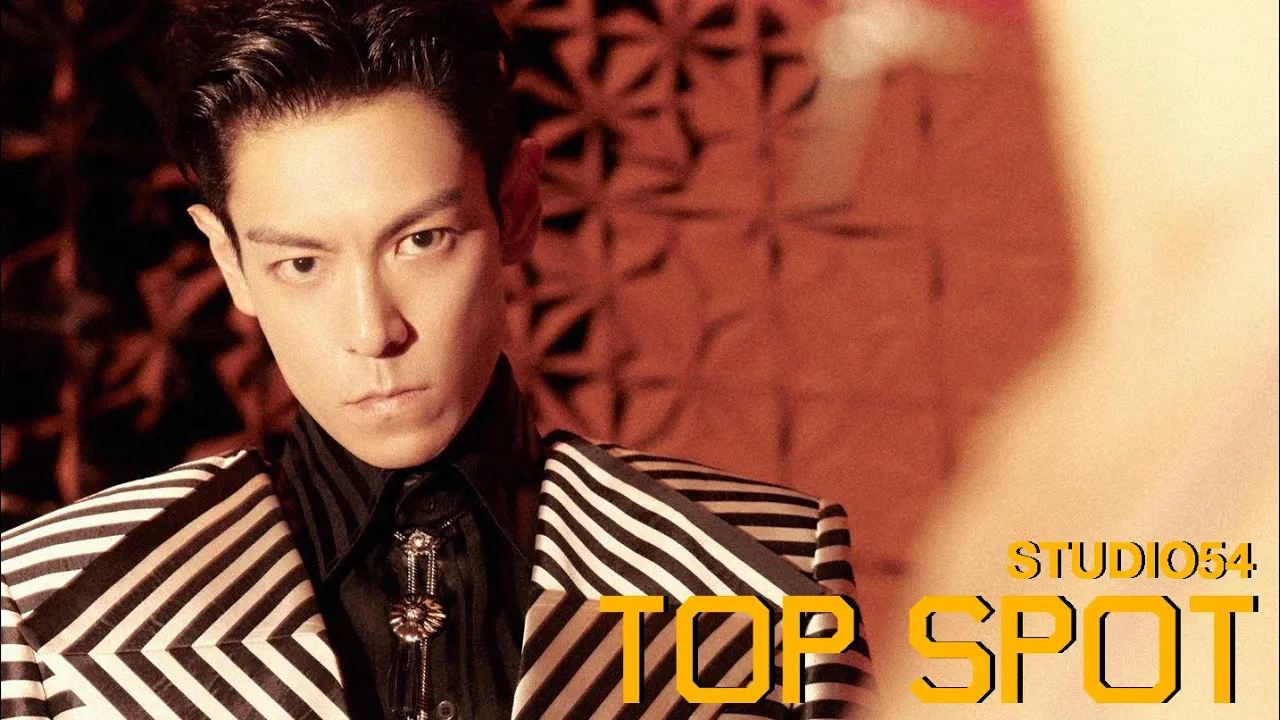
T.O.P - "완전미쳤어! (Studio54)" MV
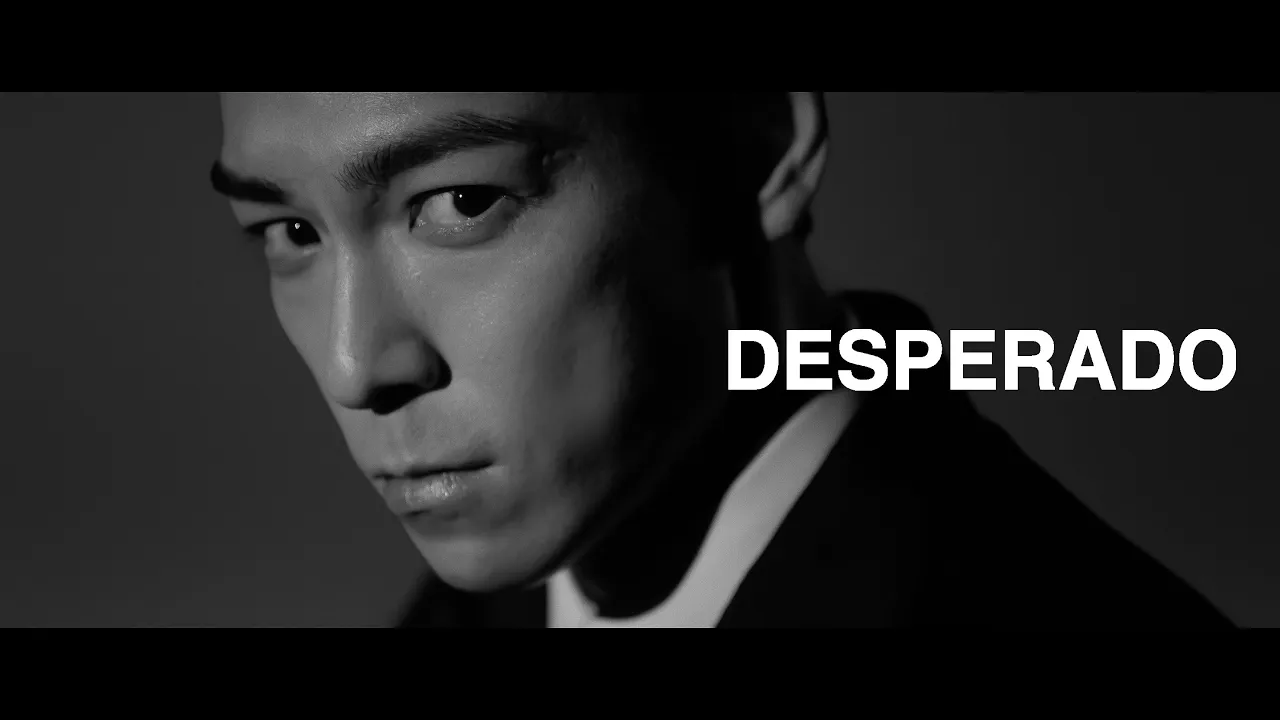
T.O.P - "DESPERADO" MV
Stream TOP SPOT - [ANOTHER DIMENSION]
Purchase TOP SPOT - [ANOTHER DIMENSION] on Official Stores



TOP SPOT - [ANOTHER DIMENSION] VERSIONS

‘의식확장’ - Awakening ver.

‘다른차원’ - Parallel ver.

‘다중관점’ - Perspective ver.

NEMO - Perspective ver.

NEMO - Parallel Ver.


Artist T.O.P Graces the Cover of HIGHSNOBIETY JAPAN ISSUE17, on sale September 1
Translated to English by TTTOPSUPPORT
Original Article: HIGHSNOBIETY JP
Release date: July 23, 2026
Pre-Orders Now Open: Artist T.O.P Graces the Cover
How far can a person continue to reinvent themselves? From an icon who represents an era to a new archetype that cannot be fully defined by existing titles.HIGHSNOBIETY JAPAN ISSUE 17 (on sale September 1) features T.O.P on its cover. After nearly a decade away from the spotlight, what did he confront, and how did he rediscover himself during that time?In this extensive interview, we explore the place where he stands today as he prepares to take another new step forward through the themes of "silence," "self," "stardom," and "art." It delves into his thoughts that have never before been shared publicly.The concept of this feature is “AUGMENTED SELF — The Expanded Self.” Together with GUCCI, which carries forward classical codes while presenting new outlines of the body and identity, the feature portrays T.O.P’s evolution—not as a rejection of the past, but as a process of layering upon it and continuously updating himself.What emerged was not simply an idol, an artist, or an actor. He was a person who embodies all of these identities while refusing to be confined by any single definition.The issue will also include exclusive information about T.O.P’s upcoming activities that has not been revealed elsewhere. Additional cover visuals will be released sequentially.
See the full image set on Instagram
T.O.P Leads Art Direction for Champagne “Le Rêve Brillant” as World’s First Collaborative Case Project Is Unveiled
Translated to English by TTTOPSUPPORT
Original Article: PR TIMES JP
Release date: July 23, 2026
The 125-year-old champagne house and world-renowned artist T.O.P (Real Name: Choi Seung-hyun) have joined forces for the first time. A limited-edition case embodying the theme of a “brilliant dream” has been unveiled.

Le Reve Brillant Japan Co., Ltd. (Head Office: Japan) is pleased to announce that luxury champagne brand “Le Reve Brillant”, born from a historic champagne maison with over 125 years of heritage in the village of Rilly-la-Montagne, Champagne, France, has appointed internationally acclaimed Korean artist, contemporary art collector, and art director T.O.P (real name: Choi Seung-hyun) as the art director for its new special-edition case.This project marks the brand’s first-ever artist-led package design and will be introduced as the world’s first collaborative case, bringing together the worlds of fine champagne and contemporary art.
A Collaboration Embodying a “Brilliant Dream”
“Le Rêve Brillant” means “brilliant dream” in French. Since its founding in 1899, the spirit of tradition and innovation passed down through three generations byGarnotel has been carried forward as the brand philosophy:
“Inspiration, love and brilliant make the dream come true.”
The person chosen by the brand as the ideal embodiment of this philosophy is T.O.P.In addition to his musical career, which helped lead the globalization of K-pop, T.O.P has also established a unique presence in the field of contemporary art. In 2016, he curated the auction exhibition “#TTTOP” at Sotheby’s Hong Kong, further demonstrating his influence and vision as an art figure.
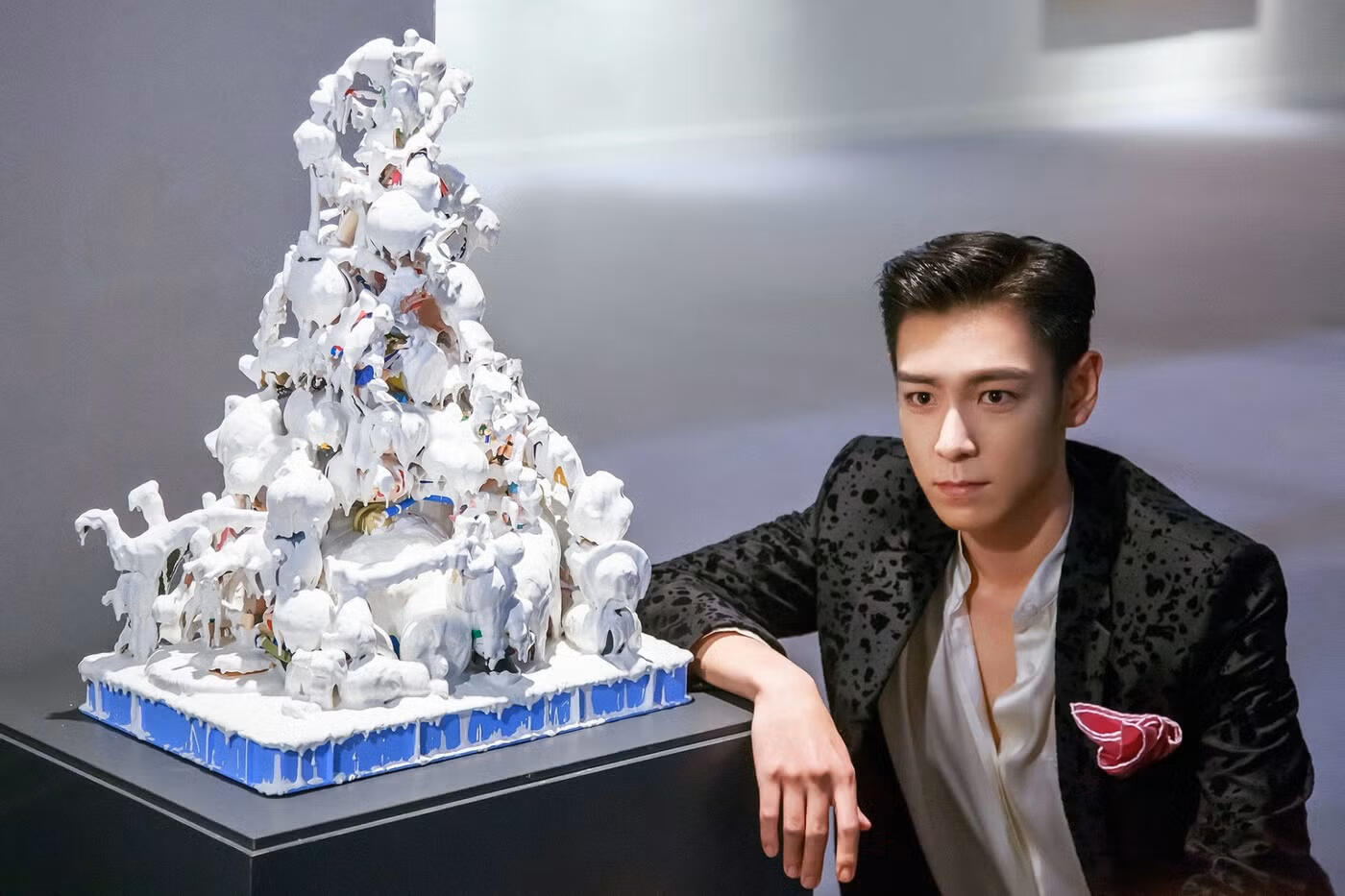
T.O.P. with Kaneuji Teppei’s Avalanche #1, 2016. Image courtesy of Sotheby’s Hong Kong.
For this project, T.O.P will take on the design of a champagne brand case for the first time, challenging himself to create a new form of artistic expression.
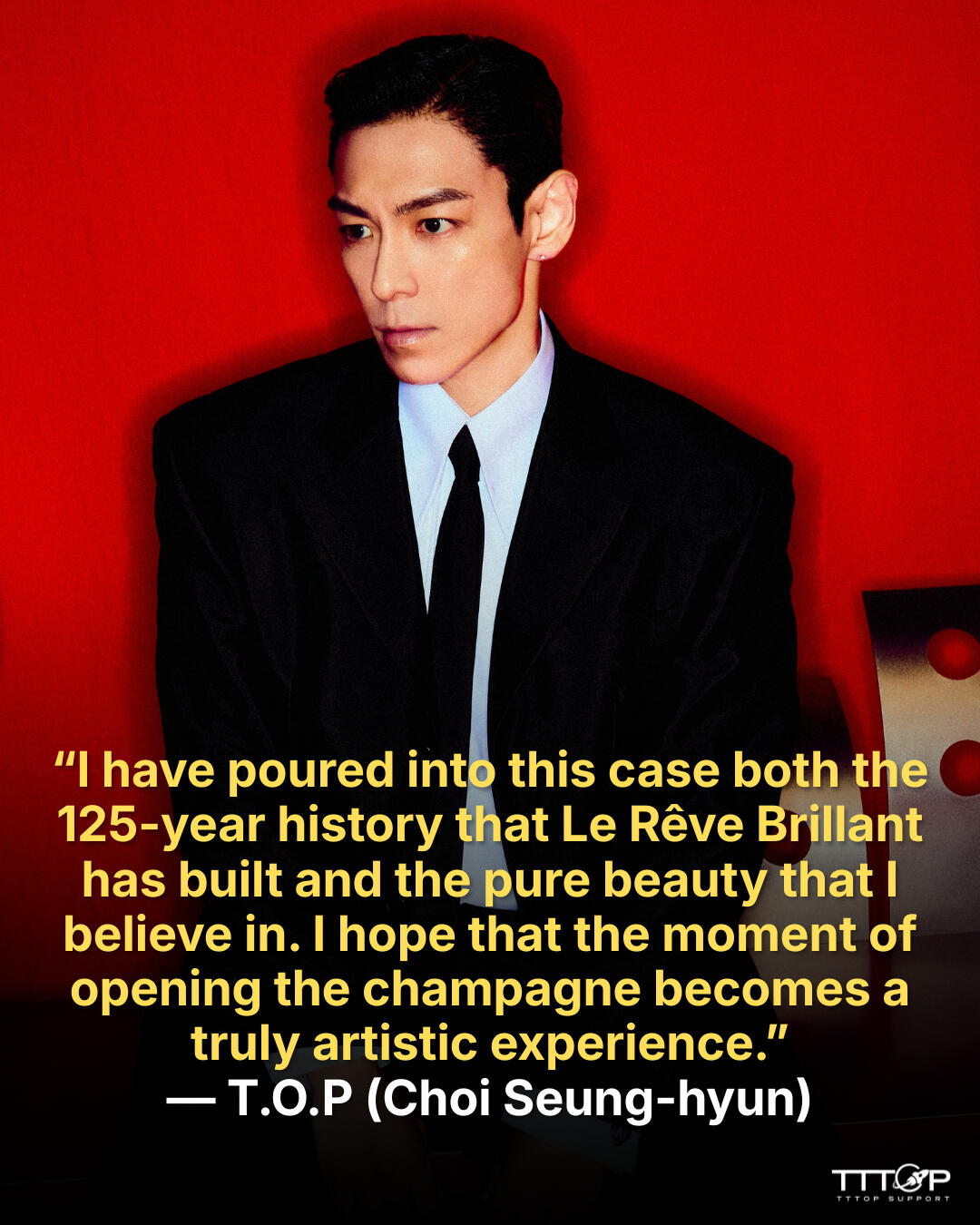
Entering a New Phase for the Brand
In early 2026, Le Rêve Brillant entered a new phase of its brand journey by welcoming world-renowned actor Byeon Woo-seok as its official Japanese brandambassador.This collaboration with T.O.P further accelerates that momentum and represents an important step in bringing the brand vision “Transforming champagne into an art form for sharing dreams” to life.The brand’s inspiration, the artist’s passion, and a brilliant dream.Through the intersection of these three elements, a new luxury experience is born. We invite you to look forward to this new expression of craftsmanship and artistry.
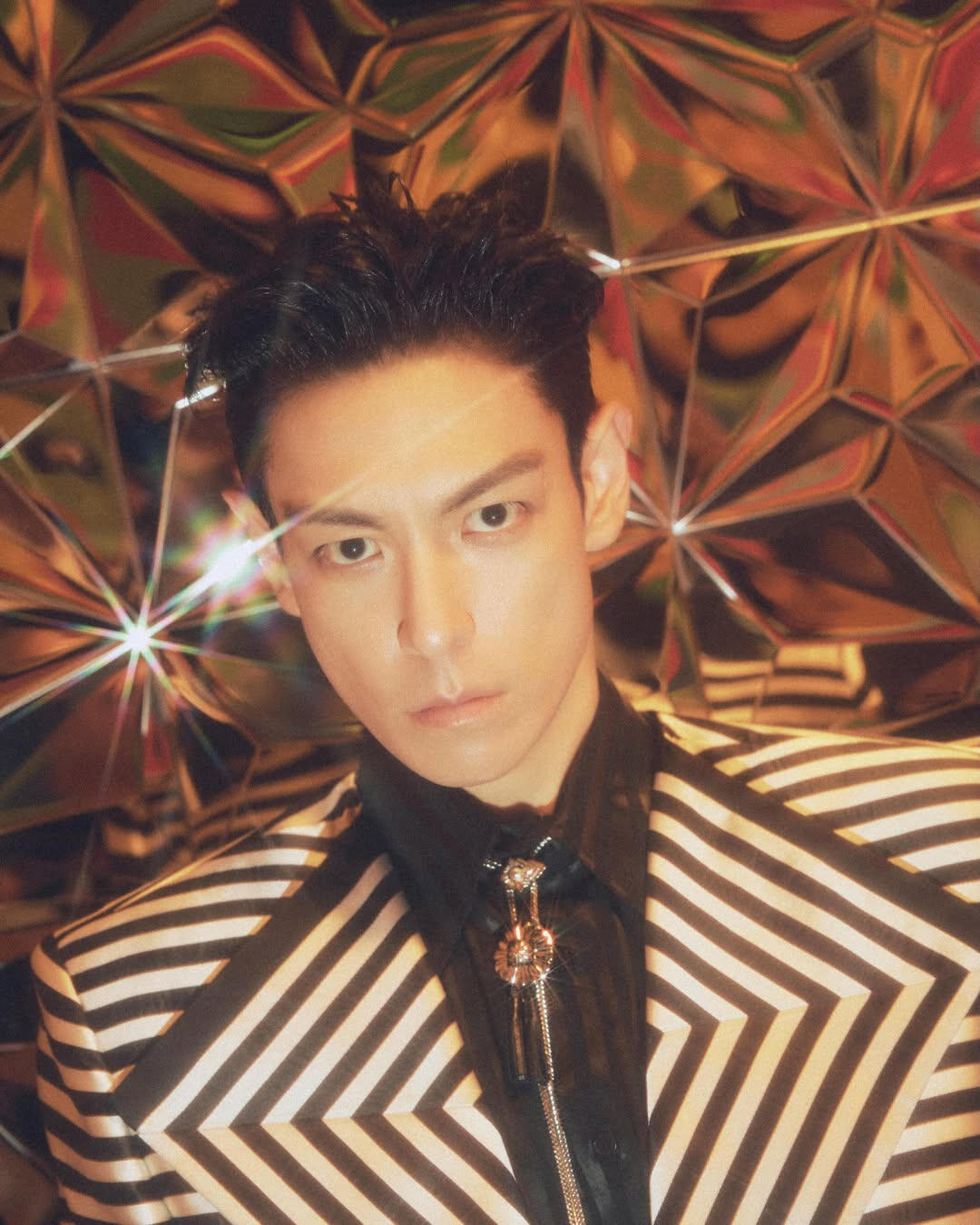
T.O.P (Choi Seung-hyun) Profile
A leading Korean artist.T.O.P made his debut in 2006 and gained immense popularity throughout Asia and around the world through his group activities.As an actor, he has also continued to expand his career across both music and film, including an appearance in Netflix’s “Squid Game Season 2.”In addition, he is active as a contemporary art collector and art director, earning high acclaim in the field of visual arts through projects such as the curated sale “#TTTOP” at Sotheby’s Hong Kong and the overall art direction of his solo album “TOP SPOT - ANOTHER DIMENSION.”This marks his first time taking on art direction for a champagne brand.
T.O.P and Le Rêve Brillant Collaboration Case Overview
Concept
• “A Brilliant Dream, Crafted into Form.” (Bringing a brilliant dream to life)Art Director
• T.O.P (Real Name: Choi Seung-hyun)Applicable Product
• Le Rêve Brillant Collection — Special Edition CaseDesign Motif
• The moment when champagne bubbles (perlage) rise has been reimagined as an abstract expression of contemporary art.Materials & Finish
• A contrast between matte finishing and foil stamping isemployed to create a design that evokes the sensation of owning a work of art.Release Timing
• To be announced (limited quantity)Sales Channels
• Official online store, select luxury hotels, department stores, and luxury restaurants
About Le Rêve Brillant
Founded in 1899 in the village of Ludes-la-Montagne, in France’s Champagne region.
Le Rêve Brillant is a luxury champagne brand born from the spirit of tradition and innovation that has been preserved by Garnotel across three generations for more than 125 years.While enjoying strong recognition in France, the brand is also expanding into the Japanese market as part of its strategic global development.
Main Lineup
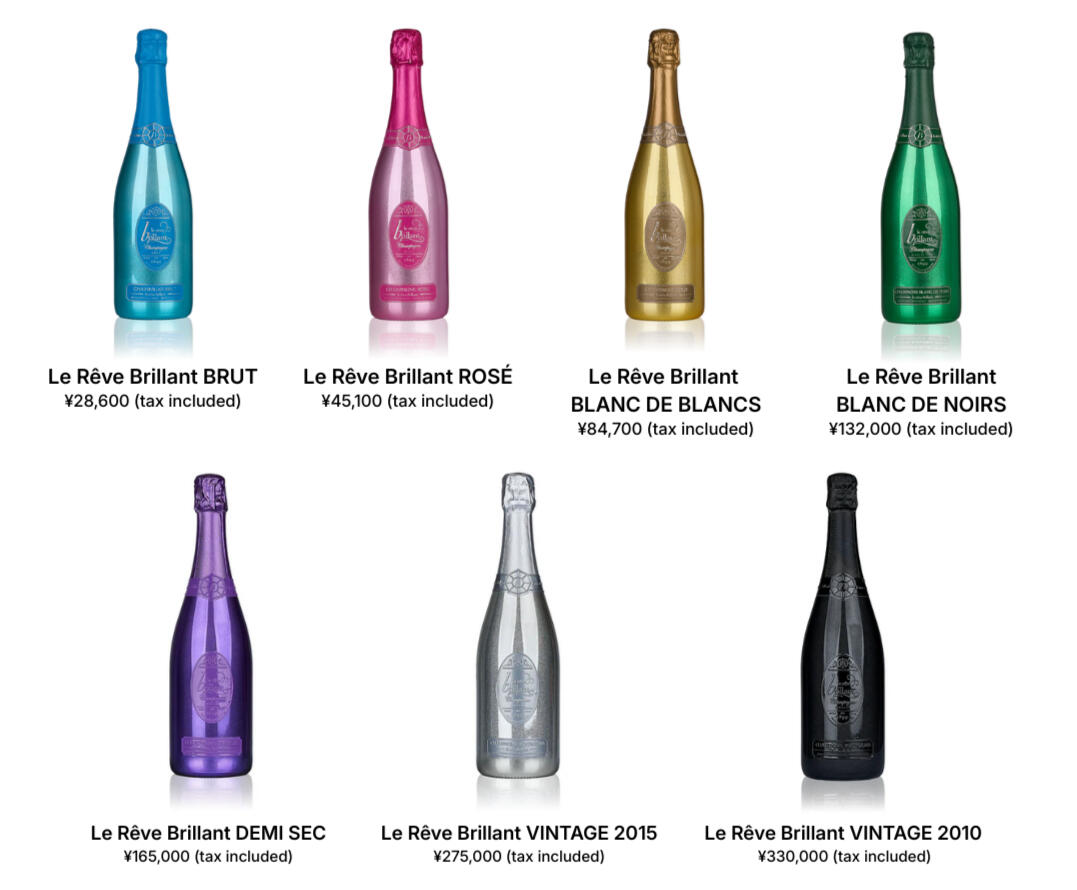
See the full image set on Instagram
T.O.P Attends Gucci's
High Jewelry & High Watchmaking
Preview Event
Translated to English by TTTOPSUPPORT
Original Article: PR TIMES JP
Release date: July 16, 2026
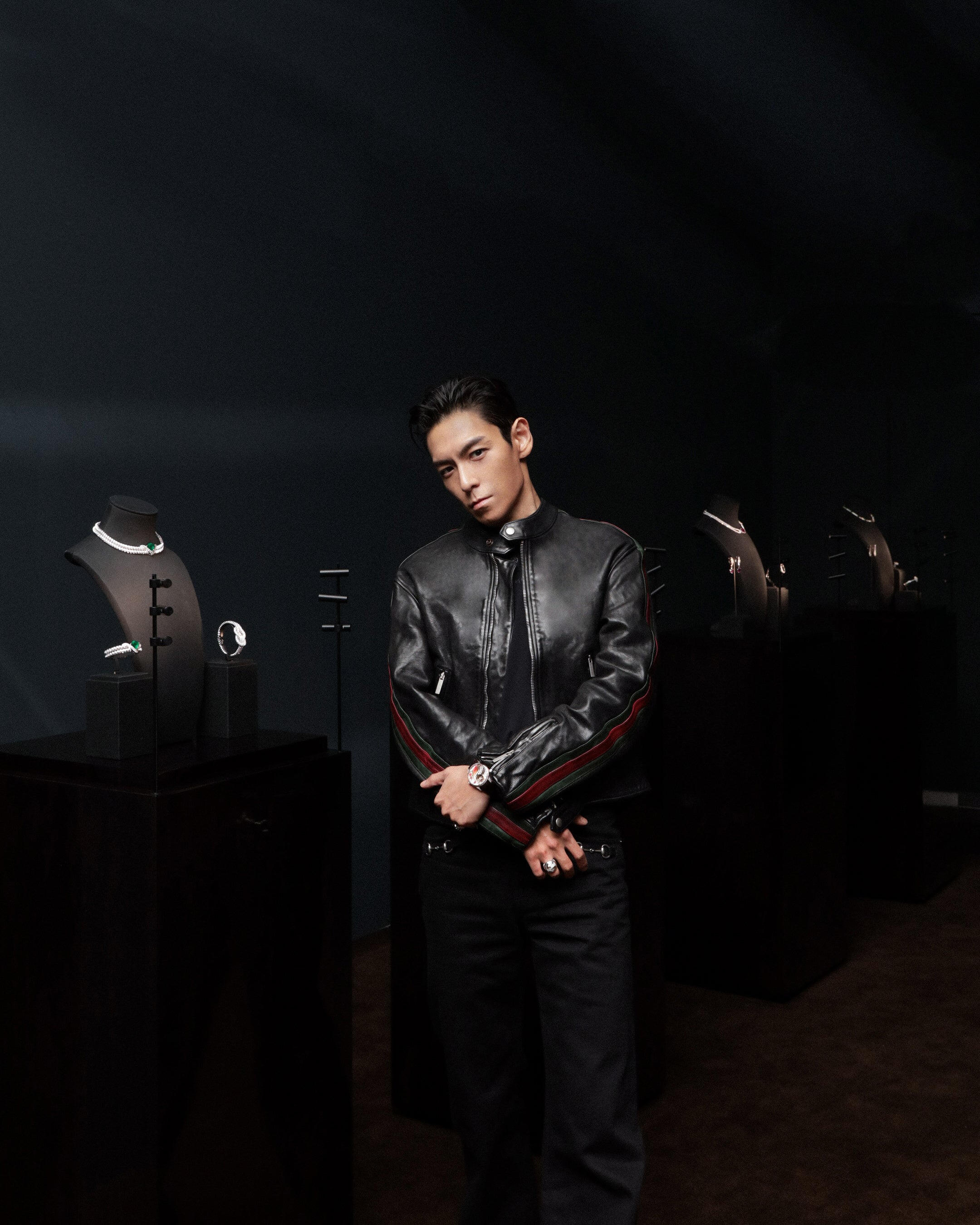
To commemorate the unveiling of its new High Jewelry and High Watchmaking collections—created as a celebration of the natural world and a tribute to the House's enduring heritage, Gucci hosted an exclusive preview event showcasing its exceptional craftsmanship and creativity.World-renowned artist T.O.P made a special appearance from South Korea for the preview. Wearing pieces from Gucci's new High Watchmaking collection and a High Jewelry ring, he joined in celebrating the launch of the new collection.Inspired by the beauty of flowers, the world of seafaring, and Gucci's iconic motifs, the collection is presented across four families: Gucci Flora, Gucci Nodo, Everlasting G, and the House's signature designs, including the Horsebit and Marina Chain collections. As part of the Gucci Flora collection, a special Japan-exclusive design will also be introduced, featuring a necklace, earrings, and ring crafted in white gold and adorned with pink tourmalines and diamonds.
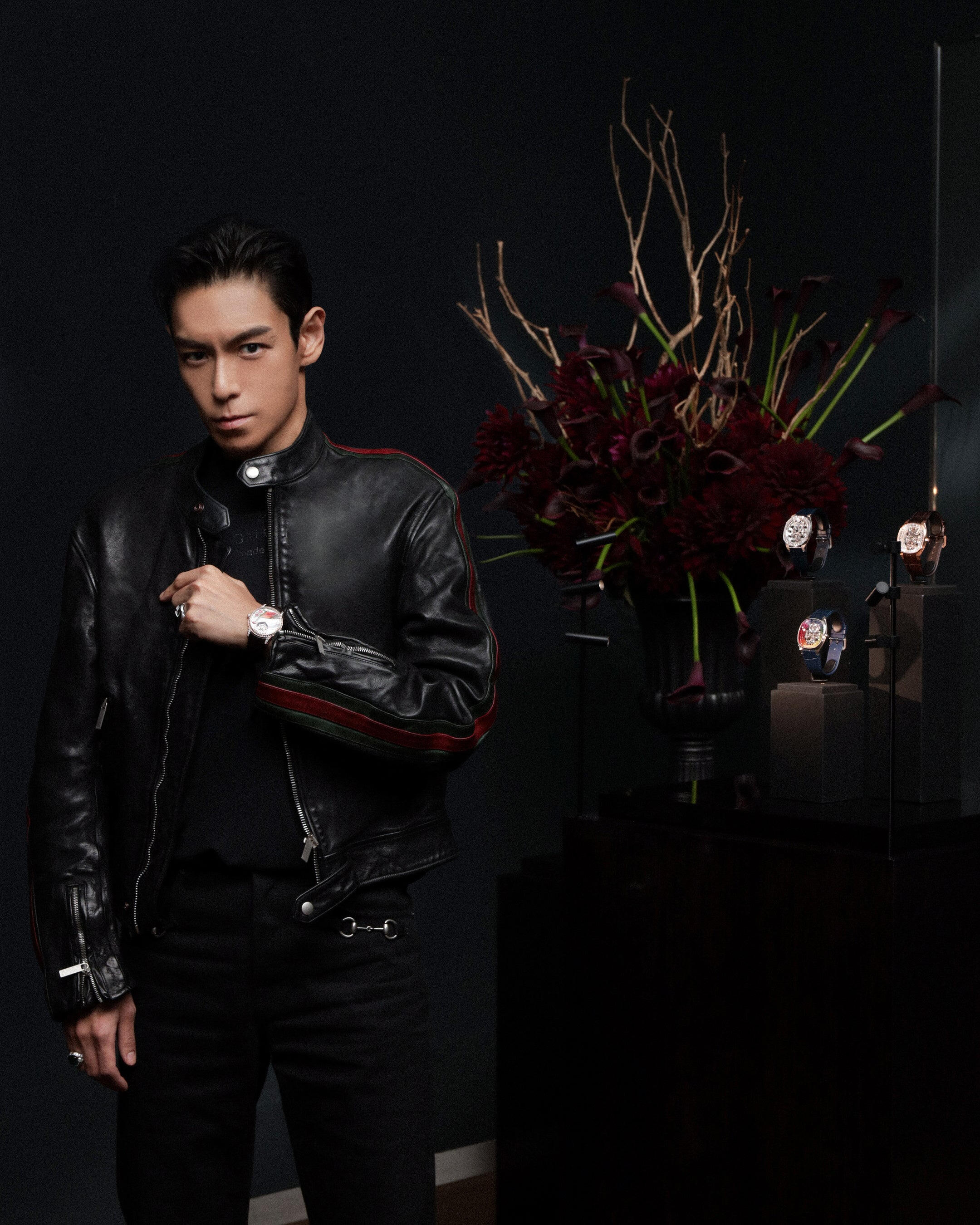
T.O.P wore a High Watchmaking timepiece from the G-Timeless Métiers d'Art collection, inspired by a Gucci archive silk scarf from the 1980s. The watch features a striking crane motif rendered in feather marquetry, while the rose motif is delicately executed using micropainting. The dial is crafted in grand feu enamel, showcasing exceptional artisanal craftsmanship.Métiers d'Art, meaning "artistic craftsmanship," refers to creations that embody the extraordinary skill and artistry of master artisans. This series draws inspiration from Gucci's archive silk scarves, reinterpreting their iconic designs through traditional decorative watchmaking techniques.The timepiece is also equipped with a tourbillon positioned at 12 o'clock, while the caseback is finished with hand engraving. Through the expressive artistry of these master crafts, the watch is elevated into a true work of art.
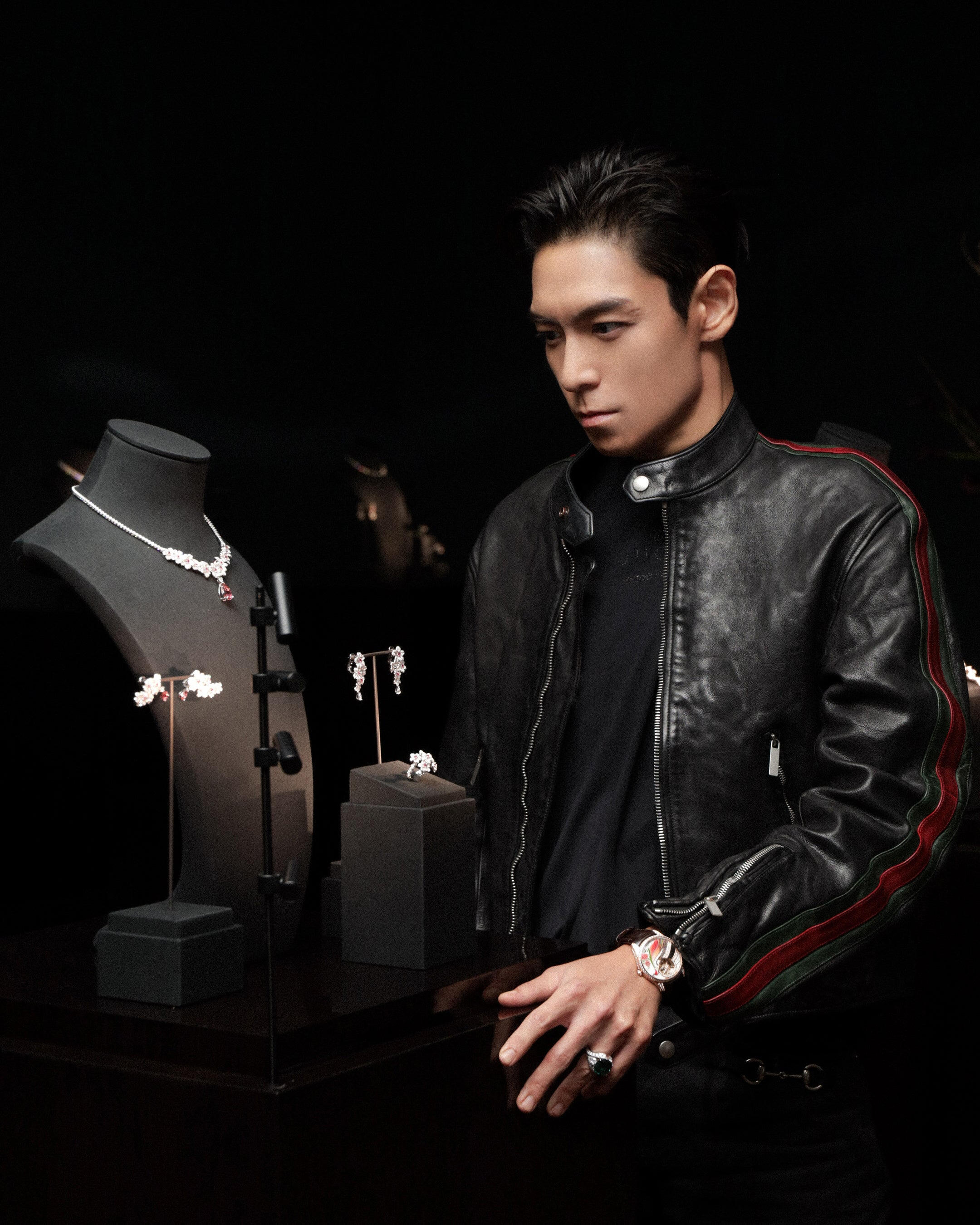
Furthermore, T.O.P wore a white gold, diamond, and green tourmaline ring from the Labirinti Gucci collection, which embodies a journey through the magnificent beauty of the Italian garden.The collection draws inspiration from the geometric elegance of formal garden design and the fresh beauty of flowers in full bloom. Its designs carefully trace a path connecting the past and the present, vividly telling a story of new beginnings born from tradition.
See the full image set on Instagram
T.O.P attracts 10,000 fans to a free fan meeting in Japan, saying,
'I want to give back to the fans who waited for me for 10 years.'
Translated to English by TTTOPSUPPORT
Original Article: Single List
Written by: Reporter Kang Bo-ra
Release date: July 10, 2026
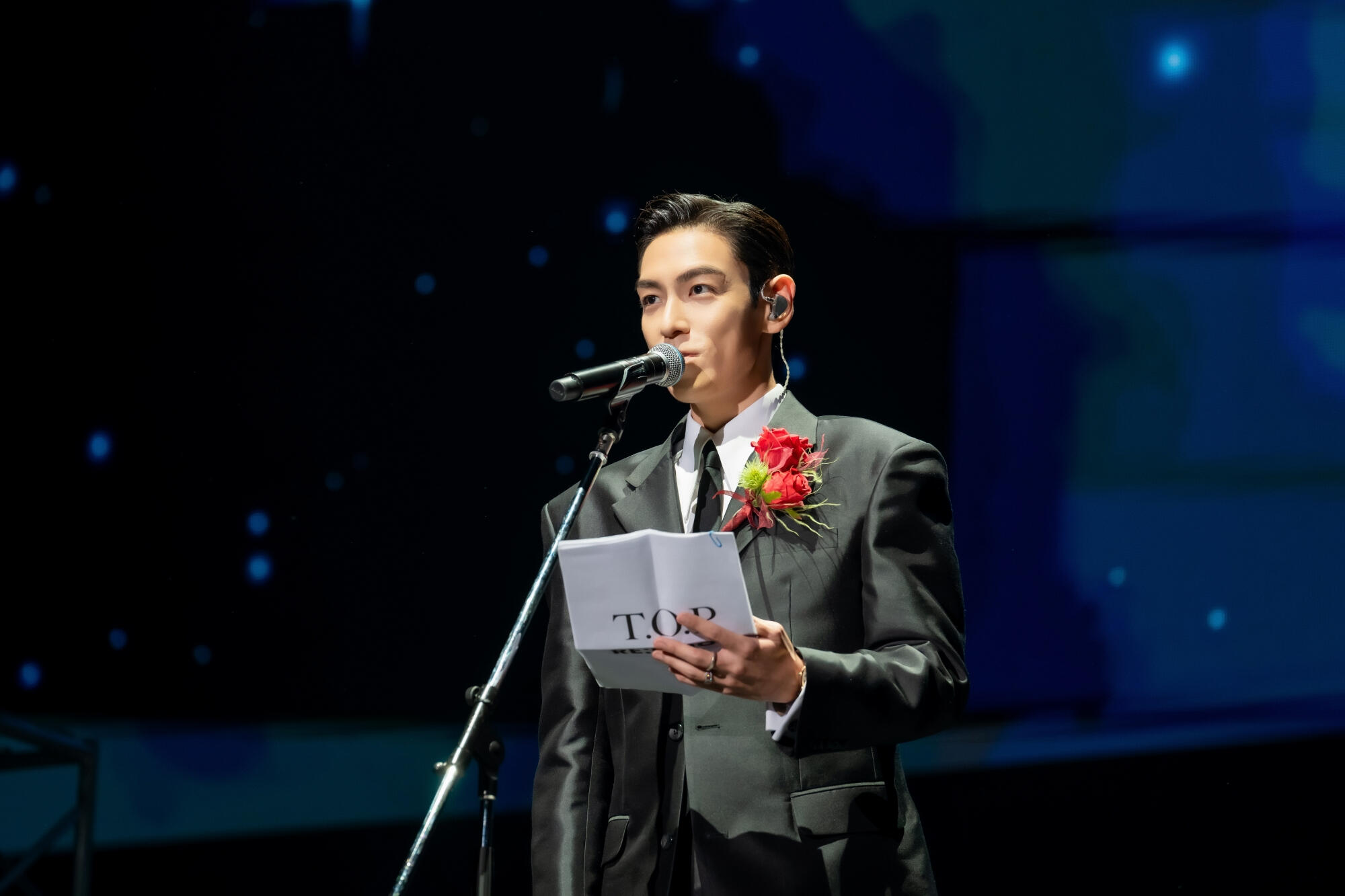
Singer T.O.P held a large-scale free fan meeting in Japan, where he reunited with approximately 10,000 fans.On the 9th, T.O.P held his fan meeting, "RE:UNION," at Pia Arena MM in Yokohama, Japan. The event was offered free of charge to members of his official fan community, TOPSX, with approximately 10,000 fans in attendance.Opening the fan meeting by reading a handwritten letter he had written himself, T.O.P reflected on the past 10 years of his career, including his appearance in Netflix's Squid Game and his ventures into YouTube content creation.“I've spent a long time thinking about this first reunion in 10 years," he said. "I sincerely wanted to give something back to my Japanese fans, who quietly stood by and waited for me.”He then premiered the character music video for the track 연극이 끝나고 난 뒤 (Stendhal Syndrome) from his first full-length album ANOTHER DIMENSION, released last April. He also shared the news that he had completed work on his next album, drawing cheers from fans.Fans responded with a surprise video, and toward the end of the performance, T.O.P walked around the audience area to greet fans personally. He expressed his gratitude, saying, “I will continue to meet you all through even better performances in the future.”Meanwhile, after wrapping up his Japan fan meeting, T.O.P will embark on his brand tour, T.O.P PRE-STUDIO 2026, beginning in Hong Kong on August 15.
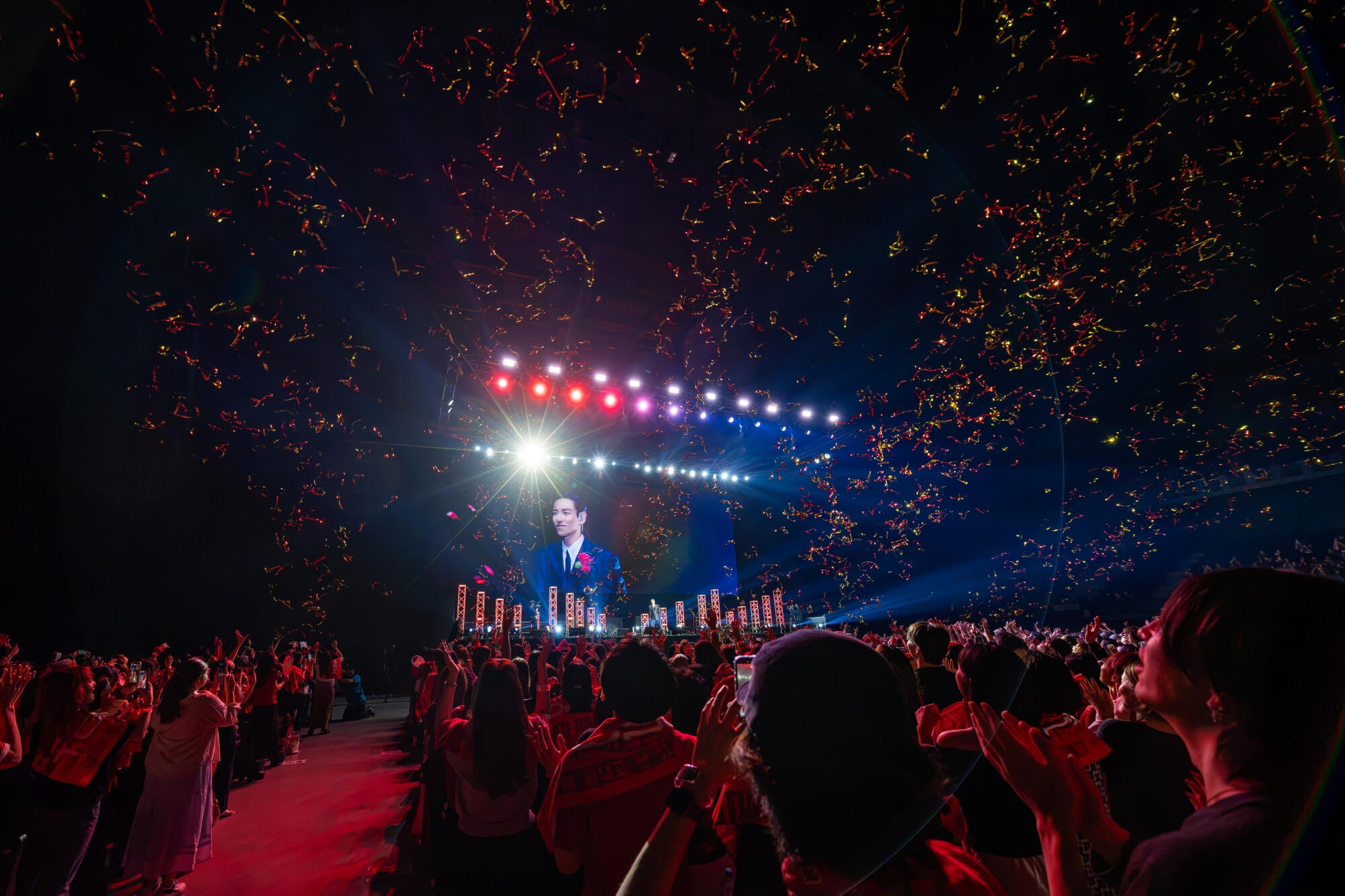
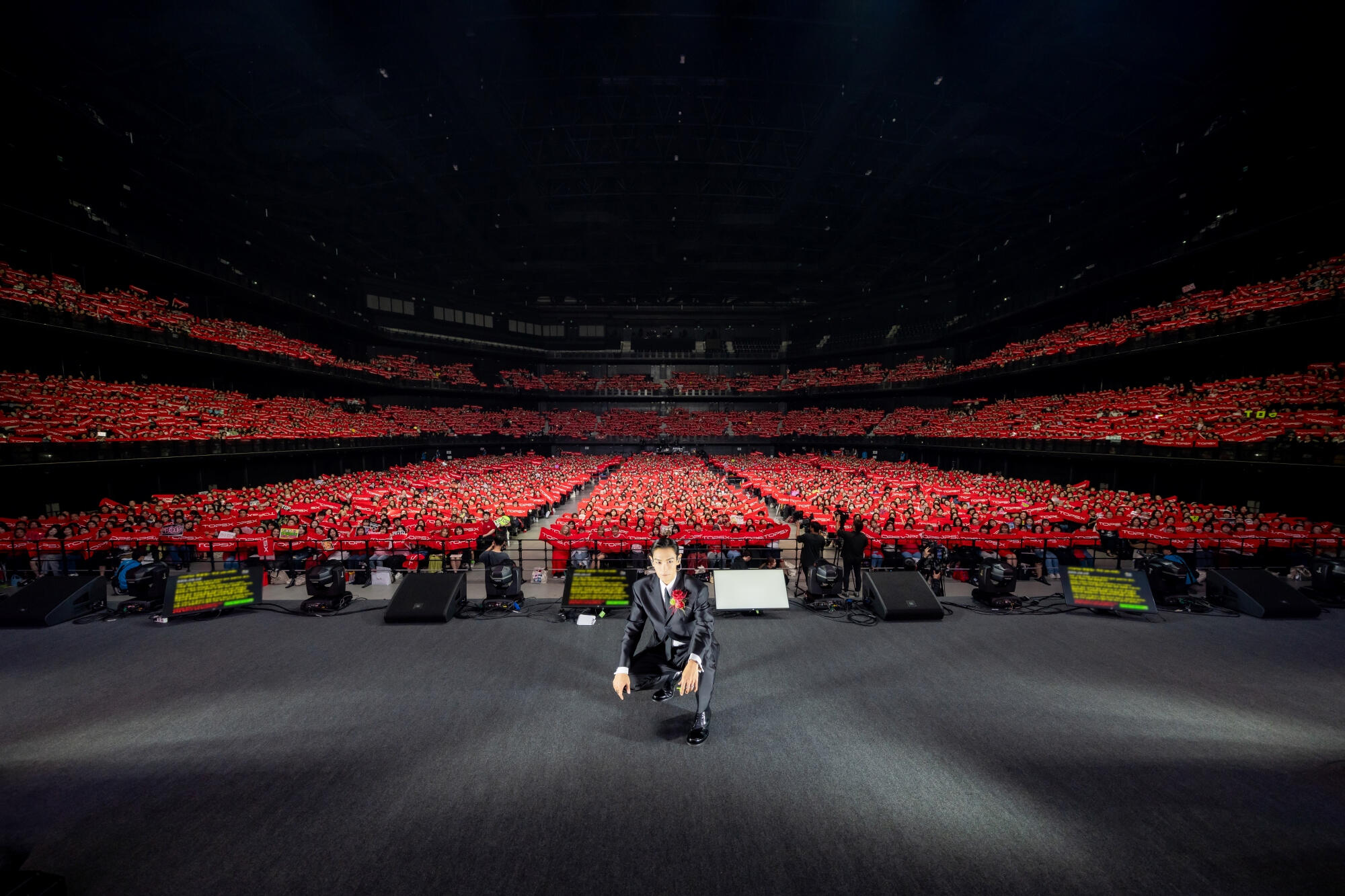
See the full image set on Instagram
T.O.P to Host Free Fan Meeting at a Japanese Arena, Inviting 10,000 Fans in an Unprecedented Gift to Fans
Translated to English by TTTOPSUPPORT
Original Article: Sports Chosun
Written by: Reporter Jung Yu-na
Release date: June 2, 2026
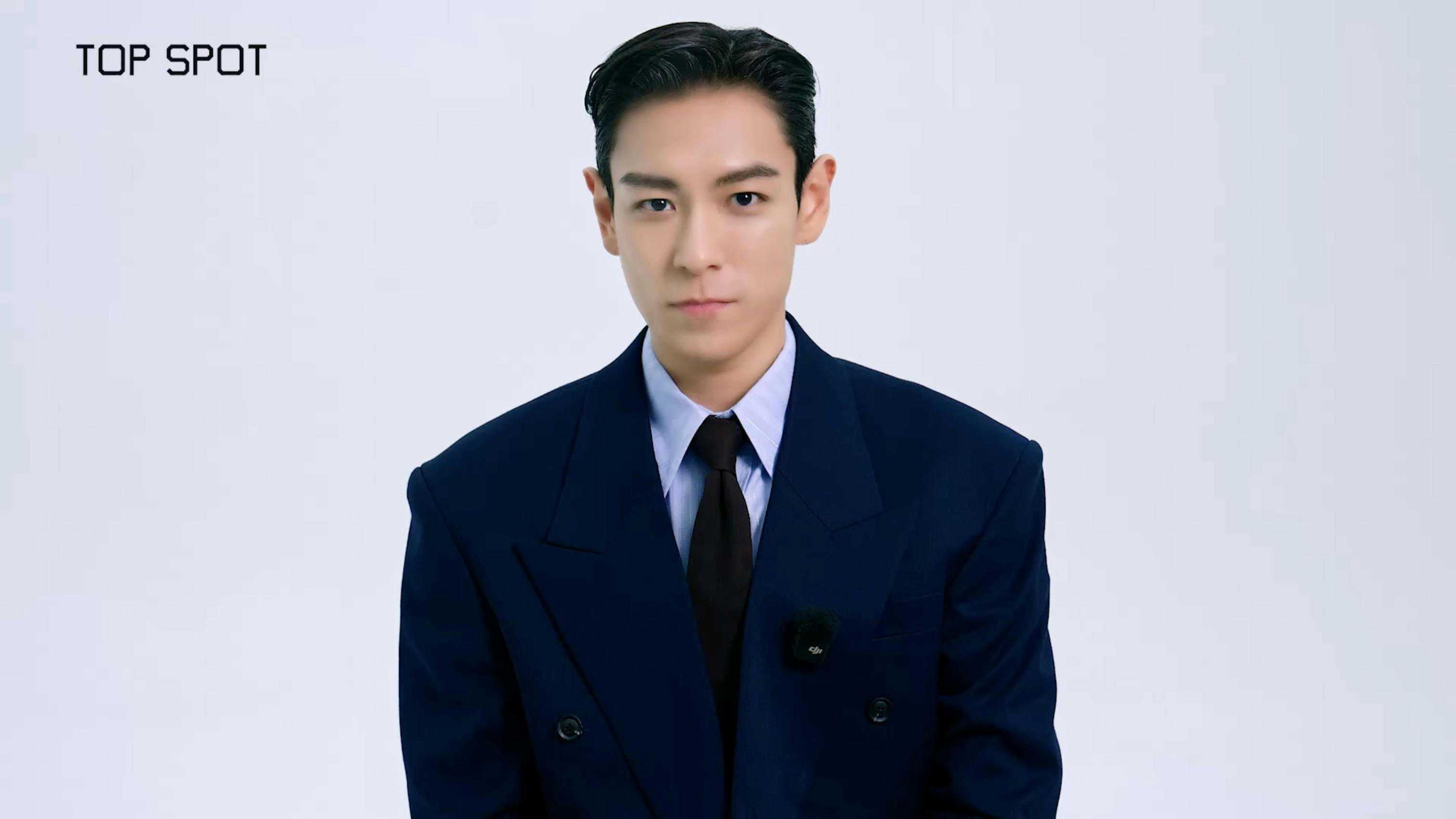
Singer T.O.P is holding a large-scale free fan meeting in Japan, marking a meaningful reunion with local fans.On the 2nd, his agency TOPSPOT PICTURES announced that T.O.P will hold a solo fan meeting in Japan on July 9 at 6:00 PM at “PIA Arena MM” located in Yokohama, Japan.This fan meeting is a special “gift-like” performance that T.O.P has personally planned for fans who have continued to show unwavering love and support over the years. The event will be held for members of his official paid Japanese fan membership and will take place in a large arena capable of accommodating about 10,000 people. It is being presented with the unprecedented scale of “free admission for all seats,” once again highlighting T.O.P’s deep appreciation for his fans.In addition, the fan meeting will be hosted by Masayuki Furuya, a well-known “Hallyu representative MC” in Japan, who is expected to showcase great chemistry with T.O.P.
T.O.P is also actively preparing special segments for local fans who have long awaited communication with him, including a variety of programs and sincere talk segments.Recently, T.O.P achieved major global success with his first full-length album “Another Dimension” (다중관점), reaching No. 1 on iTunes in 15 countries worldwide.On the day of release, it also recorded approximately 1.47 million Spotify streams, setting a new record for the highest number among K-pop solo artists this year. In addition, based on digital streaming performance alone, the album entered No. 20 on the U.S. Billboard World Albums Chart and received high praise from the American music magazine The Fader, capturing both global charts and critical acclaim.

Proving his unique musical impact and continuing strong global momentum, T.O.P will use this upcoming Japan arena fan meeting to express his gratitude to fans around the world who have shown him enthusiastic support. As he continues to balance wide-ranging activities while maintaining close communication with fans, attention is focused on his next global moves.Meanwhile, ticket reservations for the fan meeting will begin with a pre-sale for official fan club members starting June 5. Detailed schedules and reservation information can be found through the official Japanese fan community.
See the full image set on Instagram
View T.O.P's repost on Instagram
HIGHSNOBIETY JAPAN
ISSUE17
Scans by April
Translated to English by TTTOPSUPPORT
Magazine Release: September 1, 2026
Posted: September 6, 2026
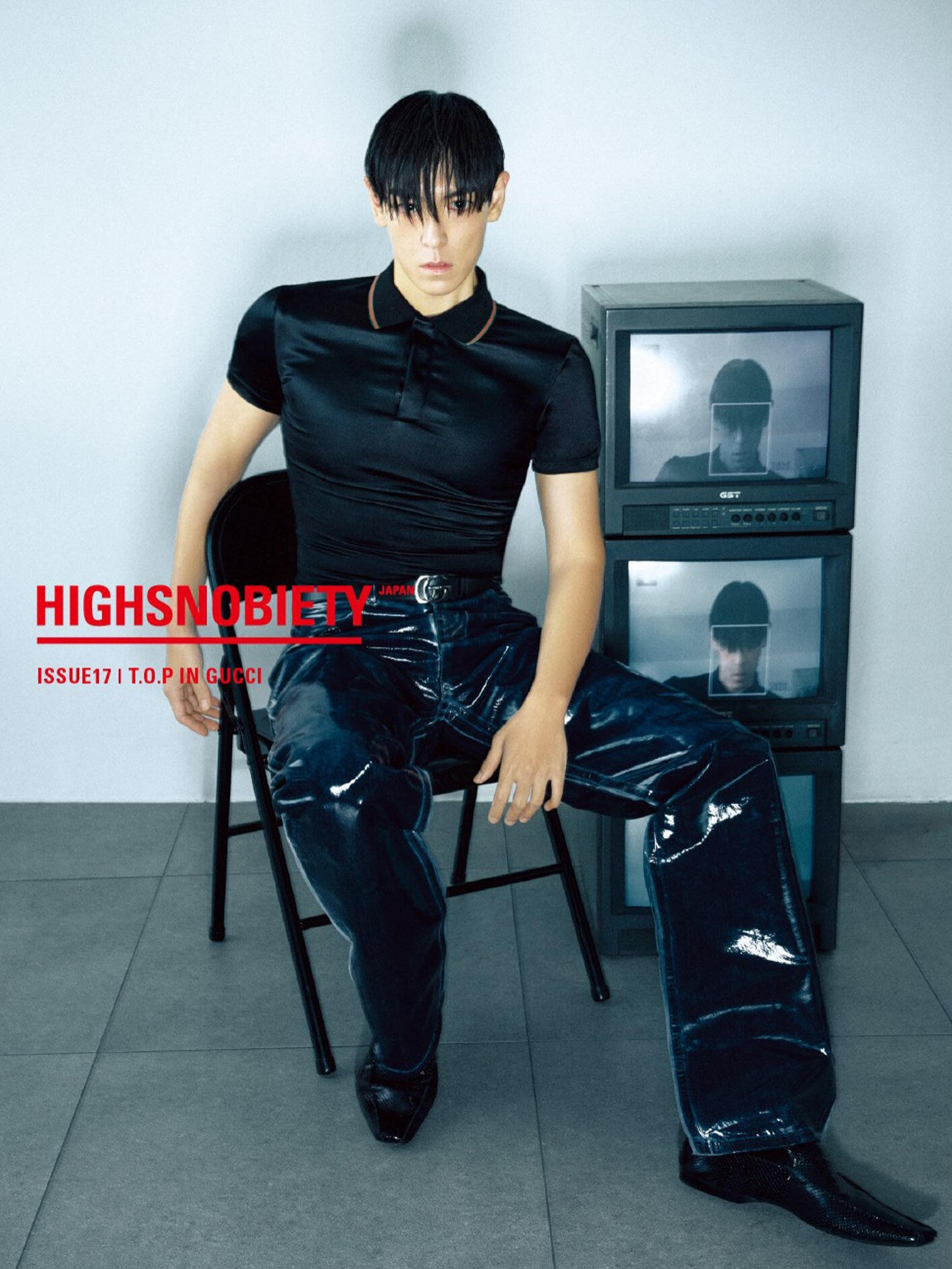
GUCCI
TRANSLUCENT CREATIVITY
Seeing Through the World — T.O.P Breathes Creativity
T.O.P
PHOTOGRAPHER JIYONG YOON
STYLING MYUNGSUN LEE @ TIKITAKA OFFICIAL
HAIR KONGTAN MAKE-UP HYESOO YOU PROP STYLIST YESEUL LEE
PRODUCTION HYOJEONG CHOI, KYUNGBOK BAE @ KACHI MEDIA
INTERVIEW & WORDS YUKI UENAKA
Creation is not about expressing oneself.
It is about becoming transparent enough for the world to pass through you. Wind passes through things that are transparent. And whatever the wind passes through begins to breathe. Breathing is proof of being alive. To keep moving and wavering rather than remaining constant. To not become too orderly. To never stop. Perhaps that is why creation, too, resembles breathing.Not remaining constant, but continuing to waver. Not being too perfectly ordered. Not coming to a stop. Perhaps that is why creation, too, may be something like breathing.What is complete is beautiful. But what is perfect has already stopped breathing. There is no hesitation, no trembling, no room left for someone else to enter. In contrast, what is imperfect wavers, allowing the wind to pass through. Light enters, and time flows in. And then, someone's memories quietly permeate it. There remains room not only for the creator, but for one's own breath to overlap with it.
I believe creation means not rejecting that wavering. It is neither about explaining the world nor about asserting oneself forcefully. It is about allowing the world to quietly enter into oneself, and, for a moment, transforming all of it into one's own breath.I would like to call that intelligence “Permeable Intelligence.”It is not an intelligence that accumulates knowledge. It is an intelligence that does not reject the world, but allows nature, time, and others to breathe within oneself.
Perhaps luxury, too, should originally be this way. History is not something that should simply be preserved. Only when it passes through the body and gains a new breath does it truly become the present.What GUCCI presented this season was also not a completed aesthetic, but a form of creation that continues to evolve as it embraces the body and resonates with culture. Clothing that seamlessly melts into the body. An invisible edginess. Luxury that gains meaning within the body of the person wearing it, rather than through being explained. There, clothing is not a finished product. Creation begins only through the breath of the person who wears it.And behind that quiet process of renewal, I feel there is the philosophy of GUCCI’s Artistic Director, Demna. What he attempted this time was not to create a new GUCCI. It was to restore breath to the GUCCI brand once again. Not to destroy its history, but to make that history transparent enough for it to pass through the bodies of the present. Tradition is not something simply preserved; it becomes the future only when it begins to breathe again within someone.
That is why T.O.P seemed to overlap with this collection in a remarkably natural way. He, too, is a creator who continues to renew himself not by completing or defining himself, but by continuing to let the world pass through him.This time, as I came face to face with T.O.P, I did not feel as though I had met a star. Rather, it felt as though I had been enveloped by a single “atmosphere”—one in which the boundaries between intelligence and sensitivity, nature and art, the past and the future… quietly unraveled, and which continued to accept the world without rejecting it.He possesses a strong aesthetic sensibility. Yet that sensibility is not a closed philosophy. It was a transparency unafraid even to let go of his own convictions.That is why he felt the most human.And at the same time, he had transcended the very contours of what it means to be “human,” more than anyone else.
YUKI UENAKA
The LOGOS OF SILENCE
Q1: After a long period of silence, you must have come to certain realizations. In today’s world, everyone is expected to constantly communicate and continue explaining themselves. How do you, T.O.P, view the boundary between “speaking” and “not speaking”?T.O.P: I am always thinking about the boundary between what I, as a person, must express, and what I should sometimes endure and deliberately choose not to express.
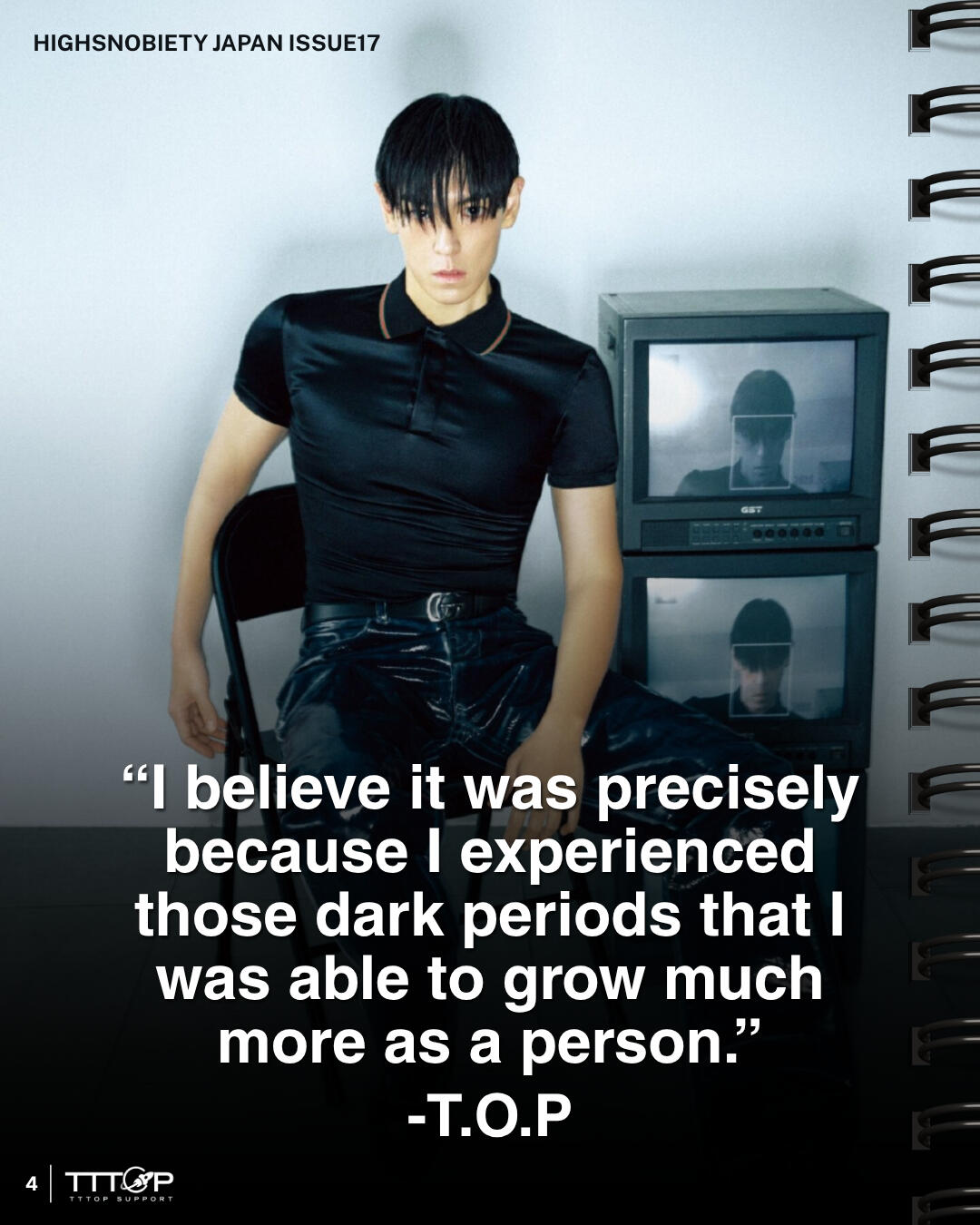
Q2: Silence is generally perceived as an “absence.” But looking back, was that period of time, for you, a time that was lost, or was it a time in which you were nurturing something?T.O.P: Rather, I think it was a time when I was able to find myself. It was the most important period of my life, because I was able to reclaim myself anew. And at times, there were very dark moments. But I believe it was precisely because I experienced those dark periods that I was able to grow much more as a person.If I had not gone through that time, I don't think I would have been able to stand back up and return to making music as I am now.
Q3: I think T.O.P is one of the few stars who has always possessed a certain appeal precisely because he does not explain everything about himself. Many people go through life wanting others to understand them. How important is it for you, T.O.P, to be understood by others?T.O.P: I don't try to force people to understand me. The biggest reason is that I believe my work and activities are not meant to be understood by people of the present age, but rather to speak as works created for the future. So, instead of trying to persuade people or force them to understand who I am right now, I intend to simply continue doing my work quietly and diligently.
Q4: I think there are moments when, when faced with a difficult obstacle, we want someone to affirm us. Don't you ever feel lonely or isolated when you feel that those around you don't understand you?T.O.P: I don't try to indulge in self-pity. Rather, I think I am the kind of person who, precisely when I have periods of isolation, tries to make the most meaningful use of that time possible.
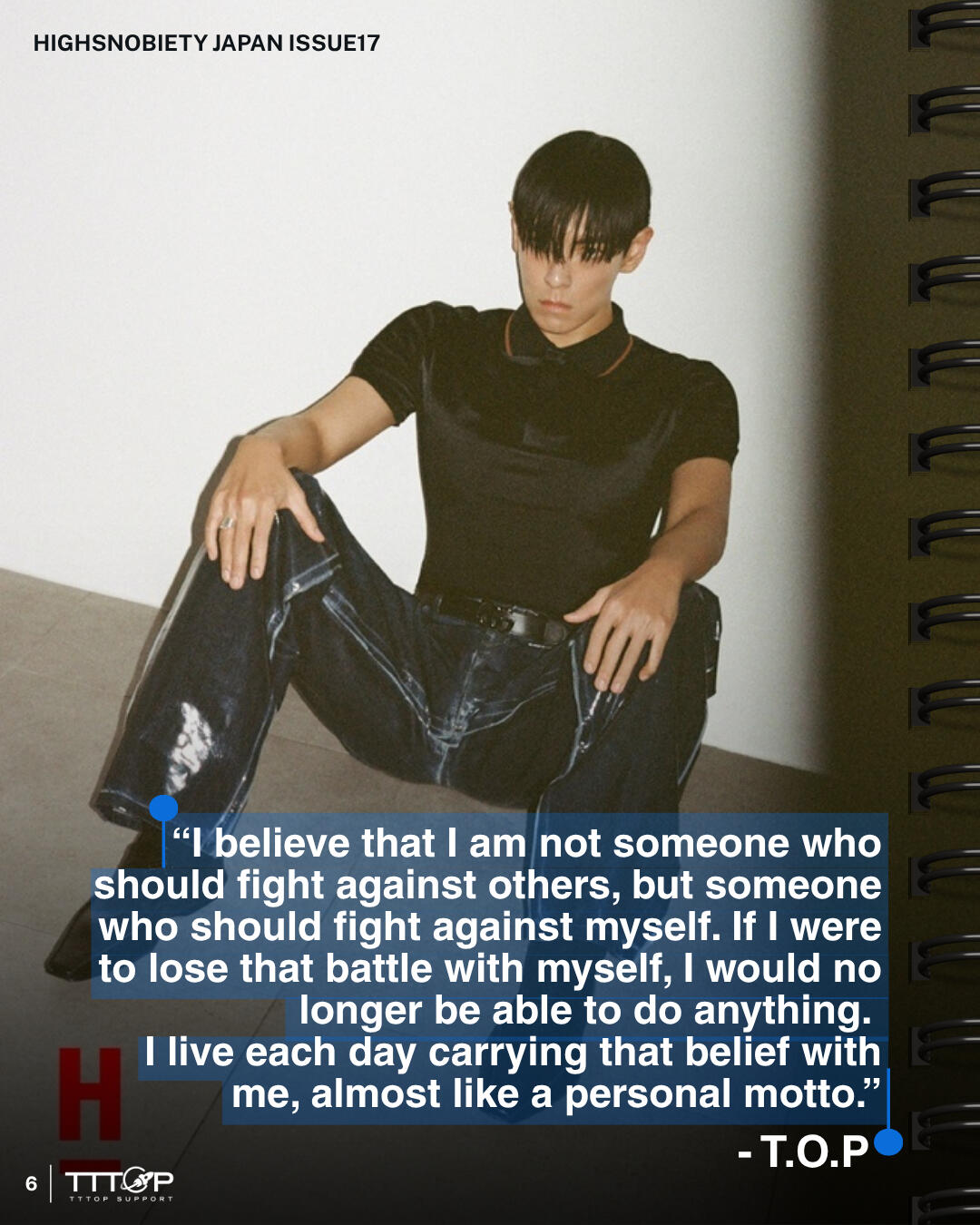
Q5: You’re a mentally strong person.T.O.P: I believe that I am not someone who should fight against others, but someone who should fight against myself. If I were to lose that battle with myself, I would no longer be able to do anything. I live each day carrying that belief with me, almost like a personal motto.
Q6: Now that you have experienced music, acting, and art, what do you think is the most fundamental means of expressing yourself?T.O.P: Including all the genres you just mentioned, ultimately, I think it is the work itself that I present to the world.Those works are how I express myself. No matter what kind of evaluation they receive, my job is to speak through my work. So, rather than saying that there is one particular genre through which I express myself, it is everything I put out into the world through all forms of creative expression. Whether it is music or acting, ultimately, they all share one thing in common: they are art.That's why I don't think of them as separate genres. I believe that the works created within them are what serve as my means of expressing myself.
Q7: This may be a somewhat difficult question, but I’m always thinking about the relationship between art and business. Marketing and pure art can sometimes be separate, while in other cases, I think the two can be successfully integrated. What are your thoughts on that balance, T.O.P?T.O.P: I consider the two to be the same thing. That's because I am not a fine artist, but a commercial artist. Ultimately, what I create is business art, so I don't think of art and business as separate things.For example, I am doing a photoshoot for GUCCI today, but GUCCI is also a commercial fashion brand. I think the very act of working together like this is itself a collaboration in commercial art. When I think about it that way, I feel that, ultimately, everything is business art.
Q8: If you were to define who you are now in a single word, what would it be? Is there a particular word that has changed you the most throughout your life?T.O.P: If I were to describe myself in a single word, I would say that I am someone who lives with the mindset of a “student” —someone who continues to learn.Whether I see something beautiful in nature or meet someone with a beautiful heart, I always try to learn something good from it. I think that my very approach to life is to always have the desire to learn many things and continue growing.
Beyond the “Idol” Identity
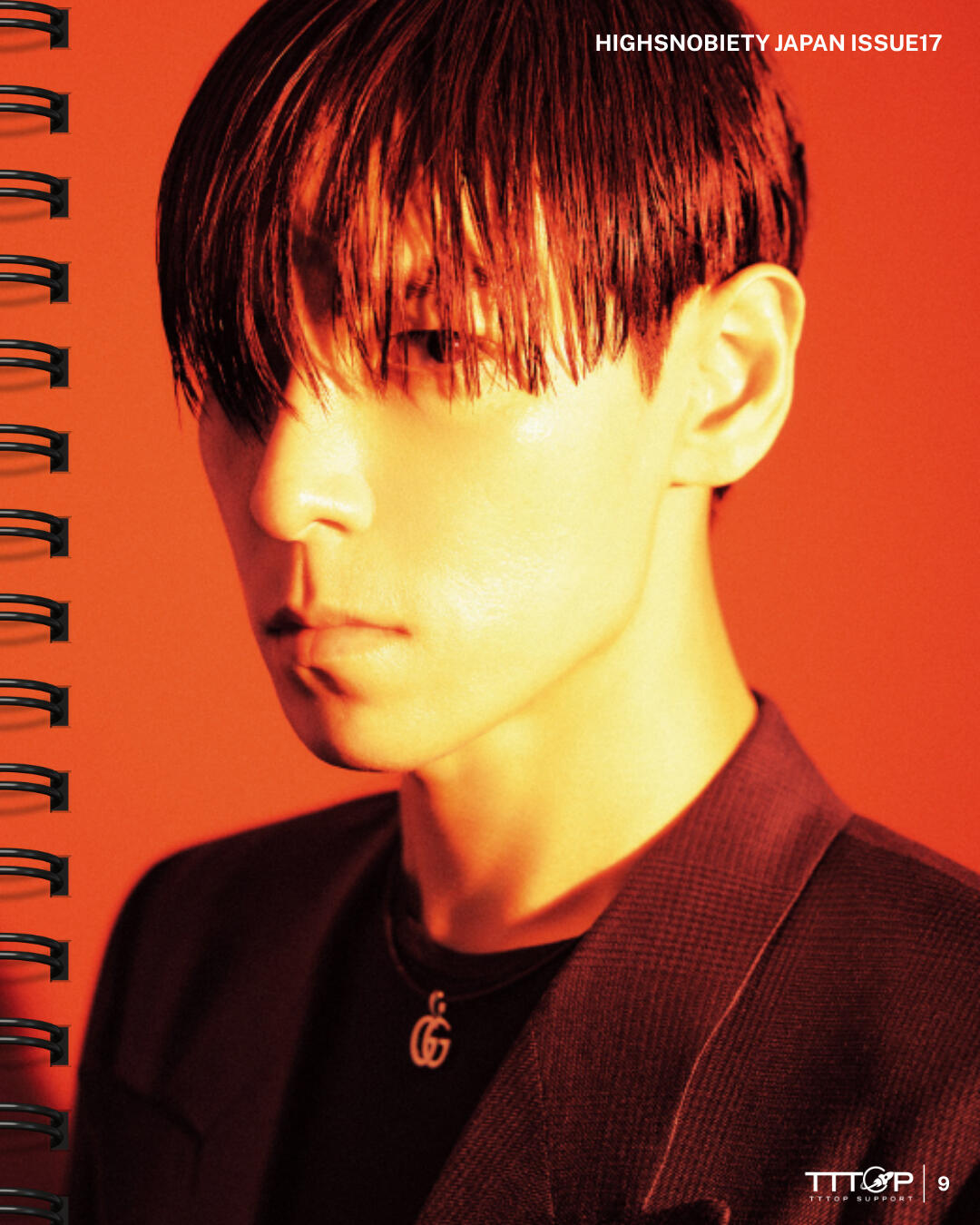
Q9: I think BIGBANG is one of the groups that changed the history of K-pop. T.O.P, you yourself have always seemed to keep a certain distance from the framework of being an “idol.” How do you personally perceive the word “idol”?T.O.P:I have often been asked questions like this since I was young, but I don't think I have ever thought deeply about it. Perhaps that itself is part of my identity as a person.To begin with, I have never thought of the boundaries between an idol, a musician, and an artist as separate, nor have I lived my life consciously thinking about them. For me, the only thing that matters is the time I spend making music.Rather, I think the very act of being conscious of such distinctions may be a way of thinking that arises precisely in people who are more conscious of how they are perceived by others. I don't think I have ever lived my life being conscious of those boundaries.
Q10: Would you say that, in your own mind, you never considered yourself an “idol,” even from the time you debuted?T.O.P: Not at all.
Q11: Nowadays, with social media and algorithms, we live in an era where even stars are expected to be “easy to understand.” In light of that, do you ever feel a sense of discomfort with being defined?T.O.P: I have never once felt that way. That's because I have never tried to live my life confined within that framework. That is precisely why I think I was able to take a step back and look at myself during those ten years. If I had chosen to return to that world and live my life bound by it, I don't think I would have been able to have this much “space” during that time.
Q12: T.O.P, throughout your long career, I think you've carried the image of “T.O.P” that many people hold. Did that image free you, or did it restrict you?T.O.P: I have never once felt that I had any limitations. I have always felt free. The reason I can say that with confidence is that, even now, 20 years after my debut, I don't think anyone in the world truly knows what kind of person I am.Other than my fans, I don't think there is anyone who truly understands what kind of person I am. If anything, I would like to ask everyone: “Even now, can you really say that you know the real me?”
Art, Beauty, and Japan
Q13: T.O.P, you have maintained a deep interest in art for many years. When collecting a work of art, what first draws you in: its beauty, or the ideas behind the work?T.O.P: Perhaps it is both. However, I don't think it is the beauty or the conceptual philosophy itself. Rather, I think I am drawn to a work when I sense a spiritual energy between the two, or somewhere along the line extending from them, and when it moves me.
Q14: So you mean something that extends beyond the sensory and the theoretical, right?T.O.P: Something different from those, a spiritual energy that lies even further along that line. Something that moves me somehow…When I meet someone, for example, there are times when I can feel warmth just by looking into their eyes, even without having a conversation. And conversely, there are times when someone can feel very cold. In the same way, I think I instinctively try to sense whether there is something beyond that which can move me.
Q15: So you mean that your senses are highly attuned. Is it something close to what you might call a sixth sense?T.O.P: I may be someone who is particularly perceptive.
Q16: In Japan, there is a culture of viewing 余白 (yohaku) or “space” and 不完全さ (fukanzen-sa) “imperfection” as forms of beauty. Is there anything about that sensibility that resonates with you?T.O.P: I strongly resonate with it. I believe that it is precisely because there is space and imperfection that a refined, delicate sense of perfection can emerge there.
Q16: Could you give us a specific example?T.O.P: This is something I always try to incorporate into the works I create myself. For example, when producing music, whether I'm creating the work that everyone hears, coming up with ideas, or actually making the music, I always begin by giving form to everything that comes to mind and expanding it as much as possible, and then I work on stripping things away afterward.For example, I might remove vocal harmonies or take out a particular instrument. In that way, the album I made this time was completed by stripping away as much as possible. That's why I think this was an album I created while thinking deeply about questions such as, “How can I create more space?” and “How can I create instability and express its beauty?”The reason I like instability is that I find unstable lines more appealing than perfect lines. However, it's not that I like instability that has been created intentionally.We are living in the age of AI now, and even if you draw everything with perfect lines, those perfect lines can be reproduced by anyone in exactly the same way.
But, for example, imagine that everyone is trying to draw the same straight line, and by chance, one line turns out to waver or tremble ever so slightly. No one can draw that exact same line again.Anyone can use a ruler to draw a perfectly straight line. But a line born from the slightest movement or tremor in someone's breathing cannot be imitated by anyone. That is why, in order to create music and works of art that no one else can imitate, I believe that it is precisely within that instability that we can come closer to perfection.
Q18: That was a very profound discussion. I would like to take some time to reflect on it myself and think about it again. So, when you are appreciating a work of art and when you are expressing yourself through music or acting, are the things happening in your mind different? Or are they all part of the same continuum of creativity?T.O.P: I like these kinds of philosophical questions. They're interesting. I believe that they are all the same creativity.However, while they are all the same creativity, when I encounter works of art and art history, or when I watch music or films created by others, I respect their ways of expressing themselves. Since I was young, I have treasured and kept within myself the emotions and feelings I have experienced through such works, in my own way. I think other creators are probably the same.And when I express something myself or create a work such as music, I try to express it and give it form in a way that only I can. In that sense, I think it is another kind of creativity.
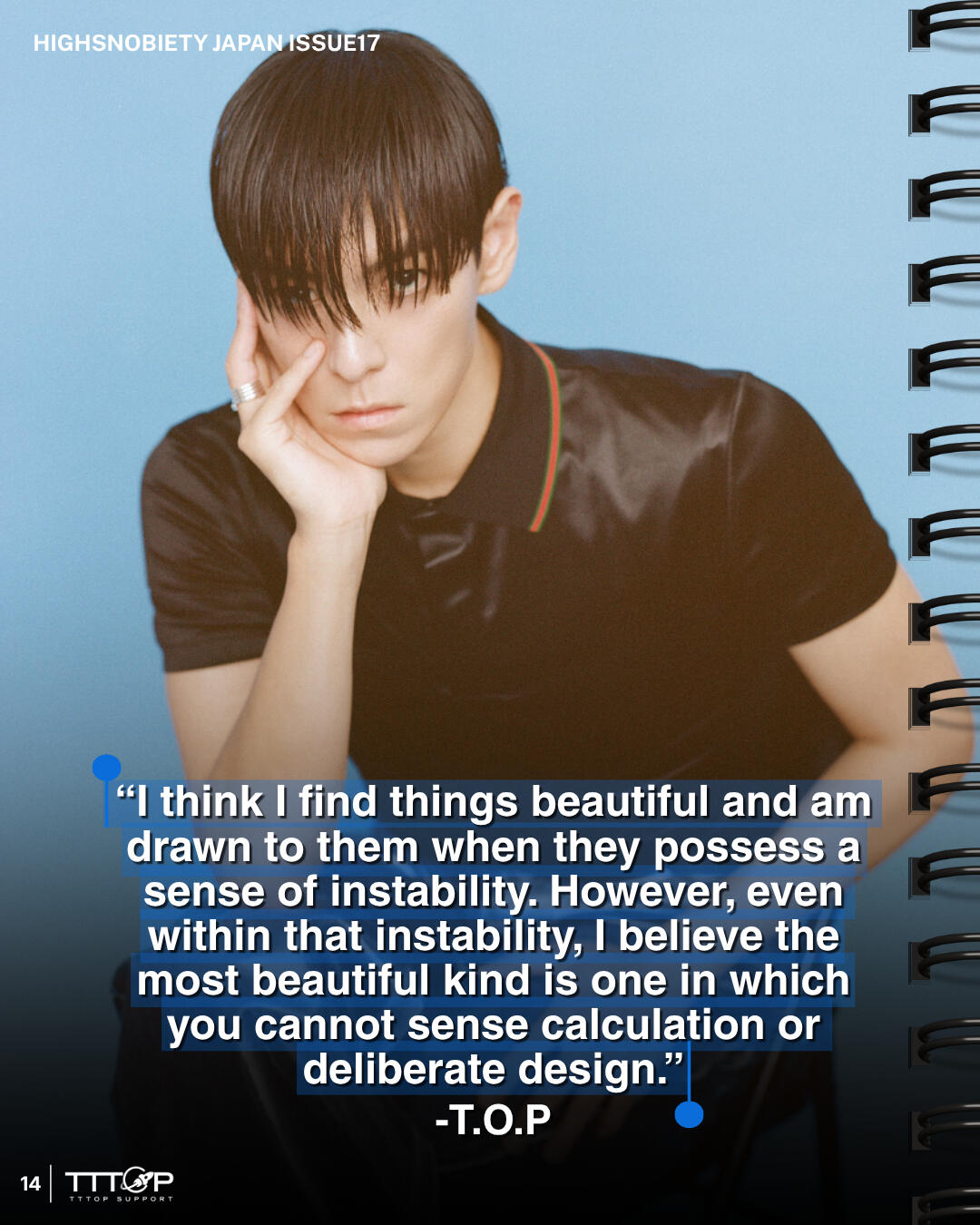
Q19: As you mentioned, the way we perceive beauty differs from person to person. With that in mind, are there any common elements or a consistent sensibility among the things you find beautiful?T.O.P: Earlier, you described me as having a “quiet sense of tension,” and I think the things I find beautiful myself also tend to possess that same kind of quiet tension. Perhaps that is why you were able to sense that kind of energy from me as well.Things that are not completely stable can sometimes possess a sense of tension, and there is also beauty in quiet things. Ultimately, I think I find things beautiful and am drawn to them when they possess a sense of instability. However, even within that instability, I believe the most beautiful kind is one in which you cannot sense calculation or deliberate design.
Q20: I feel that my own sensibility is somewhat similar to yours, T.O.P. There are times when I find beauty in the passage of time itself. Even when a work takes only a month to create, I can be strongly drawn to something that feels as though it contains a hundred or even a thousand years of time, or something in which different flows of time seem to have become intertwined to a degree that is beyond what human perception can fully grasp.T.O.P: That's right. That's why I like nature the most. I think nature is the most beautiful precisely because of the passage of time.
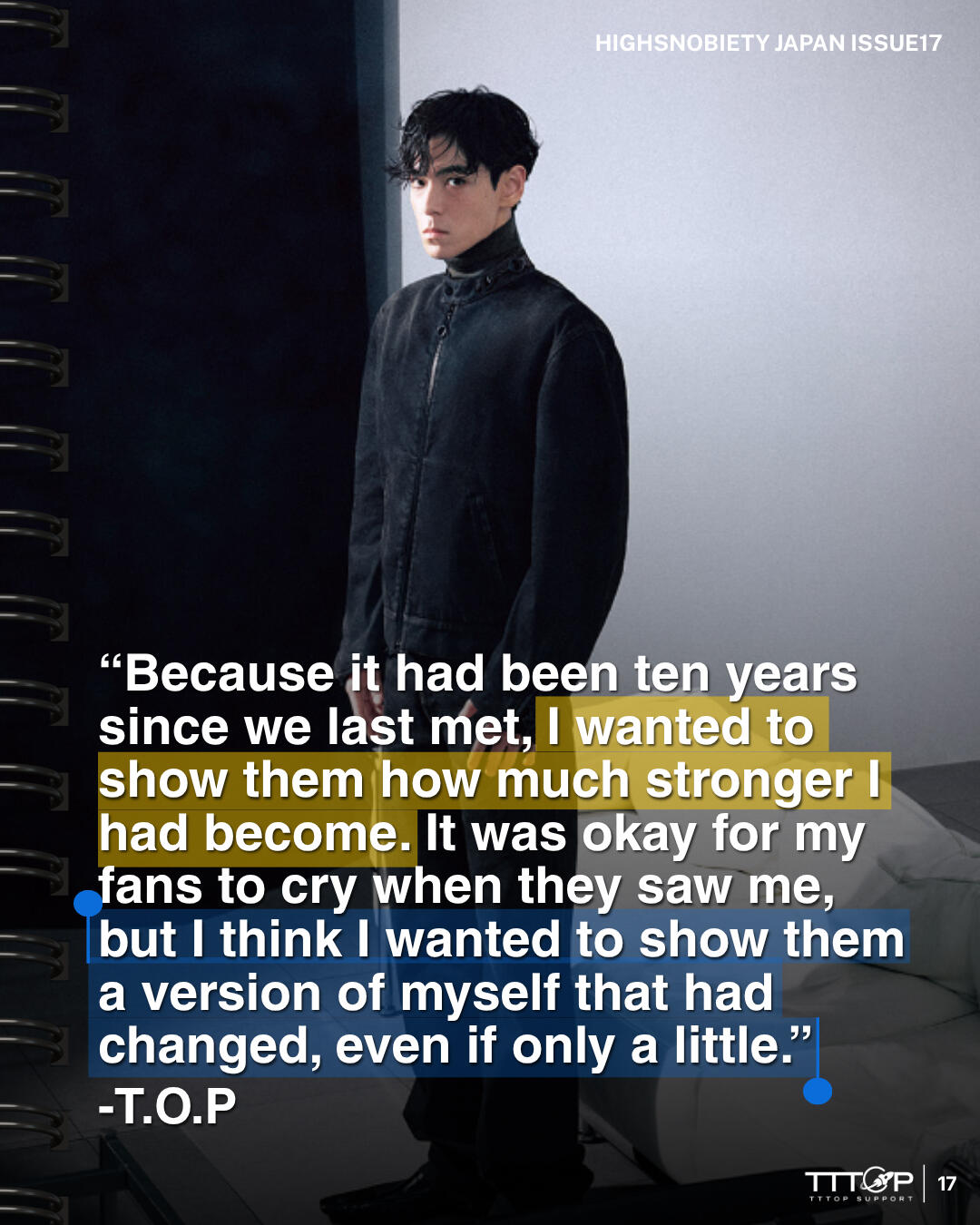
Q21: From the perspective of TOPSX, the ten years of “absence” seem to have been viewed not as lost time, but rather as a time of value. You have also spoken about how you were searching for yourself throughout that period. In today’s rapidly changing world, how do you view the importance of deliberately stopping, taking a step back, and allowing your thoughts to mature?T.O.P: If I separate it into two things, my relationship with myself and my relationship with my fans, I think they are somewhat different. Looking back, I don't feel that I spent all that time simply thinking deeply about myself. Rather, I personally feel that it was precisely because I had that period of “absence” that I was able to realize the preciousness of creation. That is why I believe I was able to continue searching for, and eventually find, the music that I am meant to make.And as for my relationship with my fans, when we reunited… first of all, I think I was trying not to cry. I was holding back my tears quite a lot. Because, as I mentioned earlier, I myself had come to understand the importance of creation that the period of absence had given me.On the other hand, on the day I reunited with my fans, I strongly felt how precious it was to meet again, something I was able to realize precisely because there had been that period of absence. That is why I think I didn't want to cry so easily.Because it had been ten years since we last met, I wanted to show them how much stronger I had become. It was okay for my fans to cry when they saw me, but I think I wanted to show them a version of myself that had changed, even if only a little.
Q22: If it had been your “past self” who met your fans again after ten years, do you think you would have cried?T.O.P: It is quite difficult to even imagine what I would have been like ten years ago. If that ten-year period of absence had happened starting ten years earlier, I would have been separated from my fans at the age of 19… Since I have never experienced anything like that, I can't imagine it.I think it was precisely because it was such an incomparable reunion that it felt even more precious to me. But one thing I know for certain is that I am a very emotionally sensitive person, so I think I probably would have shed a lot of tears. It was such a moving experience.
THE FUTURE
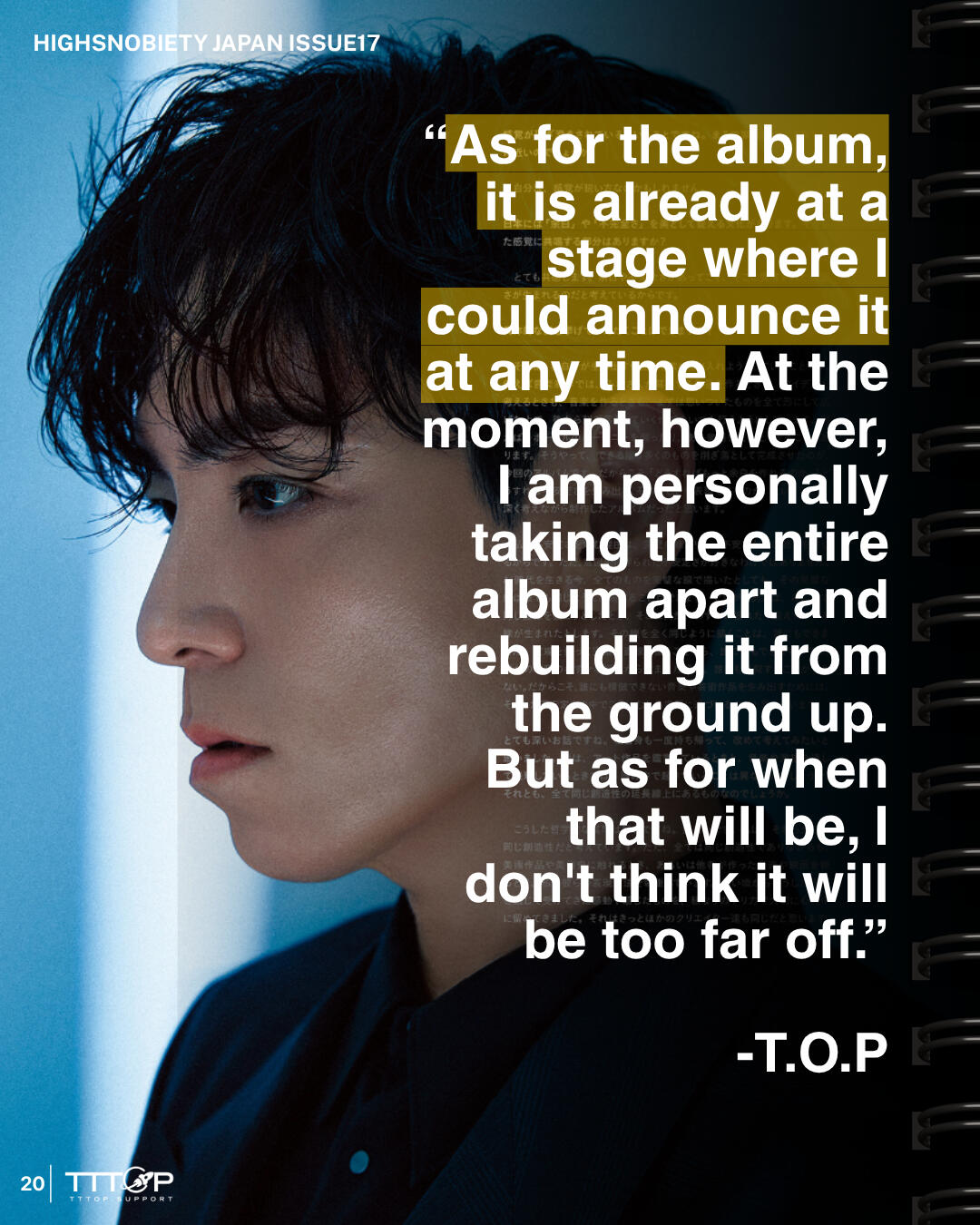
Q23: At the RE:UNION Japan Fanmeeting, where you showed your deep love for your fans by inviting everyone free of charge, the character music video for “STENDHAL SYNDROME,” a track from your album ANOTHER DIMENSION, was unveiled for the first time. Many people are eagerly anticipating your next steps. When do you plan to return before everyone with new work? Could you tell us about your specific plans?T.O.P: From now on, I plan to meet my fans in person through the “T.O.P PRE-STUDIO 2026” tour, so the first and most important step is to meet my fans directly on site and make time to interact with them. As you already know, there are plans for us to meet regularly in this way.As for the album, it is in a state where I could announce it at any time. At the moment, I am personally taking the entire thing apart and reworking it from the ground up. But as for when that will be, I don't think it will be too far off.There is really a lot that I am preparing. In music, there is a new album, and the “T.O.P PRE-STUDIO 2026” tour is also coming up. I'm also putting quite a lot of effort into designing some lovely merchandise featuring the character “MOJIRI,” who appeared in various forms and whom Japanese fans have really come to love. I am pouring my passion into creating these designs together with Director Choi Kyung-sun, whom I previously worked with on the “STENDHAL SYNDROME” music video, paying close attention to every detail. I hope you will look forward to those things as well.
Q24: Will the merchandise be made available worldwide rather than being limited to Japan?T.O.P: That's right.
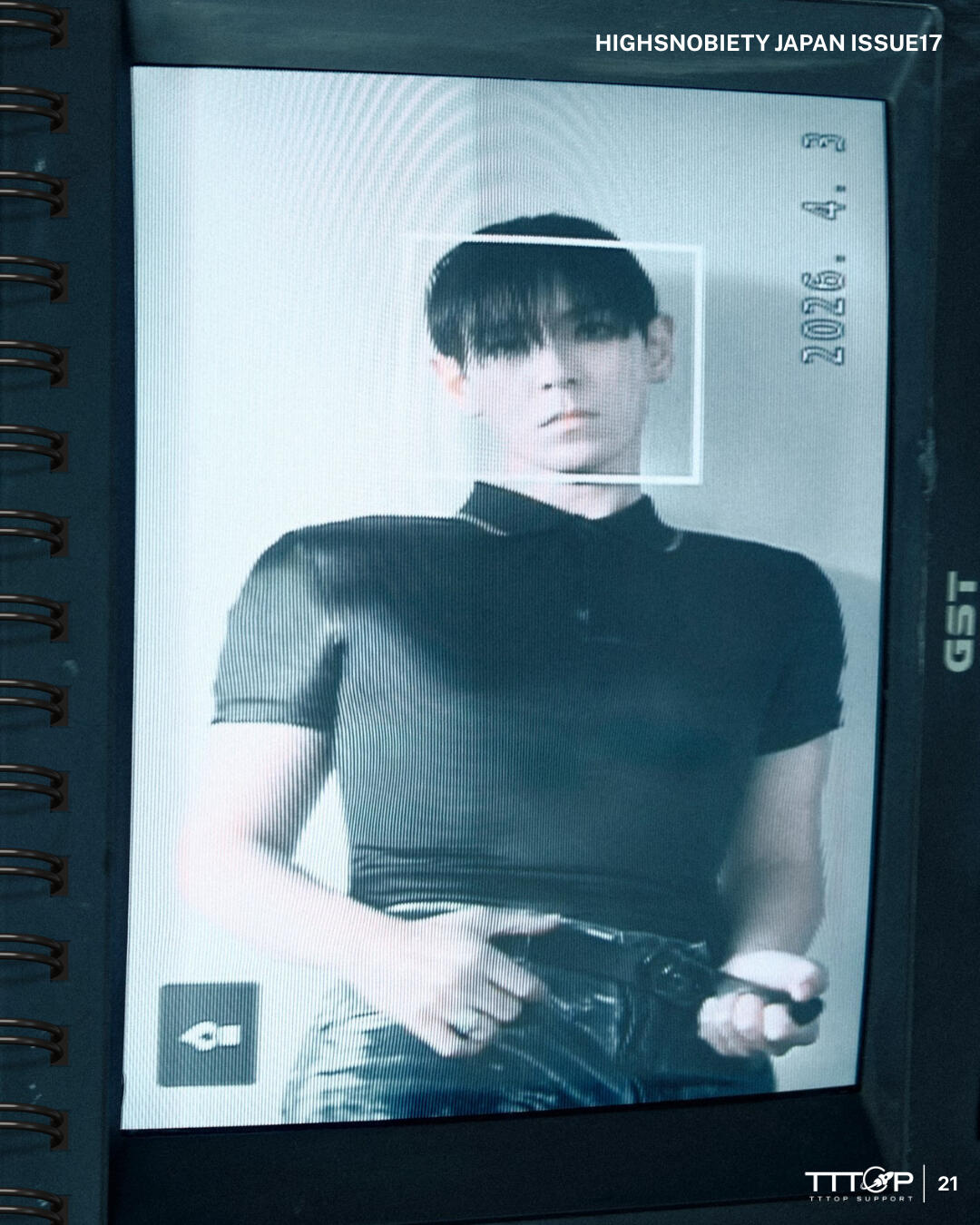
Q25: Could you also tell us about the direction you are taking with your music?T.O.P: For the first time, I’ll share this here: if ANOTHER DIMENSION, my first album, was an autobiographical story, in other words, a story about myself, then the second album will be a story about the people in the world that I observe, rather than a story about myself, at least.In other words, if the first album was a process of looking back on and observing myself, the second album will be a story about the people I observe. It will be stories about the people living in the world.Social phenomena will probably appear in it as well. There are some fairly bold expressions, and I think there will also be new forms of expression that I have never explored before, so I hope you will look forward to it.
Q26: Expectations are growing for “T.O.P PRE-STUDIO 2026,” a unique space and a one-of-a-kind project. T.O.P, what kind of place is “T.O.P PRE-STUDIO 2026” that you envision? And what kind of new relationship would you like to build with your fans there?T.O.P: As I mentioned earlier, if ANOTHER DIMENSION, my first album, was an album in which I took another look at and observed then the second album is a story about the people in the world that I observe and look closely at. “T.O.P PRE-STUDIO 2026” is based on the same idea. With my previous album, I released music that I wanted to share with the public and my fans. This time, however, we will create together the things that my fans want to ask me about and the themes they want to experience through my music. I think the process itself is a very romantic encounter.We will create works together with my fans, sharing everything, whether it is a good idea or a new idea, and creating together. I think there is even a possibility that a new album could emerge from that.I see “T.O.P PRE-STUDIO 2026” as a new stage of collaboration where we do all of these things together.
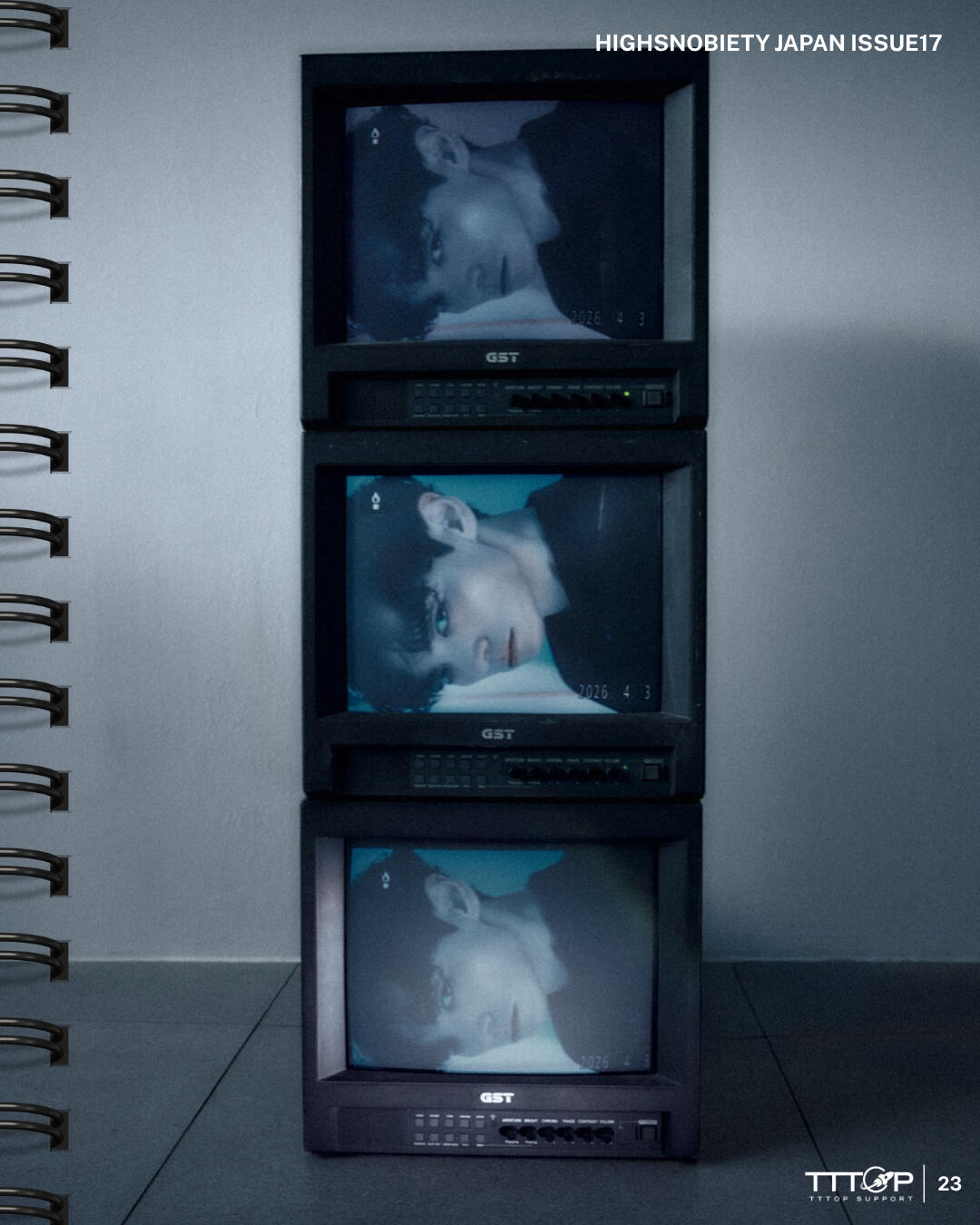
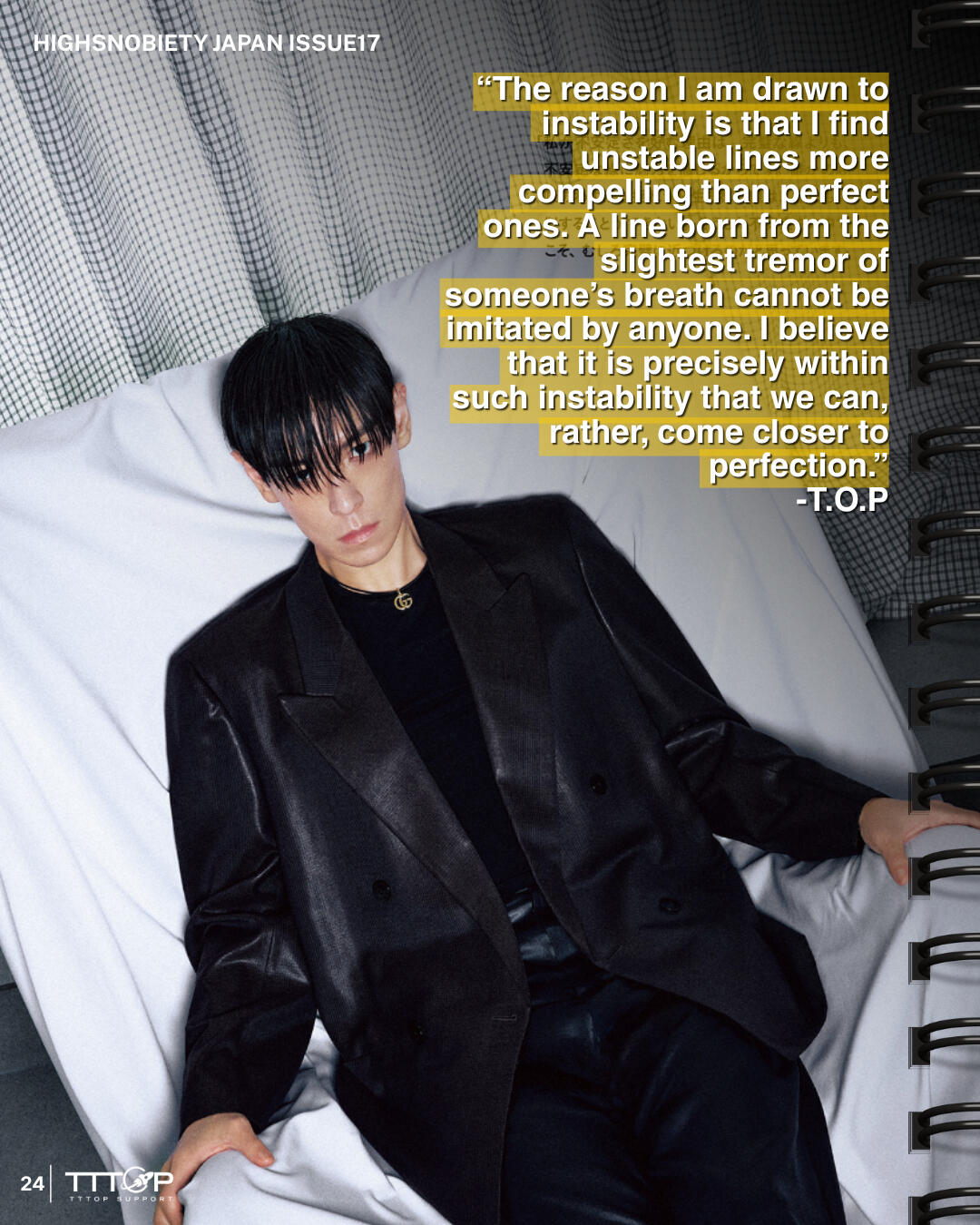
Q27: The word “TOP” evokes an image of an unshakable position, or a perfect “peak.” On the other hand, you have spoken about how you find beauty in imperfection and in things that are incomplete or lacking. I found that seemingly contradictory sensibility very intriguing. There was also an image of you as a perfectionist, but through this conversation, I have come to sense a new side of you, almost like “Another Dimension.” But you do still like perfection, after all, don’t you, T.O.P?T.O.P: Of course, I do have a strong commitment to always pursuing perfection, but I think I am also someone who sometimes takes a step back from that, looks at things from a broader perspective, and struggles with them while trying to explore and discover.
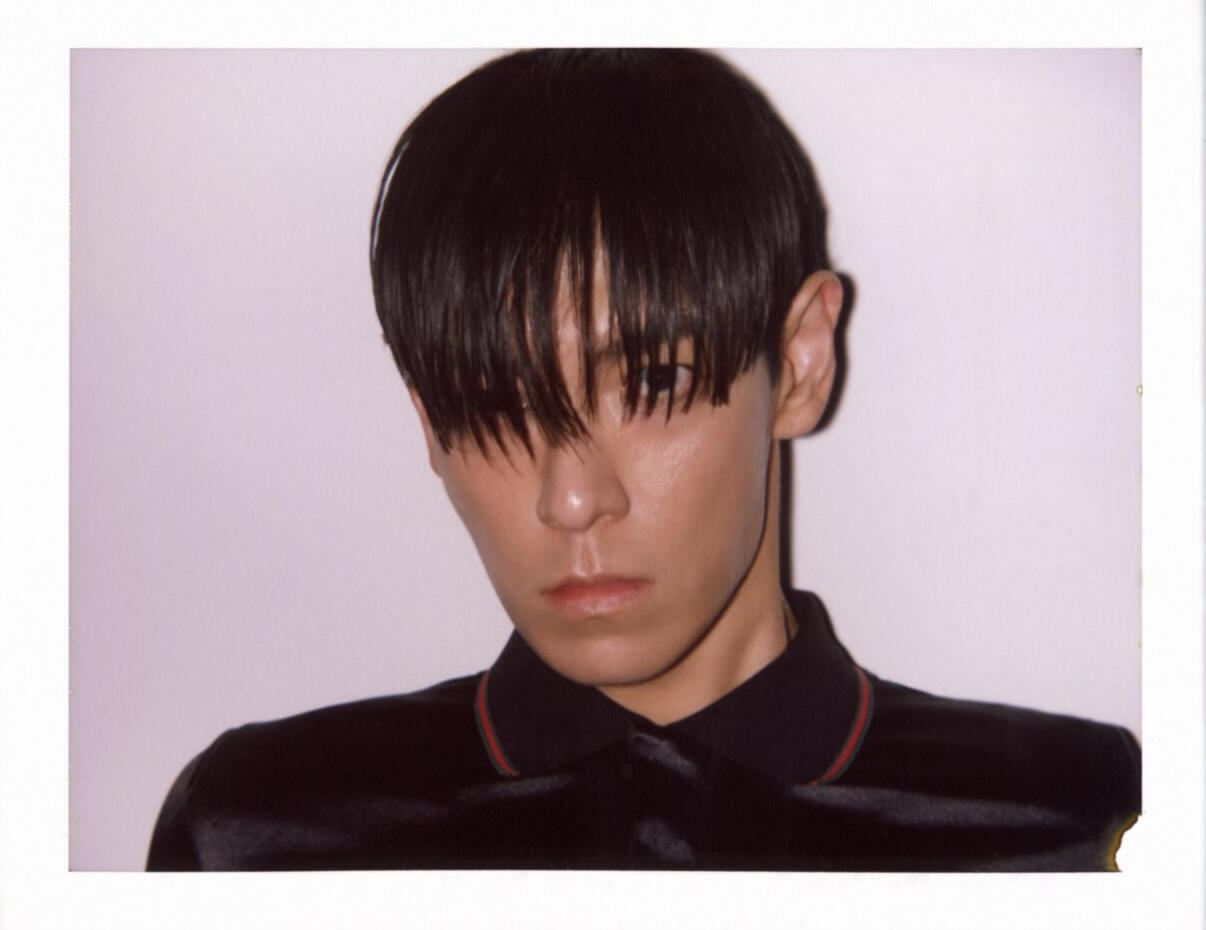
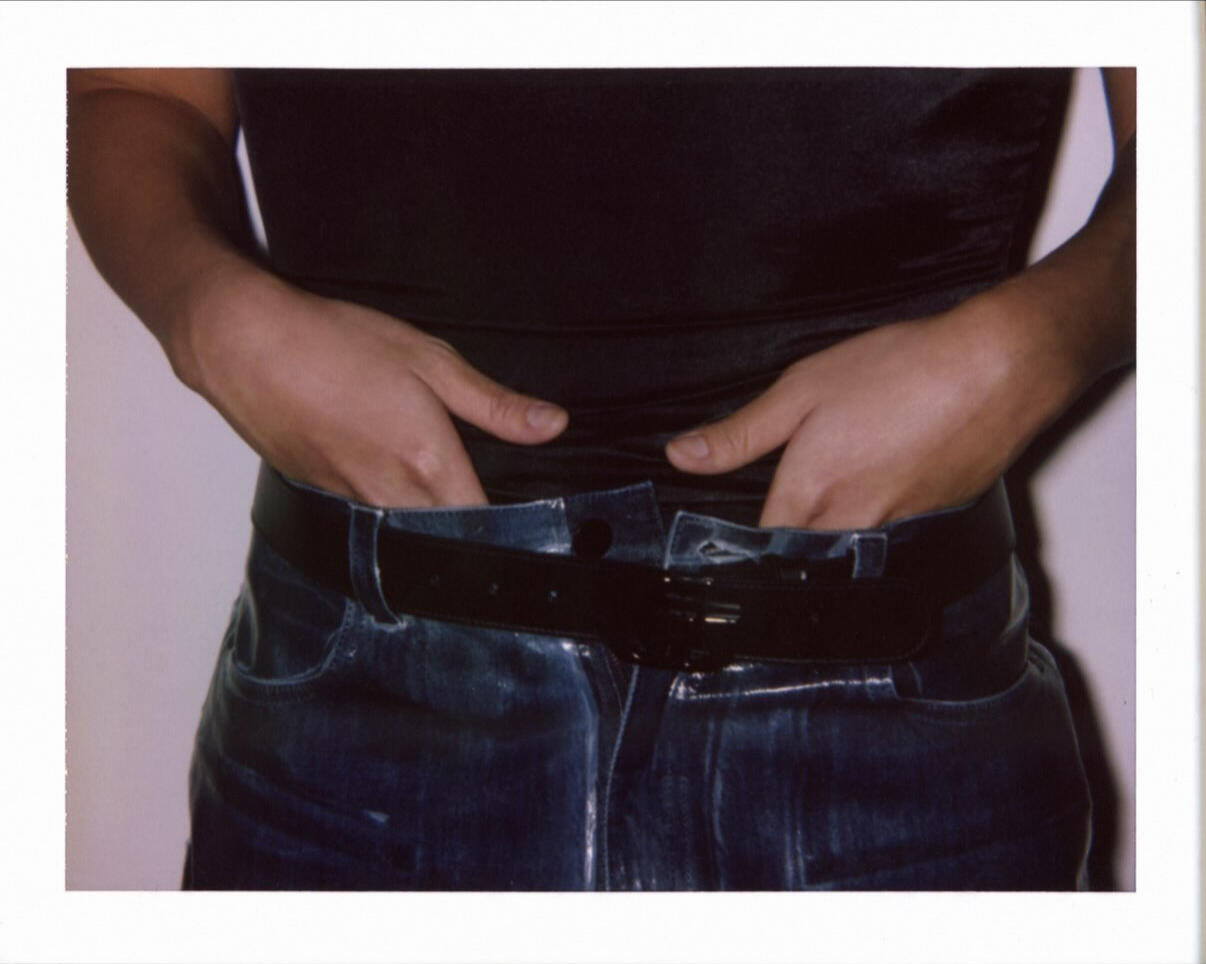
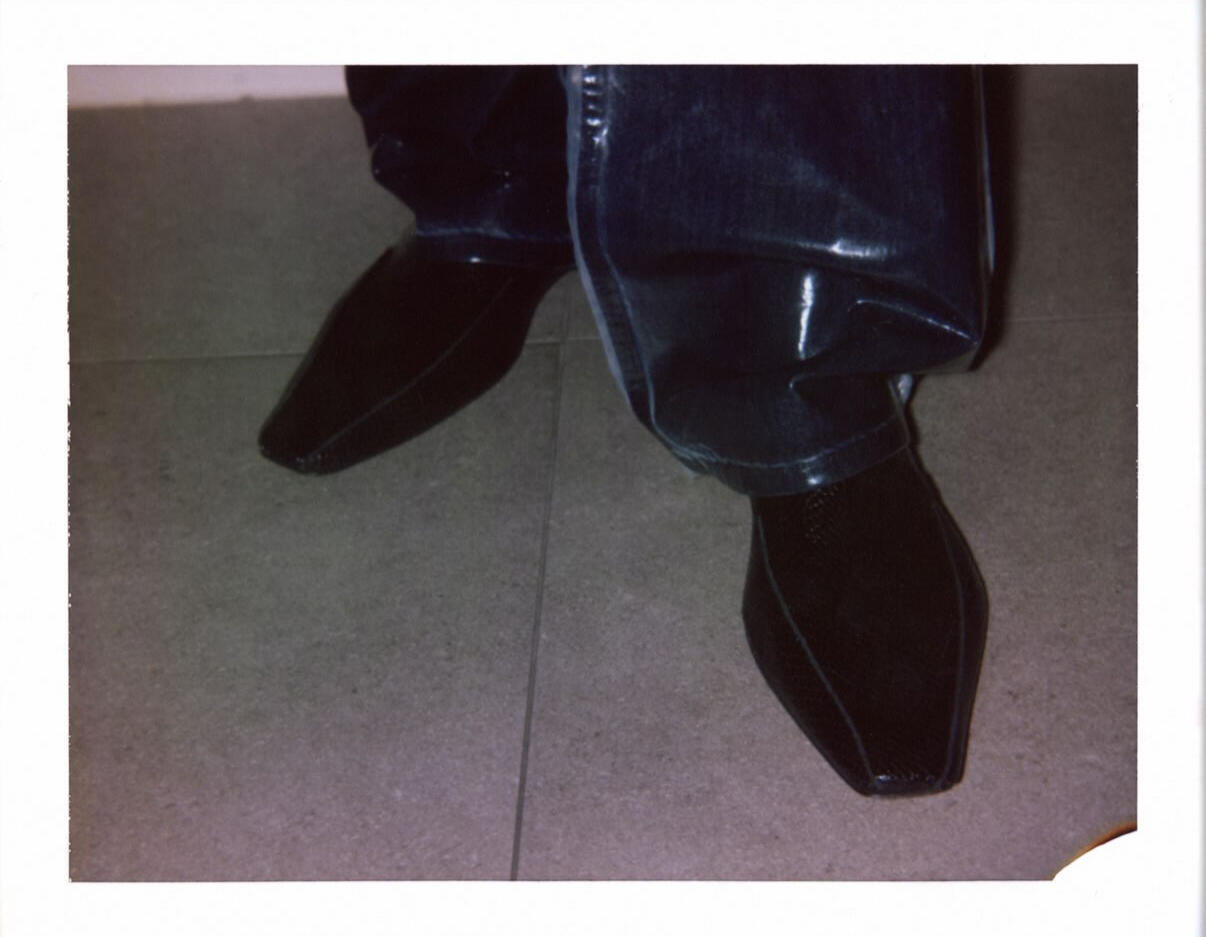
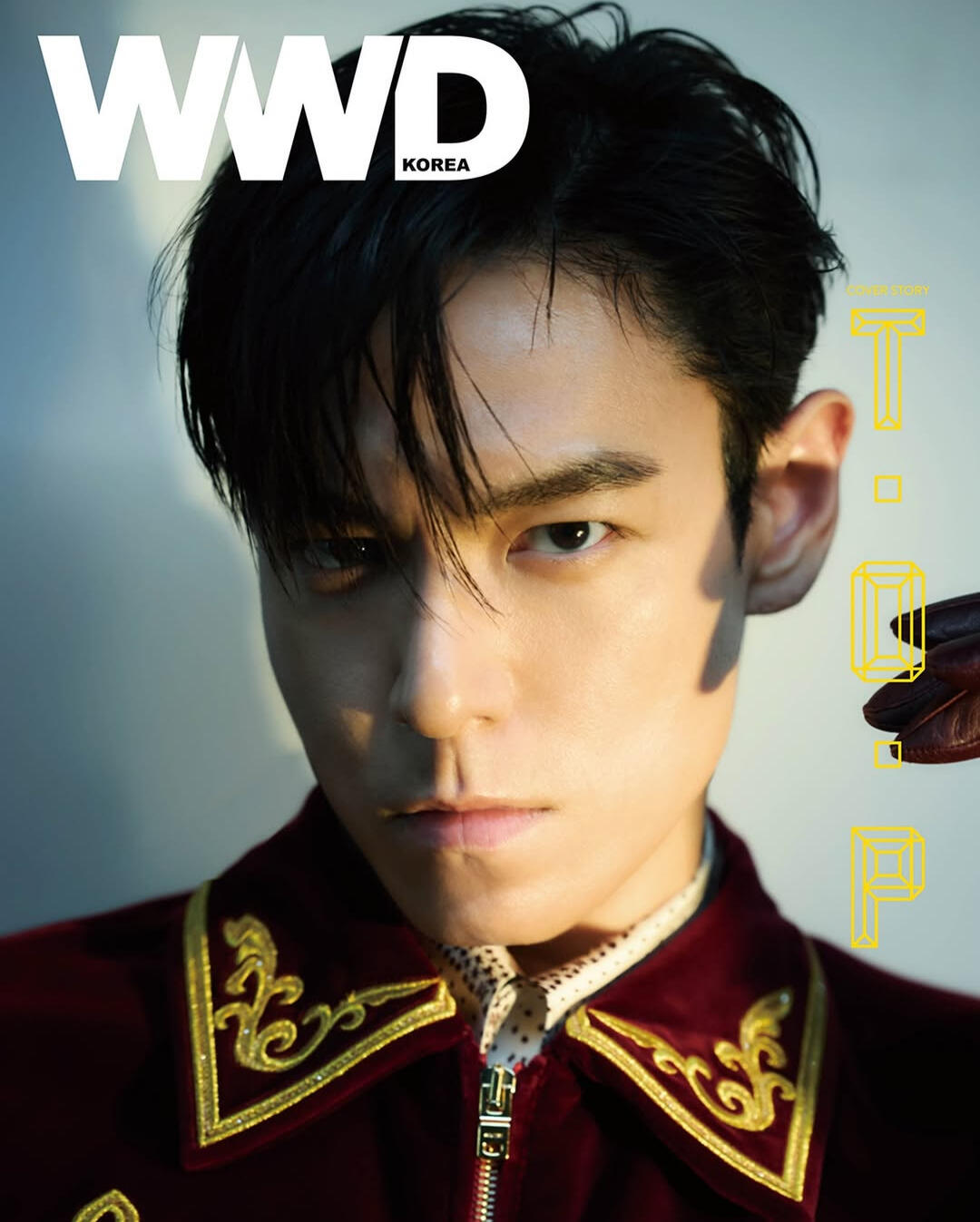
WWD KOREA
may 2026 issue
Translated by TTTOPSUPPORT
Posted: May 6, 2026
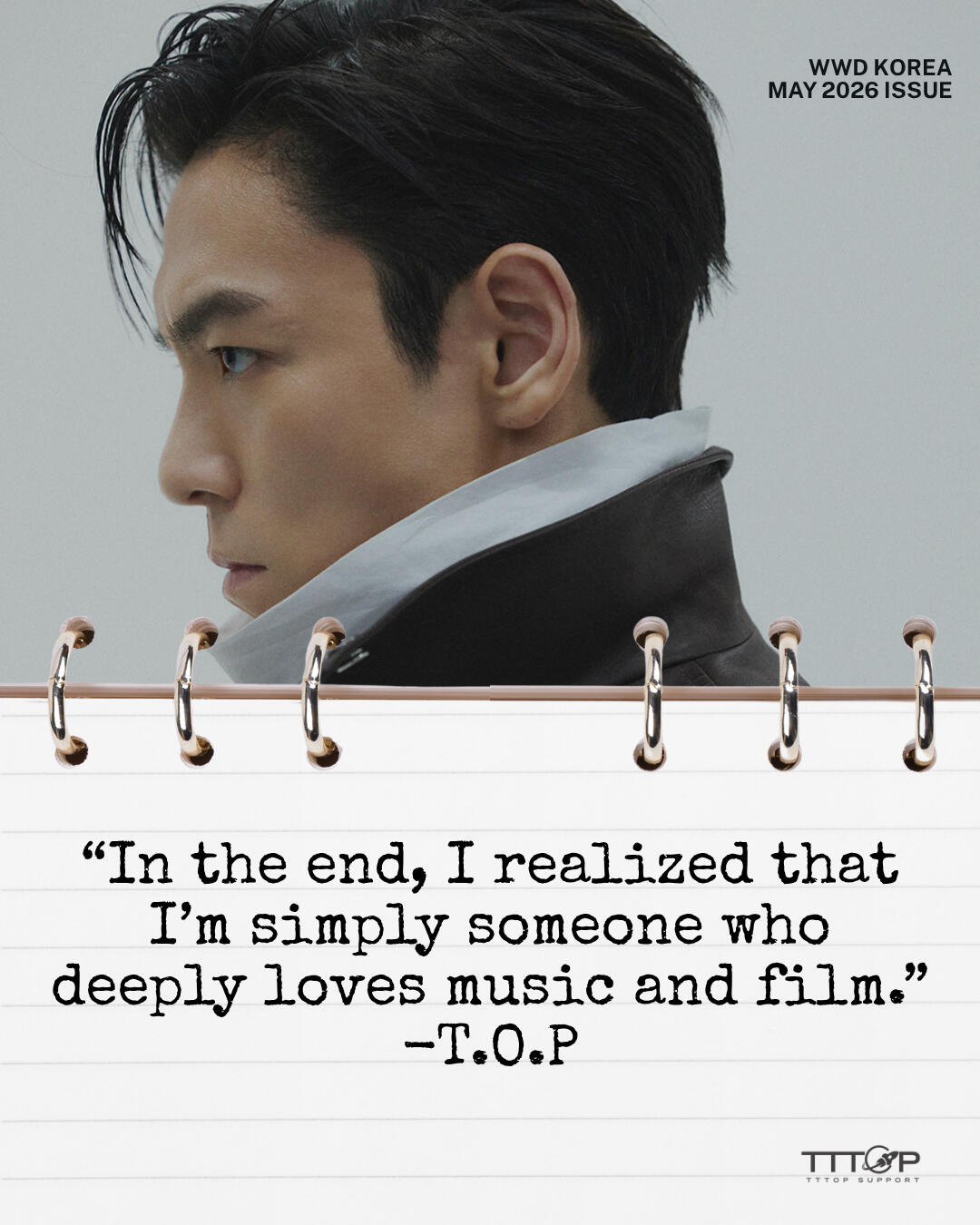
Message from WWD Korea Editor in Chief
The cover star of this issue is T.O.P, who has broken 13 years of silence and returned with a full-length album. Going beyond simply writing songs, he says he has intensely explored the essence of the music he is meant to create. Distancing himself from all noise, he calmly confesses the time he spent dissecting himself.“Rather than clinging to something until the end, I think I’ve come to focus on the process of emptying myself. I try to fill that emptied space not with grand beliefs, but with an attitude of constantly learning from the world.”For T.O.P, this album is like a ritual of tying up a chapter of his life, confronting the blemishes of his past head-on. The music, born after a true reunion with himself, fully reflects a more solidified inner self. His intense immersion in emptying himself to reach the essence evokes the discipline of a spiritual seeker.After shedding the many layers that surround us, what is the true self that remains? I hope that the sincere record of the artist T.O.P—who has coolly reflected on himself and willingly cast off his old skin—and the precious pages of this month reach you with a clear and profound resonance.
Ruby Kim
Editor in Chief
Q1: This is your first full-length solo album in 13 years. Since it coincides with the 20th anniversary of your debut, it feels especially meaningful. The fact that you never stopped pursuing music has been a great comfort to your fans. How have you been during that time?T.O.P: It was a period of stepping away for a while from social interactions and noise. But rather than simply resting, I believe I used my time more intensely than ever. I was more productive than anyone else, and it was a time of filling myself up so fully that I’d like to tell myself I spent it fiercely and meaningfully.
Q2: This album gives the impression that, rather than trying to meet someone else’s expectations, the artist has fully realized their own inner world. After going through many waves of emotion over time, what did you ultimately find to be the essence of your creative work?T.O.P:: In the end, I realized that I’m simply someone who deeply loves music and film. I felt once again that I truly become myself only when I create the music I want to hear and bring something different from others into existence.
Q3: The first track, “TOP욕,” [Self Crucifixion] is intense right from the start.T.O.P: The reason I included even the shameful parts of my past without holding anything back was because I wanted to clearly bring closure to a chapter of my life that I will never return to. By accurately documenting even those moments within my work, it was my own deliberate process of moving forward.
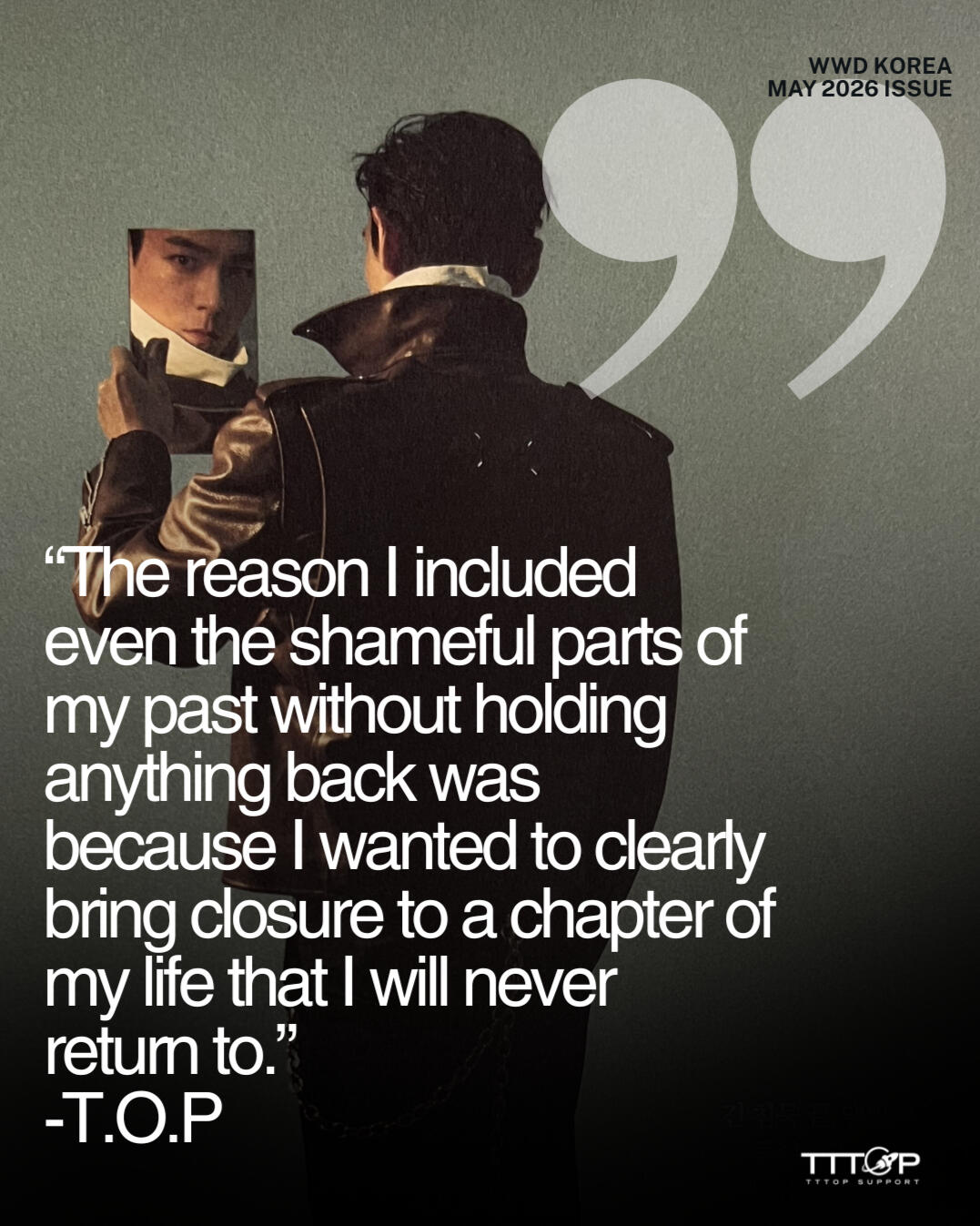
Q4: The title “Multiple Perspectives (ANOTHER DIMENSION)” is intriguing. Do you hope this album becomes a telescope through which the public can observe T.O.P as a complex artist, or a microscope that breaks down and reveals your inner self?T.O.P: Honestly, I try not to have any personal expectations at all. I don’t create my work with a specific audience in mind. Sometimes I know very well what the public wants, and that can blur with the essence I’m trying to realize. For the past decade or so, I’ve focused only on the most fundamental question: what kind of music is truly needed for people living in this era?That’s why I hope the works I put out going forward won’t simply be consumed commercially and then fade away. The album title “Multiple Perspectives” comes from that same idea. I believe that every moment when different thoughts come together through my music is part of the process of completing the album. I want to leave a record of the many different viewpoints that will reflect on this album in the future.
Q5: You personally produced all the tracks. In an era where short-form music of around 1–2 minutes dominates, you chose a longer narrative where each song exceeds 3 minutes. You must have had your own uncompromising standards.T.O.P: Trends always flow, and public response constantly changes. Within that flow, I wanted to create music that wouldn’t just be quickly consumed and forgotten, but music that would remain unfading even as time passes. In this work, I tried to incorporate elements of a “Golden Era” that transcends time—similar to the language of 1960s–70s rock—and combine it with the emotional sensibility of 1990s Korean pop, which I see as the true essence of K-pop, along with a deconstructive approach.My most enjoyable challenge was creating a structure that feels as if it could belong to no specific era, something that sounds unlike anything ever heard before. Honestly, once I start talking about music, I have so many thoughts that it never really ends (laughs).
Q6: In terms of sound as well, it gave the impression that you relied on the power of your voice alone rather than filling the density with devices.T.O.P: On this album, there is almost no doubling or harmony. It was filled with only a single voice. I think of my voice itself as one large instrument. To capture that authenticity, I stripped away sound almost obsessively.In fact, music is similar to painting or cooking. Just as a dish shines brightest when you bring out its natural flavor by using only good ingredients, I wanted to find the optimal balance with just my essential voice, rather than layering on unnecessary elements. That process was the most interesting and important subject of study for me.
Q7: That process must have been a lonely and intense battle with yourself. Personally, it even brings to mind the works of Agnes Martin, who is known for the aesthetics of restraint. What mindset did you have when approaching the recording in order to achieve that essential sound?T.O.P: The only concept I focused on for this album was just one thing: to convince the entire world using nothing but my voice alone. Before entering the booth, I would essentially hypnotize myself with the idea that “I must persuade the world with this one voice.” While building up energy is a technical matter, my work requires a deeper form of meditation. If I am not convinced myself, I delete every file without hesitation, no matter how much effort I put into the recording. I simply cannot allow myself to speak to the world with a voice that even I can’t believe in.
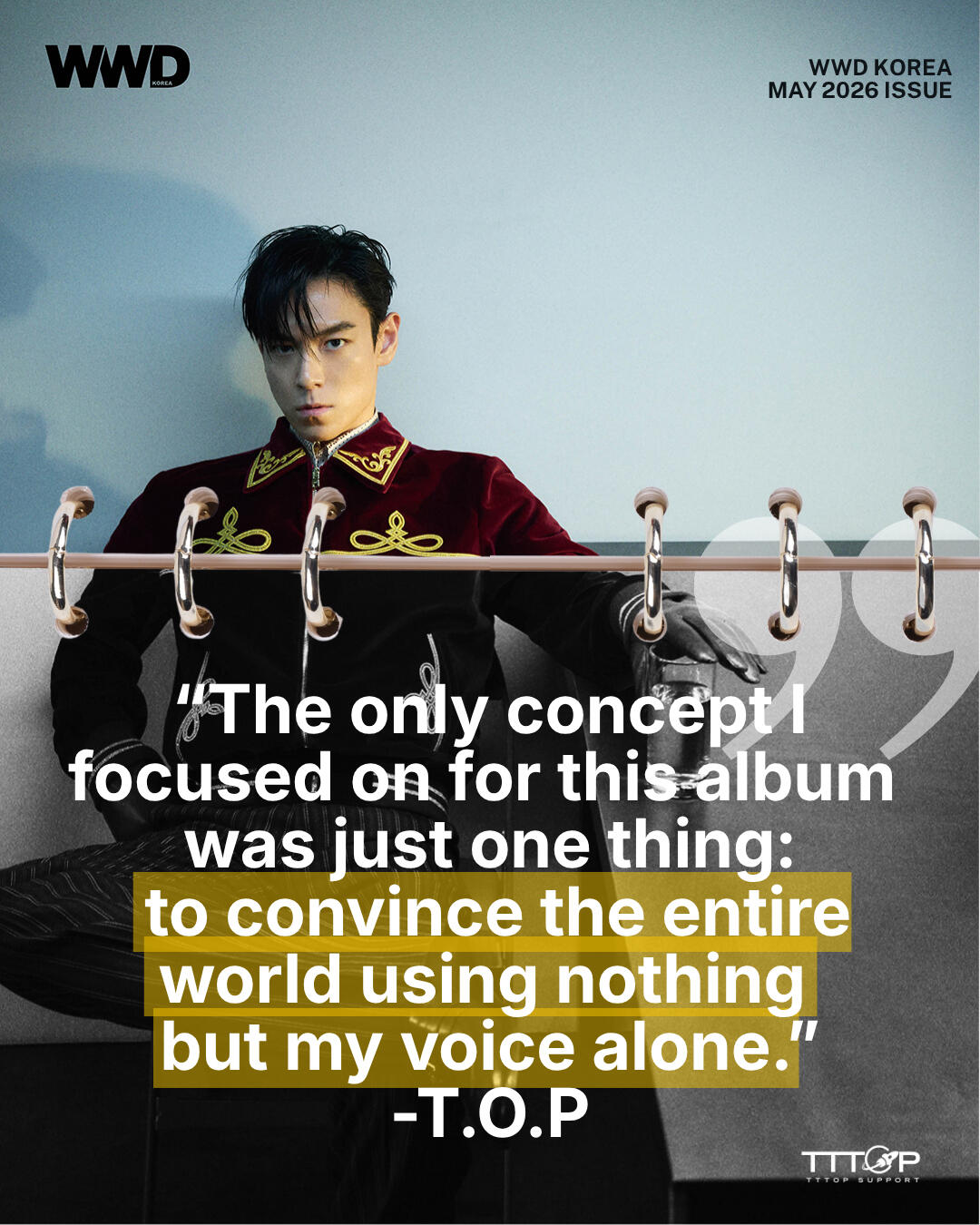
Q8: As an artist, you have a distinctive eye for ovserving the times. Is there a particular historical or cultural moment that inspired this album?T.O.P: I always try to put myself in the position of an observer. Lately, when I look at people in their 20s and 30s on the streets, I see that fashion and culture in general are strongly infused with the sensibilities of the 1990s and 2000s. Seeing that gave me the conviction that “I should make music like this again.” Personally, I really like the emotions and energy that 1990s Korean pop music had. I wanted to take the pure nostalgia of that era before the term K-pop was even established and reinterpret it in a modern, more refined way.
Q9: When you look at YouTube and various platforms, there’s been a significant influx of listeners in their teens and early 20s. Even younger fans who are encountering T.O.P as an artist for the first time are getting excited, saying, “This is real K-pop.” What kind of motivation does that kind of feedback give you?T.O.P: It makes me feel like I need to live more properly (laughs). Ever since Squid Game Season 2, I’ve really felt the impact of having many young fans around elementary school age from all over the world. The moment I became aware of that fact, I felt a positive sense of responsibility. I feel a deeper sense of accountability than ever for the position I’m in right now.
Q10: Is this album a record that condenses the past, or is it an erasure? Did you discover any new aspects of yourself through the creative process?T.O.P: There’s nothing new that I came to realize. Rather, it captures the process of completely emptying out and discarding my past self. After getting rid of all the unnecessary versions of me from the past, I was finally able to face a new self that is truly free. This album is a record of parting ways with the past.
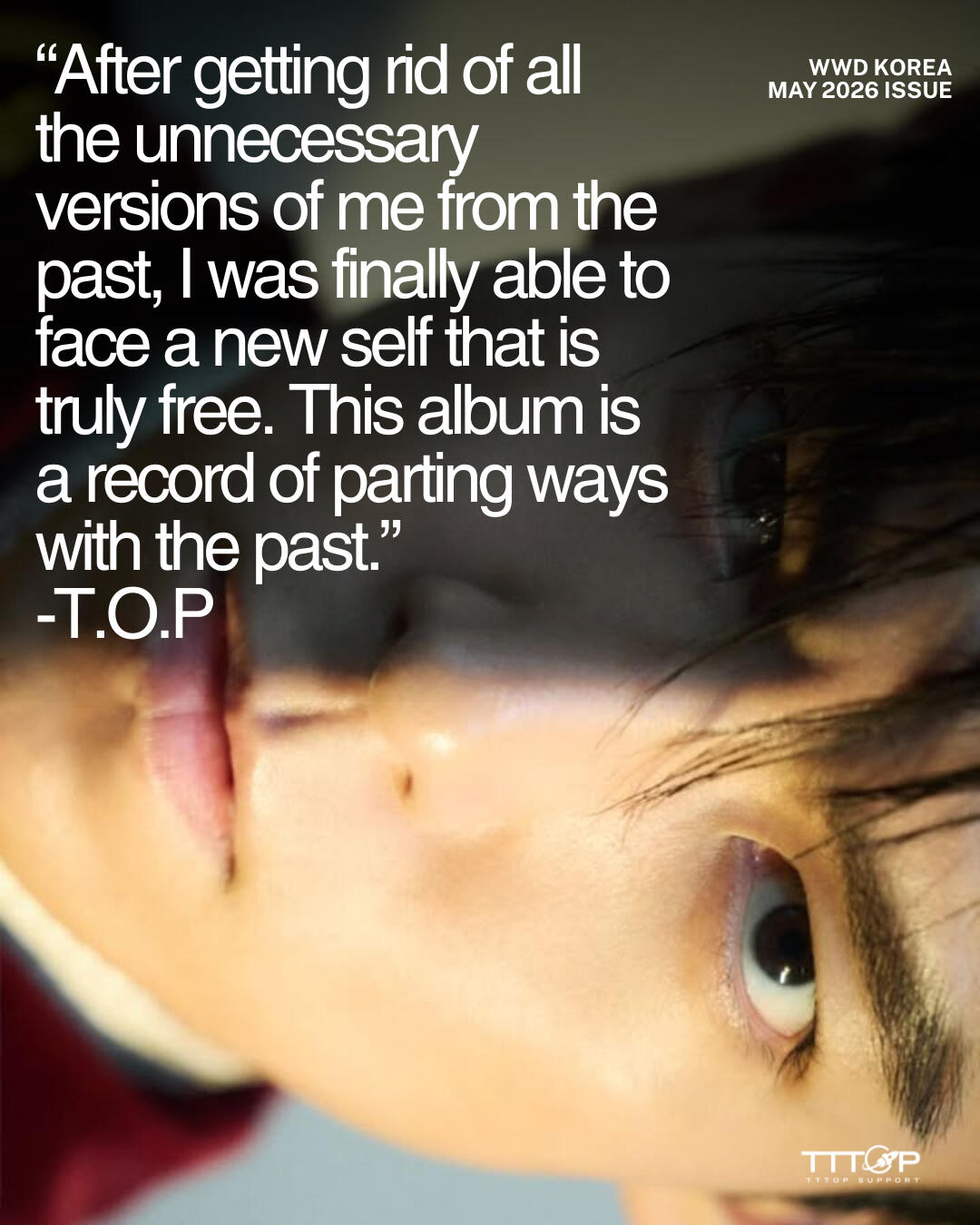
Q11: Among the many tracks, is there any special meaning behind choosing “Desperado” and “Completely Crazy” as double title tracks?T.O.P: My album doesn’t really have a separate title track. I created the entire album as one organic narrative, with the idea that every track is essentially a title track. If I compare it to a film, it’s like having to choose just one most impactful scene but given the avant-garde nature of my album, I first selected the songs that would be most friendly to the public. I focused on tracks that listeners could enter and engage with more comfortably. In particular, “Desperado” is a chapter in the latter half of the album that emotionally connects most closely with listeners of my generation, which is why I chose it.
Q12:Desperado is different from the existing style. I would say it has a slightly more direct and warm sentiment.T.O.P: At some point, I started to wonder: “Why don’t we have enough music that you can listen to when you want to heighten a subtle, intimate mood? And on the other hand, for those who want to enjoy solitude—when they’re drinking whiskey or raising a glass alone—I wanted them to feel a sense of emotional fullness, like, ‘I feel pretty cool listening to this kind of music right now.’” I wanted listeners to feel that kind of self-assured, almost stylish satisfaction. It’s a song I expressed in a quieter, more subdued way than my usual manner of speaking.
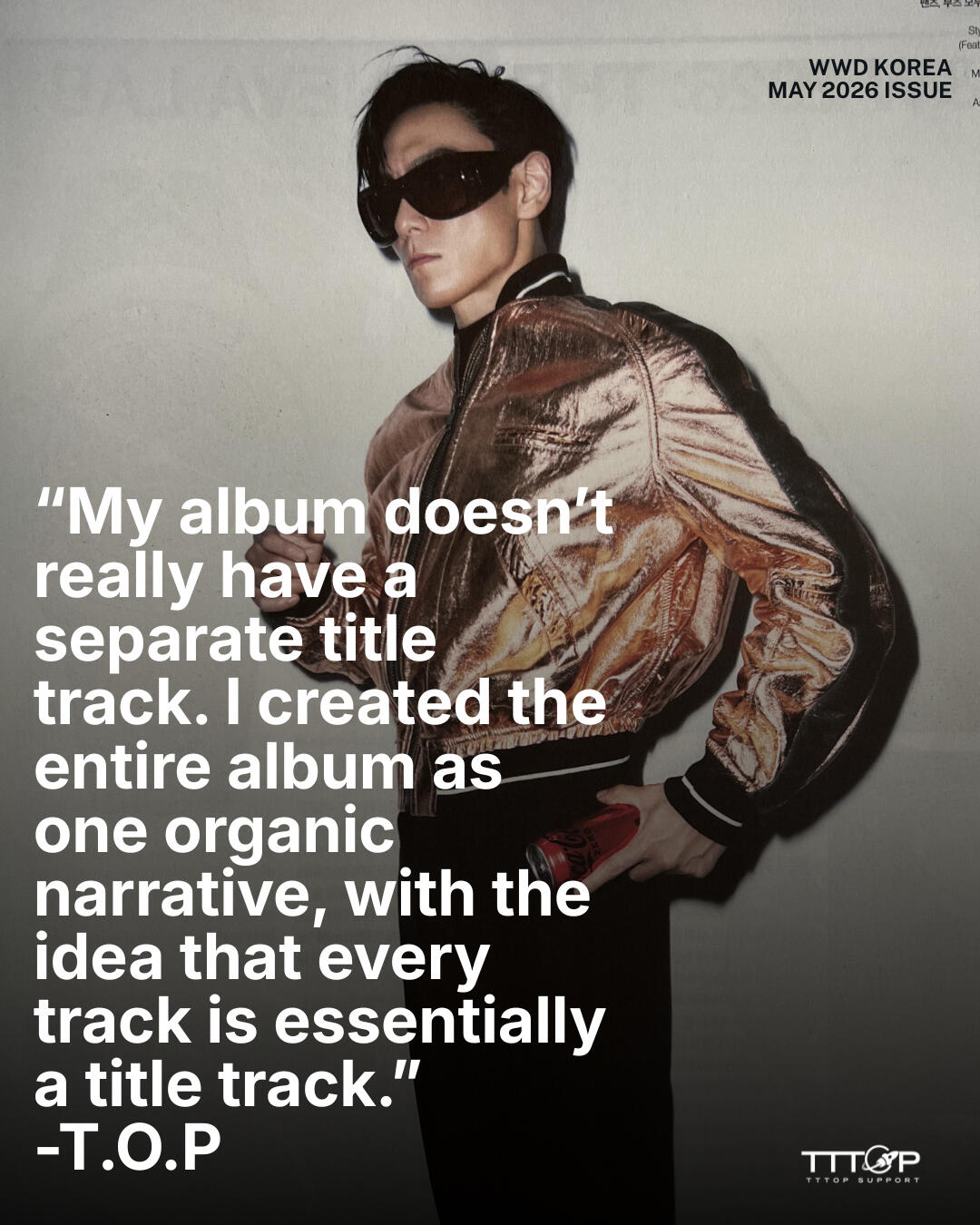
Q13: The music video’s level of completion is overwhelming. You worked with art director Chae Kyoung-sun and cinematographer Kim Ji-yong, who both worked on Squid Game Season 2. If there was one visual point you focused on the most, what would it be?T.O.P: I didn’t want to follow the typical conventions of music videos. I wanted something that blurs the line between an art film and a music video, something highly aesthetic yet still carrying a clear message. Fortunately, the directors deeply resonated with my vision, and we worked intensely while fully respecting each other’s roles and areas of expertise. I only provided visual inspiration, and after that, I completely trusted and delegated to the specialists in each position. Thanks to that, I think we were able to create a collaborative work that goes beyond just a video.
Q14: The chemistry with Nana, who appeared in the music video, has also become a hot topic.T.O.P: After finishing the song, Nana came to mind. We needed someone who could simultaneously embody a kind of manic energy and classical elegance. Above all, she needed to have the sense to internalize the rhythm of the music. I carefully asked her to listen to the music first, saying, “It’s okay if you decline, but please listen to the music first,” and she gladly agreed.
Q15: The news that Ed Ruscha, a master of contemporary art, participated in the album design was surprising in itself.T.O.P: He is a master who usually works in seclusion, so I was a bit cautious, but I met him in person and worked on the project. The entire process leading up to the mysterious and refined final result was also a very special experience for me.
Q16: Among the tracks, the title “Kkokkalkoon” stands out. It’s a rather unusual name for a fan song.T.O.P: Compared to my usual music, it’s very harmless and sweet, isn’t it? (laughs) I even tried playing around with the idea of going all the way in a cuter direction, and ended up making the title longer just for fun. I tend to enjoy using ordinary, everyday objects as metaphors. I was thinking about whether there might be a cute way to satirize people who clash with each other sharply, when one day I noticed a pointed-shaped snack next to me and thought, “That’s it.” In the English lyrics, I expressed it as “Doritos,” and I wanted the music to carry wit and humor within it, almost the opposite of what the lyrics might suggest on the surface.
Q17: I heard you’ve already completed enough music for releases over the next few years. Were the songs that didn’t make it onto this album intentionally held back for future releases as part of a strategy?T.O.P: Yes!
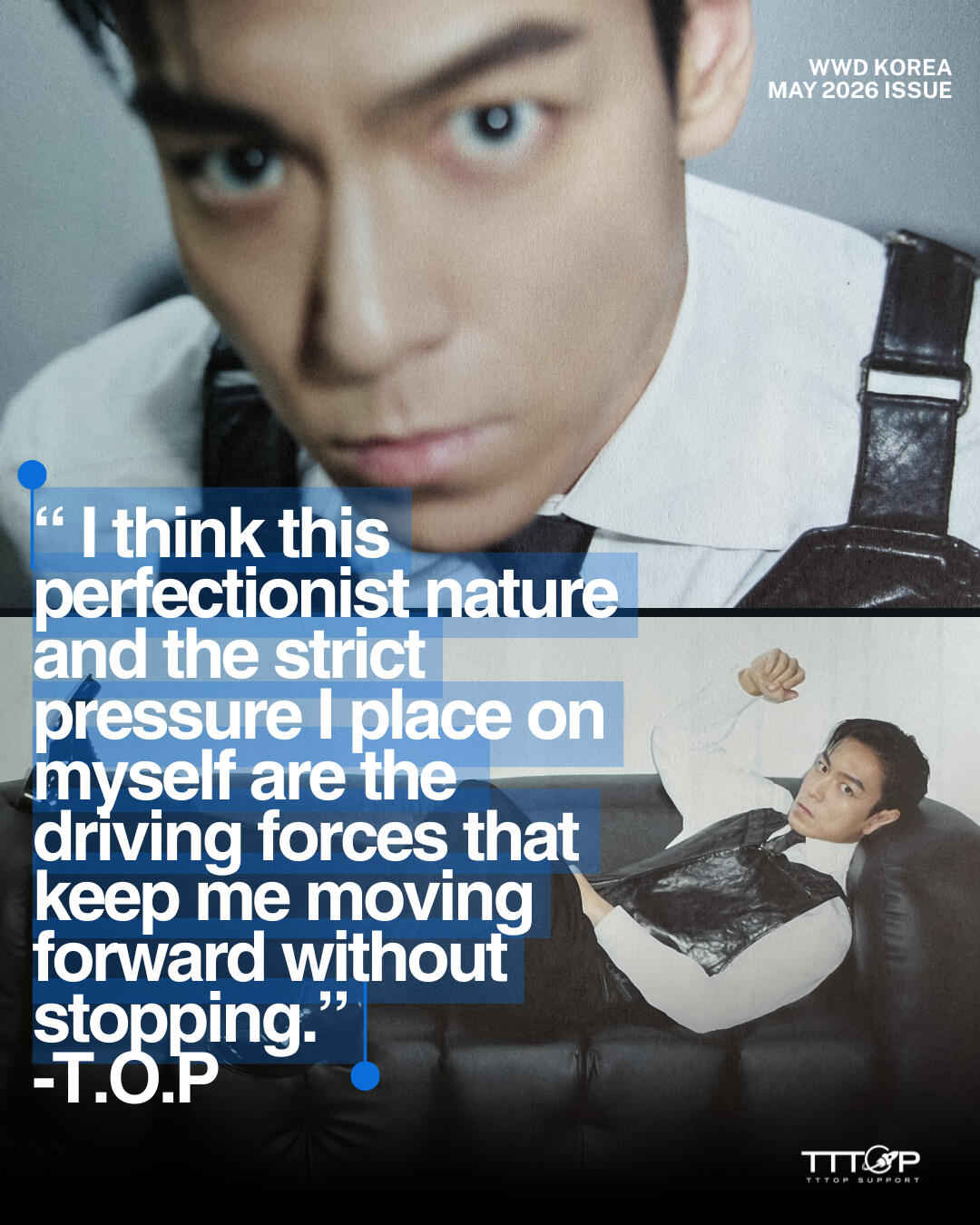
Q18: It’s like you’ve finished a kind of homework in advance, so you must feel much lighter as an artist.T.O.P: The only assignment left is simply not changing my mind. (laughs) Even after I’ve finalized the tracklist for an upcoming album, I constantly make revisions. Sometimes it goes to extremes, but I think this perfectionist nature and the strict pressure I place on myself are the driving forces that keep me moving forward without stopping.
Q19: When will those songs be released to the world?T.O.P: The first album has just been released so talking about the next one already feels like revealing too many marketing secrets. (laughs) I'll stop here.
Q20: Now, as an independent artist, you’re leading the entire creative process. What does it feel like to move forward holding the key to every decision yourself, with the sense of being completely on your own?T.O.P: I have a strong, supportive team by my side, but the final decisions and the responsibility that comes with them ultimately rest with me. It carries a different kind of weight compared to the past, but I’m living the life I’ve always wanted, and I’m very happy. Within that sense of responsibility, I feel myself growing and gradually becoming a real adult.
Q21: What is the decisive change that made you feel you’ve become more mature?T.O.P: Looking back, I had a lot of worries even in my 20s. Starting in my 30s, I seem to have moved beyond the stage of confronting my ego to something closer to “emptying it out.” Rather than clinging to the idea of holding onto something to the very end, I find myself focusing more on the process of letting go. I try to fill the space I’ve emptied not with grand beliefs, but with an attitude of constantly learning from the world.
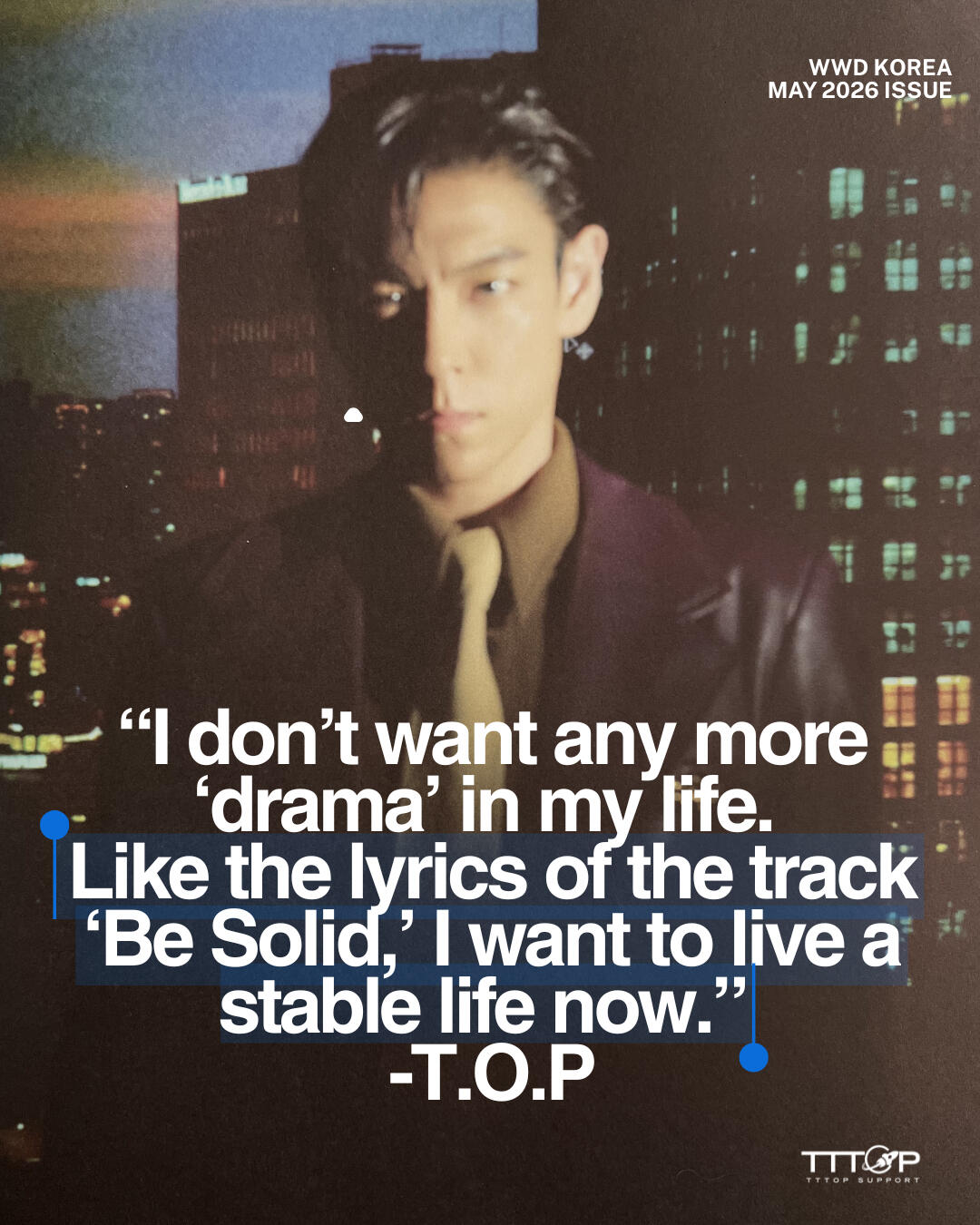
Q22: So you’ve come to see the world a little more broadly. You are famous for having deep expertise across the arts in general, including photography, film, visual arts, and music. Recently, what has been T.O.P’s source of inspiration?T.O.P: I am always, constantly buried in music. To the point where I don't even have time to go see exhibitions. It feels like my entire daily life is spent contemplating how to express the visions I have drawn in the past in a way that persuades society and produces results that will surprise everyone.
Q23: If you were to compare life to a single work of art, which movement would you say it’s closest to?T.O.P: That’s an interesting question. By chance, I’ve lived a very surrealist kind of life, but I’ve always wanted and still want to live an extremely minimal life. Ever since I was young, the direction I’ve dreamed of has always been minimalism. From here on, I plan to keep letting go of more and more, and to live an even simpler life.
Q24: I am curious about the landscape of that simple life.T.O.P: I don’t want any more ‘drama’ in my life. Like the lyrics of the track ‘Be Solid,’ I want to live a stable life now. I hope the people around me won’t suffer because of me anymore; instead, I want to become a dependable presence—someone my family and the people I work with can look at and feel reassured by.
Q25: As a winemaker and a well-known wine enthusiast, could you recommend a wine that pairs well with this album?T.O.P: Only one comes to mind: “T’SPOT.” It’s carefully crafted at a French winery, and the Rose Sparkling in particular feels like it would pair beautifully with the mood of this album.
Q26: This is the question fans are most curious about. Have you taken an MBTI test?T.O.P: Honestly, I don’t really know what MBTI is (laughs).
(After hearing the explanation)
T.O.P: Then I’ll define myself as ‘ITOP’. I don’t really want to go through any more tests just to get to know myself better. Exploring my identity is enough through music alone.
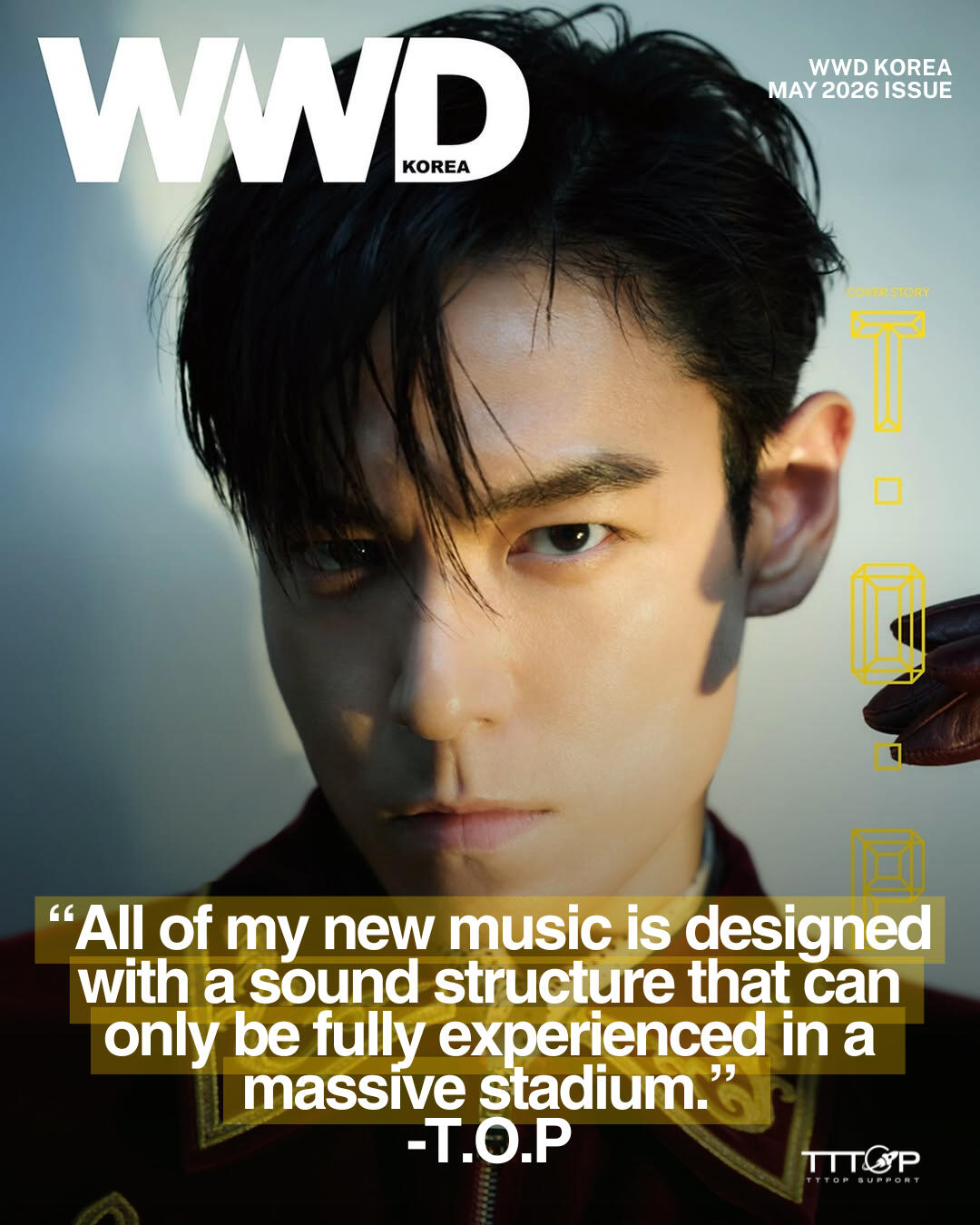
Q27: Do you happen to have plans for a concert?T.O.P: Of course. All of my new music is designed with a sound structure that can only be fully experienced in a massive stadium. I will create a stage that matches the scale of my imagination and I’ll invite you when everything is at the perfect moment, so please look forward to it.
Q28: This year marks your 20th anniversary since your debut. If the past years were an intersection of intense struggle and the silence of emptying the ego, how do you want to fill the next 20 years?T.O.P: I don’t usually place much meaning on time or visible numbers. But as I mentioned earlier, I want to spend the time ahead with a slightly more peaceful state of mind. Rather than making grand promises to prove any particular achievement, I simply want to keep consistently sharing the music I do best and love, right by your side.
Q29: While achievements as an artist are important, I truly hope that Choi Seung-hyun as a person is also genuinely happy.T.O.P: I don't think I do this work solely for myself. I believe that an artist’s purpose is to inspire others and share happiness. As a human being Choi Seung-hyun? I’m really happy that my inner self is simply calm right now.
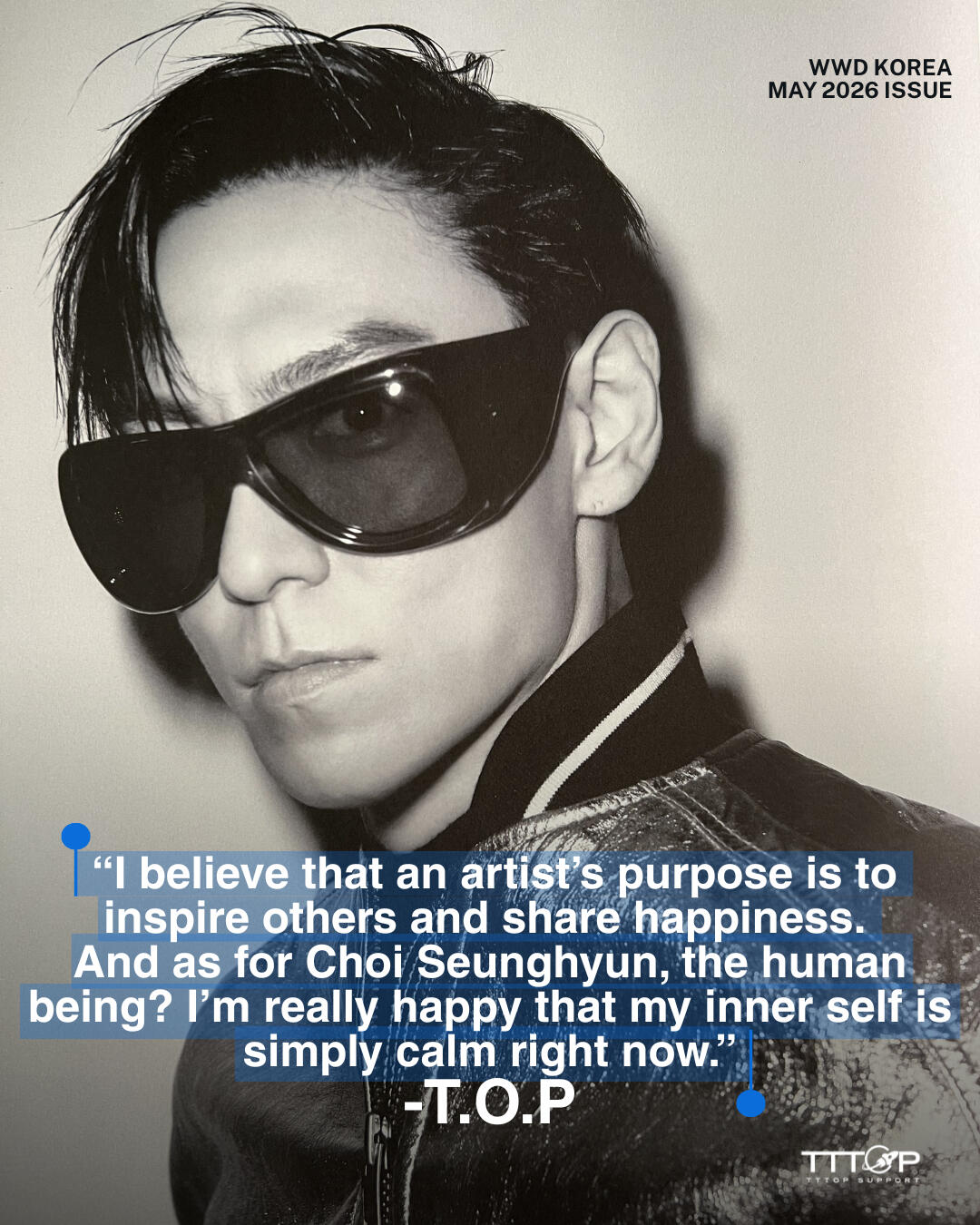
See the full image set on Instagram
T.O.P, a one off youtuber
feat. Nana
Translated and Edited by TTTOPSUPPORT
Youtube Premiere: April 28, 2026
Nana: Ah! I’m curious why you chose to cast me.
T.O.P: To be really honest…
Nana: Ah, yes!
T.O.P: When I first made the song “Completely Crazy”, from the very beginning, I really... I had this thought that it would be nice if a female character appeared who feels like she doesn’t belong to any specific era. Someone mysterious and hard to define. Like… you can’t tell if she’s from space, or from the past. That kind of unexplainable charm. She should also have a kind of classical beauty but actually, like the song title, really.. if a woman who looks completely crazy appears, I thought that would be very captivating. Above all, in my opinion, you suited it the best.
Nana: Huh? Thank you.
T.O.P: No, thank you.
Nana: 완전 미쳤어 🎶 (Completely crazy) 🎶
T.O.P: 😂
Watch full video on YouTube
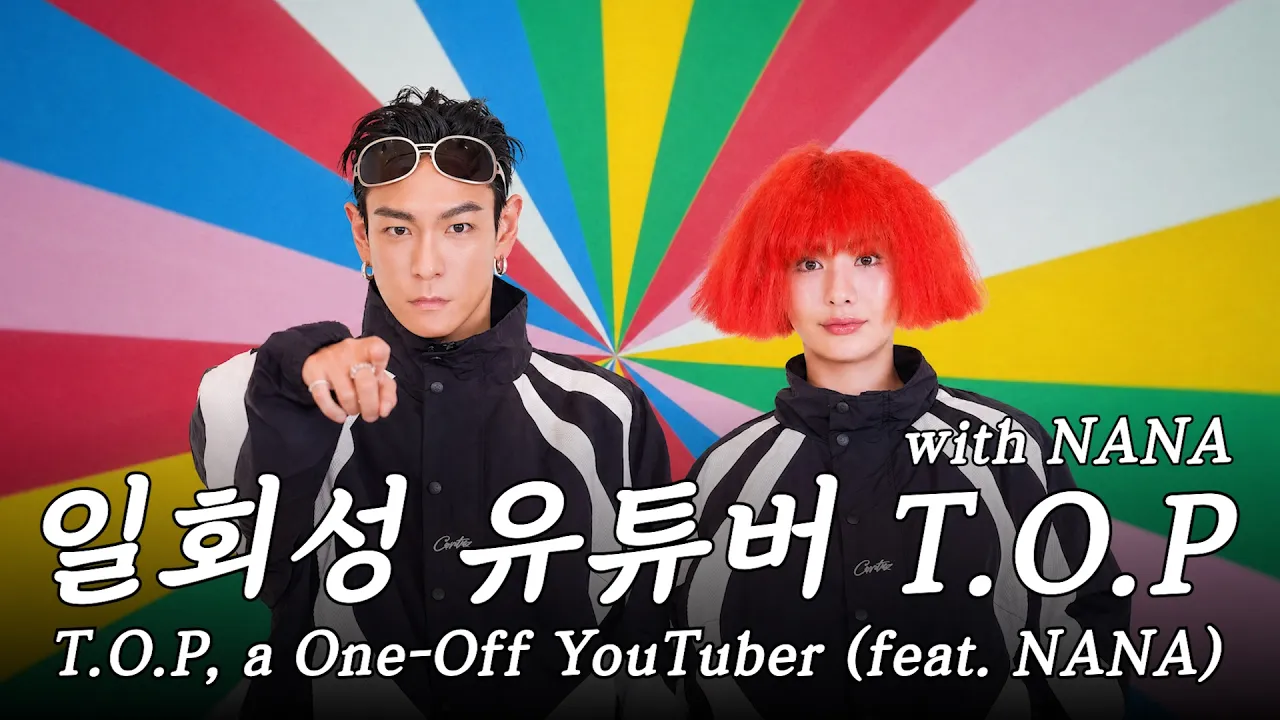
BlueCabinet Magazine Interview:
“The chair from T.O.P’s music video, by artist Lee Nara”
Translated by TTTOPSUPPORT
Posted: April 21, 2026
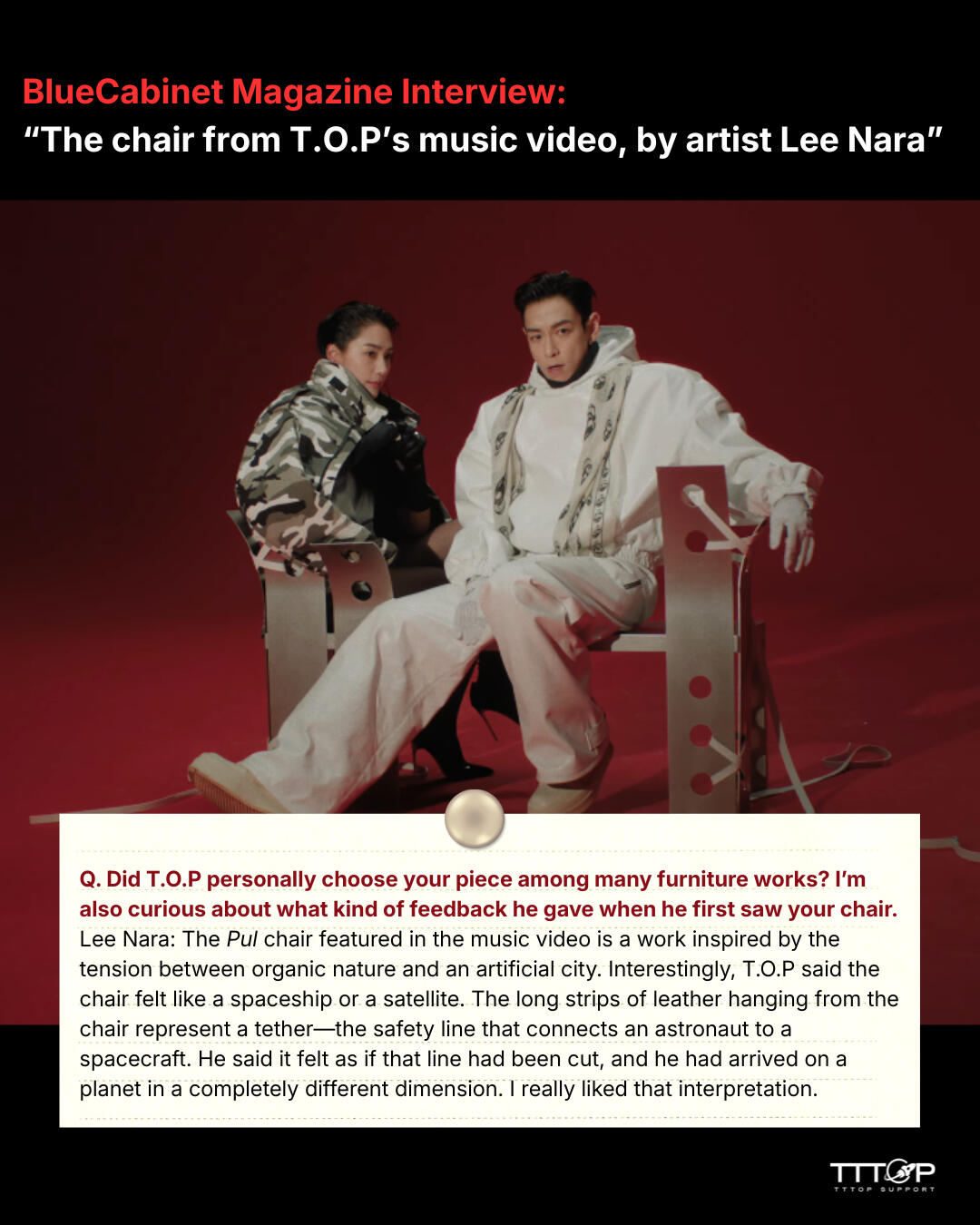
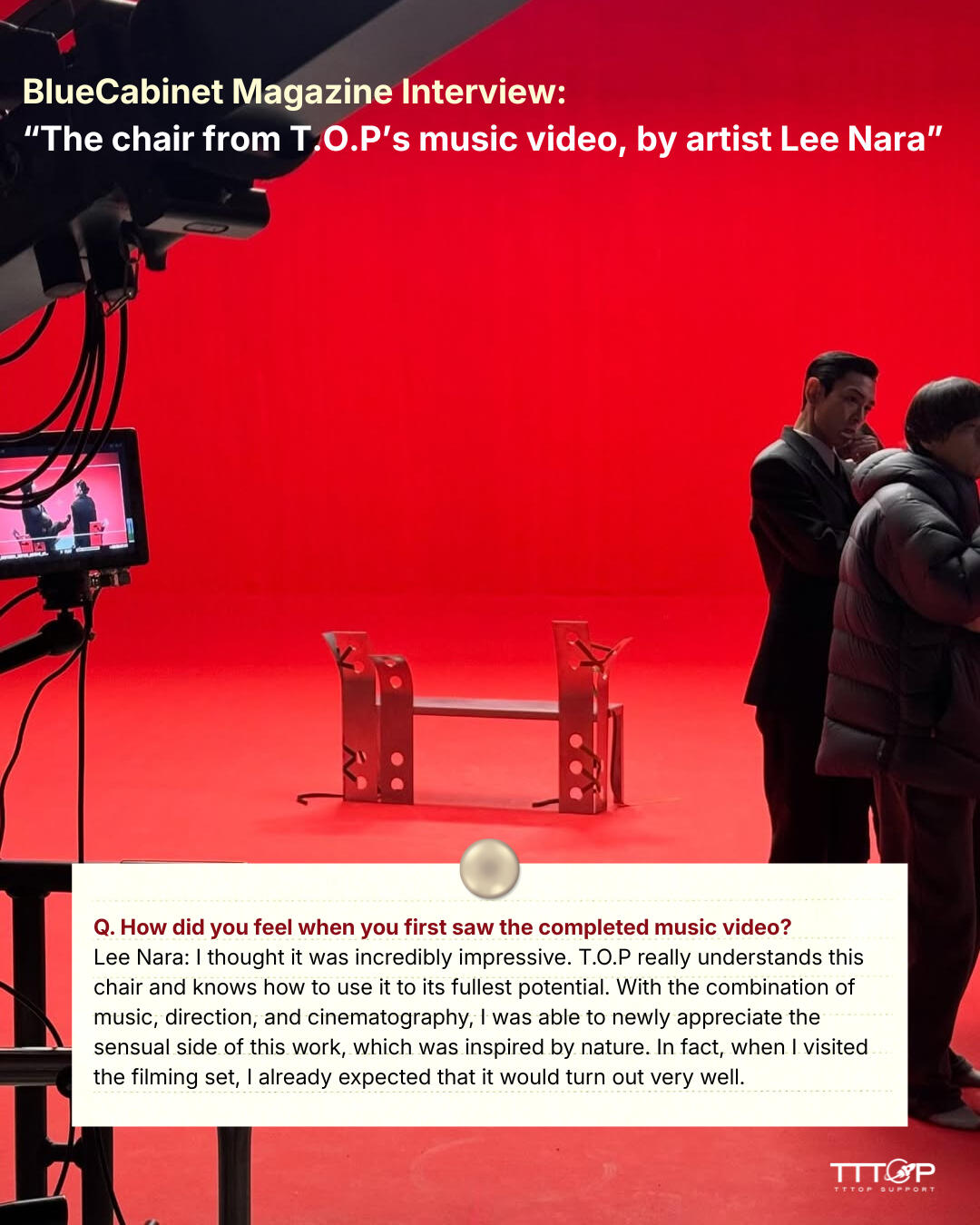
Q. Could you please introduce yourself?Lee Nara: Hello, I’m Nara Lee, an architect and artist. I primarily work on spatial design while also engaging in various artistic practices. I studied architecture in Seoul and urban studies in the Netherlands, and worked at design offices in Brussels, Seoul, and Paris.
Afterward, I became independent and founded EEL Studio, where I balance spatial projects with personal work. I am currently working between Paris and Seoul.Q. Did T.O.P personally choose your piece among many furniture works? I’m also curious about what kind of feedback he gave when he first saw your chair.Lee Nara: The Pul chair featured in the music video is a work inspired by the tension between organic nature and an artificial city. Interestingly, T.O.P said the chair felt like a spaceship or a satellite. The long strips of leather hanging from the chair represent a tether—the safety line that connects an astronaut to a spacecraft. He said it felt as if that line had been cut, and he had arrived on a planet in a completely different dimension. I really liked that interpretation.Q. How did you feel when you first saw the completed music video?Lee Nara: I thought it was incredibly impressive. The artist Top really understands this chair and knows how to use it to its fullest potential. With the combination of music, direction, and cinematography, I was able to newly appreciate the sensual side of this work, which was inspired by nature. In fact, when I visited the filming set, I already expected that it would turn out very well.
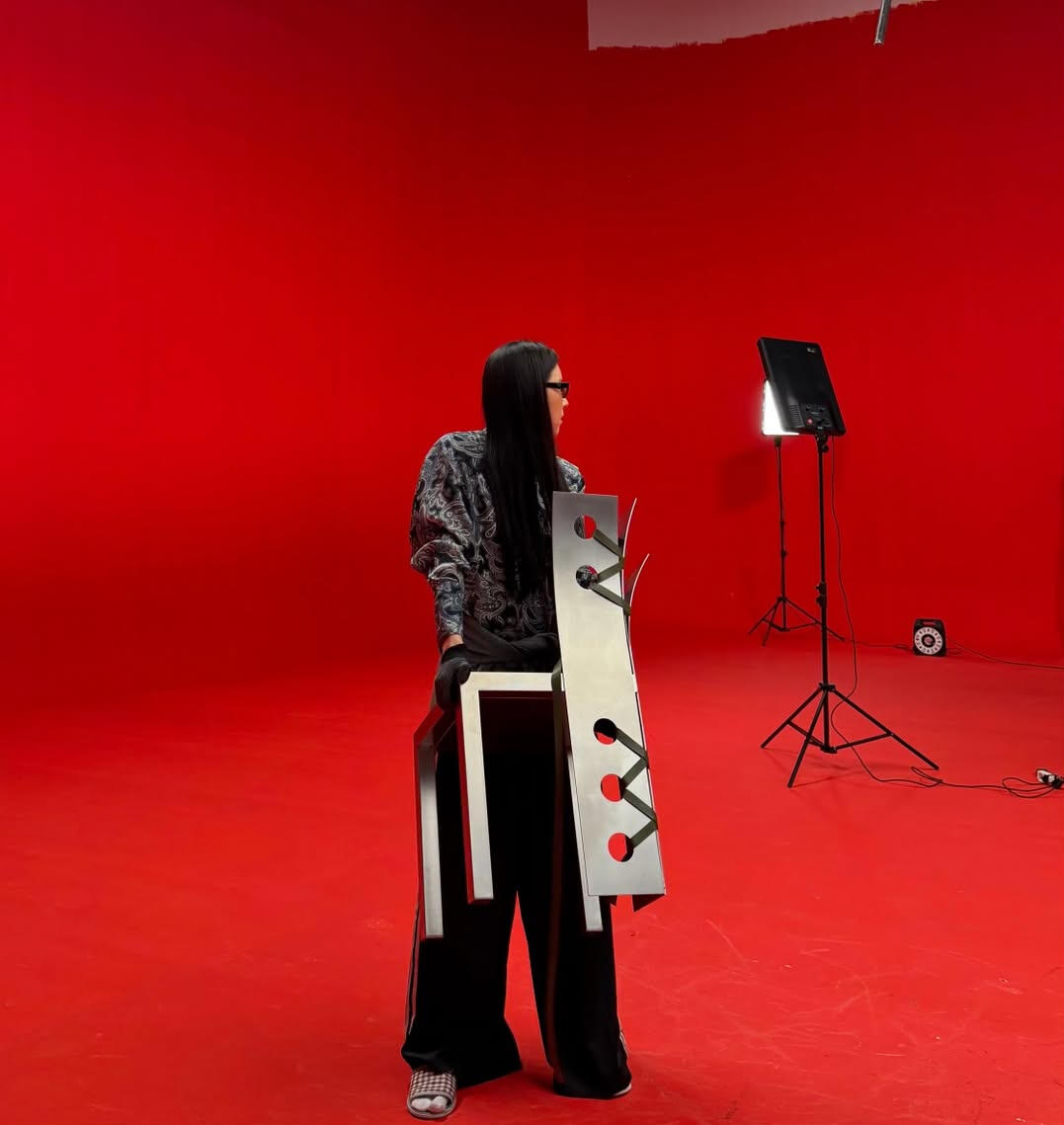
Q. What is your furniture-making process like?Lee Nara: I was inspired by the way nature and the artificial intersect in the city of Seoul. I live between Paris and Seoul, and when I arrived in Seoul last summer, I was especially struck by the intense way these elements intertwine. When artificial systems try to control nature, nature reveals an even stronger vitality.
There’s a track on TOP’s latest album called “The Feeling of Living in Seoul,” and when I saw the tracklist, it felt almost fated. Since my background is in architecture and urban studies, I’m particularly interested in materials and structure. I also intended for leather as a finishing material and metal as a structural material to exchange their traditional roles.
When I leave a city and then return, certain images suddenly feel new again, and those moments have a strong influence on my work.Q. What kind of chair do you sit on at home? Do you also use artistic chairs like these in your house?
Lee Nara: Yes, I’m currently sitting on a burgundy Vitra 03 chair. In my Paris home, I’ve been gradually adding pieces of furniture I love, and it’s getting more and more crowded. By the window, there are two Dr. Glob chairs by Philippe Starck facing each other, and the sofa is a vintage Damier by Edra, which I found in Cologne and brought to Paris. There are also some vintage pieces whose names I don’t know, as well as items from IKEA. Regardless of brand, I collect things I like. Even though they have a completely different character from my own work, I tend to collect furniture that still inspires me.Q. Do you have any advice for aspiring artists or students who want to follow their own path like you?Lee Nara: I believe the way forward is to learn independently from people you admire, trust your instincts, and keep going without stopping.